



Framed Architectural Study
A framed architectural study captures the precision of historic buildings and classical facades on paper or canvas.
Framed Architectural Study
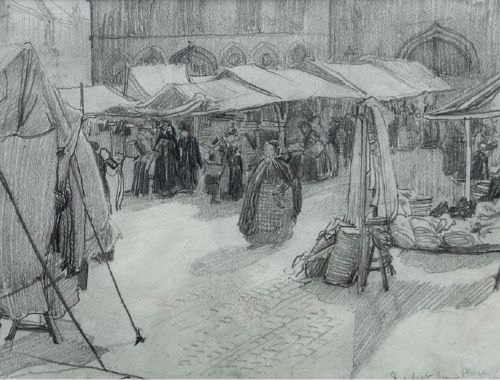
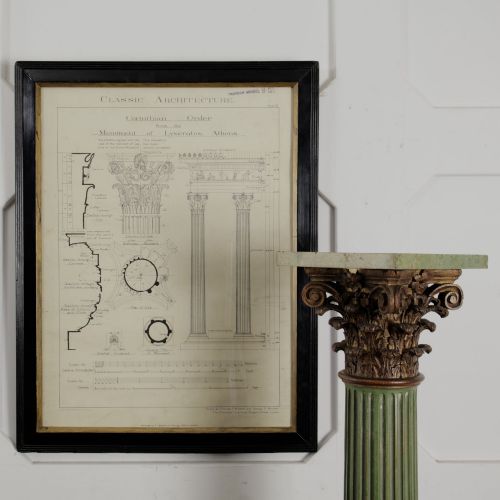
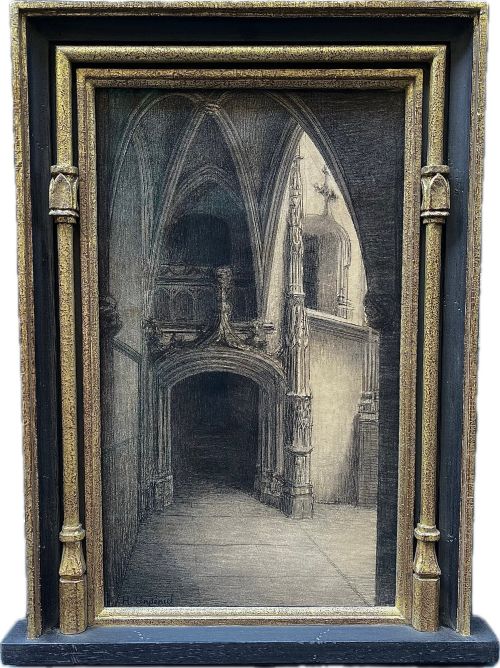
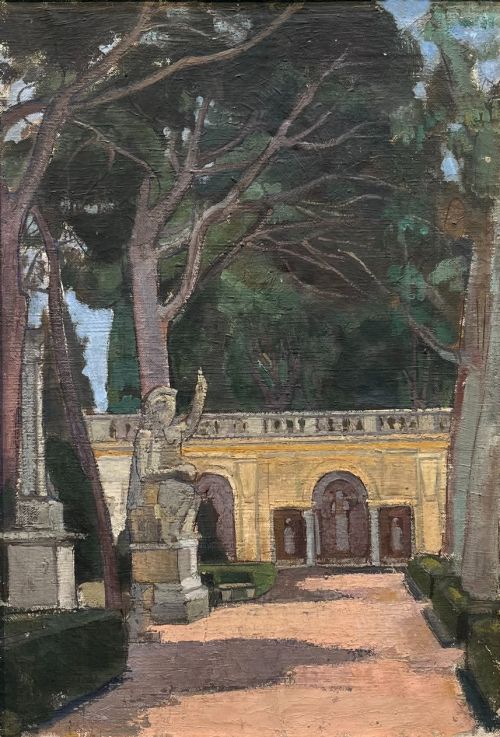
A framed architectural study represents buildings, ruins, and interiors through detailed draughtsmanship and painting. These works record structures ranging from Gothic churches and classical arches to domestic halls and grand canal views.
Most pieces encountered on this page originate from the 18th, 19th, and early 20th centuries, created during periods when travel and classical recording flourished. The selection spans finished watercolours, ink drawings, and period engravings depicting British and European subjects.
Materials and Technique
Artists relied primarily on paper, graphite, and ink, frequently adding watercolour washes or gouache to define form and light. Engravings utilise etched metal plates pressed onto paper to reproduce fine architectural details with exact precision.
Framing typically involves wood and glass to protect the delicate paper surface, occasionally complemented by gold leaf accents on the moulding. These traditional mountings preserve the medium against atmospheric degradation.
Paper and wood are the predominant materials, supporting mediums that include graphite, watercolour, gouache, ink, and gold leaf.
Distinction in Quality
Quality rests in the draughtsman's command of perspective, proportion, and line weight when rendering complex masonry and ornament. Superior works demonstrate an intimate understanding of structural geometry combined with precise tonal shading.
The sophistication of the secondary materials, such as heavy hand-laid paper and period-appropriate wooden frames, elevates the standing of a piece. Depth of observation separates routine topographical records from compelling artistic interpretations.
Henry Percy Huggill·Thomas Ellison·Henri Charles Angéniol·Anne Dorrien Smith·Rowland Henry Hill·Denis William Reed·Pio Panfili·Sir Francis Leggatt Chantrey·Tom Dudley·Frank Moss Bennett·John Jaques·Margaret Thompson
The Framed Architectural Study Glossary
- Grand Tour
- A traditional journey through Europe undertaken by upper-class young men to study art and classical antiquity. This cultural movement generated numerous topographical and architectural watercolours.
- Neoclassical
- A Western cultural movement drawing inspiration from the art and culture of classical antiquity. It manifests in architectural subjects through precise columns, symmetry, and classical orders.
- Gothic Revival
- An architectural movement beginning in the mid-18th century that imitated medieval gothic forms. Works in this style frequently depict pointed arches, ribbed vaults, and ornate ecclesiastical interiors.
- Engraving
- A printmaking technique where an artist carves an image into a metal plate using a burin. Ink is applied to the plate and transferred under pressure to create a sharp, linear impression on paper.
- Gouache
- An opaque water-based paint consisting of pigment, water, and a binding agent such as gum arabic. It provides solid blocks of colour that contrast with transparent watercolour washes.
Framed Architectural Study: Frequently Asked Questions
What is a framed architectural study?
A framed architectural study is a drawing, painting, or print depicting buildings, ruins, or interior spaces. These works range from precise topographical records to atmospheric artistic interpretations of historic structures.
Created using mediums like watercolour, ink, graphite, and engraving, they serve as historical documents of past architecture and travel.
Where were these architectural studies produced?
These works originate primarily from Britain and continental Europe, reflecting locations visited during travels or local architectural documentation. Common subjects include British abbeys, Roman ruins, Venetian canals, and Gothic churches.
Artists often travelled to record specific historic sites, contributing to movements such as the Grand Tour and Gothic Revival.
How should I display these pieces?
Paper works require protection from direct sunlight to prevent the fading of watercolours, inks, and graphite. Display them on interior walls away from moisture and extreme temperature fluctuations.
The existing wooden frames and glass protect the delicate paper surfaces from dust and physical damage while maintaining their historic character.
How can I tell different periods apart?
Dating relies on the artistic style, paper characteristics, and framing methods. Eighteenth-century works often feature fine engravings or sepia ink washes, while 19th-century pieces frequently embrace Gothic Revival or Grand Tour watercolours.
Early 20th-century examples introduce broader impressionistic brushwork and different mounting techniques that reflect changing aesthetic preferences.