




Classical Architecture Artwork
Classical architecture artwork brings grand antiquities, classical landscapes and monumental ruins into your room through detailed prints, watercolours and oil paintings.
Classical Architecture Artwork
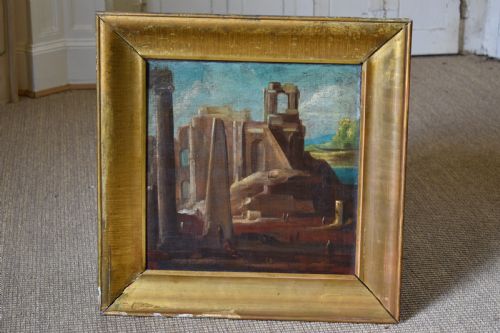
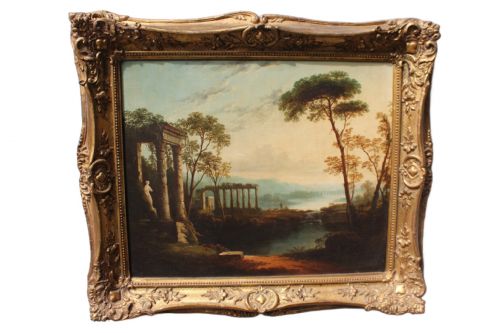
When you search for classical architecture artwork, you encounter framed pieces capturing ancient monuments, grand temples and idealised Italianate landscapes from the eighteenth and nineteenth centuries. These works include hand-coloured prints, delicate watercolours and traditional oil paintings depicting subjects such as the Forum of Nerva, the Arch of Titus and classical pavilions.
The selections span distinct periods, most notably the eighteenth and nineteenth centuries, alongside Grand Tour mementoes that travellers brought back from Italy and Greece. You will find sets of large coloured prints of architectural scenes as well as individual antique engravings and oil paintings in the manner of Claude Lorrain.
The primary forms on this page are architectural prints, watercolours and oil paintings, often housed in wood and giltwood frames with glass protection. These pieces range from eighteenth-century engravings of Athenian antiquities to later nineteenth-century watercolours of Roman ruins.
How they were made
These works rely on traditional paper, ink, watercolour and oil on canvas mediums, capturing fine architectural lines and classical proportions by hand or through early printing plates. Engravers and artists worked with paper and canvas to record antique buildings, using ink for sharp architectural definition and watercolour or oil pigments for atmospheric depth.
Framing materials include wood, giltwood and gold leaf, complemented by protective glass to preserve fragile paper prints and watercolours. Eighteenth-century engravings and nineteenth-century watercolours alike demonstrate careful handwork in both the creation of the image and the subsequent framing.
Travellers brought home watercolours of ancient ruins to prove they had stood before the Forum of Nerva.
What varies in quality
Quality in these artworks rests upon the precision of the draughtsmanship, the clarity of the architectural details and the fidelity of the perspective. Works by known hands or those capturing specific archaeological sites with rigorous accuracy demonstrate superior execution.
The preservation of the medium, whether oil paint on canvas or ink and watercolour on paper, alongside the quality of the surrounding wood and giltwood frame, defines the overall standard of the piece.
Pio Panfili·James Basire
The Classical Architecture Artwork Glossary
- Grand Tour
- A traditional journey through Europe undertaken by upper-class European young men of means in the seventeenth, eighteenth and nineteenth centuries to absorb classical culture. Pieces associated with this tradition often depict famous ruins and antiquities.
- Neoclassical
- A Western cultural movement in the decorative and visual arts beginning in the mid-eighteenth century, drawing inspiration from the art and culture of classical antiquity. This style informs the balanced compositions and classical buildings seen in these artworks.
- Engraving
- A printmaking process where an artist incises a design onto a hard surface, traditionally a copper plate, to hold the ink. This technique allowed for the crisp reproduction of architectural elevations and ancient ruins.
Classical Architecture Artwork: Frequently Asked Questions
What periods do these artworks cover?
The pieces span from the eighteenth century through to the nineteenth century, capturing the height of Grand Tour collecting and neoclassical artistic production.
You will find dated examples ranging from seventeen-fifty through the eighteen-twenties, reflecting changing tastes in architectural recording.
How should I hang them at home?
These framed prints, watercolours and oil paintings suit studies, libraries and drawing rooms where traditional decor prevails. Grouping smaller prints together, such as a set of classical scenes, creates a strong visual impact on a wall.
Keep them away from direct sunlight to protect the fragile paper, ink and watercolours from fading over time.
What is a Grand Tour watercolour?
A Grand Tour watercolour is an original painting purchased by travellers touring the classical sites of Italy and Greece during the eighteenth and nineteenth centuries. These works served as personal records of famous monuments like the Colosseum.
They capture specific locations with artistic interpretation, often retaining their original frames and mounting.
How do prints and paintings differ?
Prints and engravings offer repeated, sharply defined architectural lines on paper, often produced in sets or series illustrating antiquities. Oil paintings and watercolours are unique, hand-painted works that use colour and brushwork to create atmospheric depth.
Both forms focus on classical buildings, but prints provide graphic precision while paintings offer painterly texture and tone.