


Antique Capriccio Painting
An antique capriccio painting brings imaginary classical ruins and fantastical architecture into your rooms, capturing the romantic spirit of the Grand Tour.
Antique Capriccio Painting
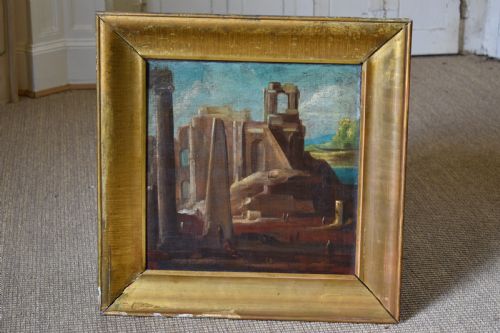
An antique capriccio painting combines real and imaginary architectural elements, classical ruins, and figures into a single picturesque composition. When you search for an antique capriccio painting, you encounter works spanning the eighteenth and nineteenth centuries, including Grand Tour pieces and later interpretations.
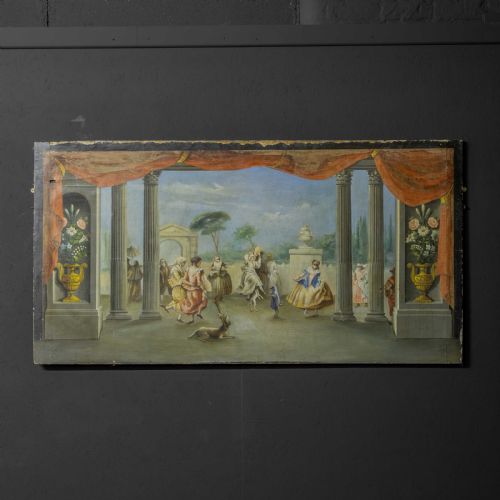
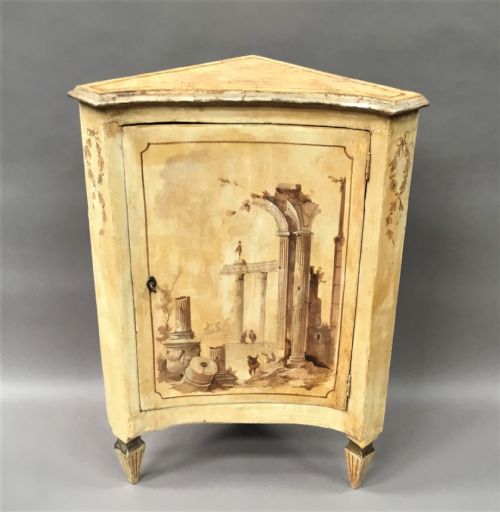
The subjects frequently feature Italian landscapes, Roman ruins, Mediterranean ports, and theatrical architectural fantasies framed in gilt wood or simpler wooden mouldings. While canvas and panel paintings dominate, watercolours, ink washes, and miniature works also appear alongside related items like painted furniture.
Materials and construction
Artists painted these works primarily with oil on canvas or wood panel, applying pigments to capture atmospheric skies, weathered stone, and distant mountains. Others worked on paper, utilising watercolour, ink, and monochrome wash techniques to achieve delicate architectural detail.
Framing forms an integral part of the physical object, utilising gilt wood, gilded wood, and glass to protect and elevate the artwork. Support materials range from laid paper bearing watermarks to sturdy timber panels and stretched canvases.
Listings feature works spanning the eighteenth and nineteenth centuries, executed in oil on canvas, oil on panel, watercolour, and ink wash.
Factors of quality
The finesse of the brushwork and the precision of the architectural perspective separate superior examples from standard decorative works. Masterful handling of light, shadow, and atmospheric depth transforms a conventional ruin scene into a compelling visual narrative.
The condition of the painted surface, the originality of the ground layer, and the presence of period or original framing significantly influence the standing of a piece. Attribution to a specific circle, school, or named artist elevates the historical and artistic merit of the composition.
Giovanni Paolo Panini·Francesco Guardi·Pio Panfili·William Crouch·Willem Van Bemmel·Julius Schnorr von Carolsfeld·Franz Hoepfner·Claude Lorrain
The Antique Capriccio Painting Glossary
- Capriccio
- An architectural fantasy placing together different buildings, archaeological ruins, and other architectural elements in a fictitious combination for artistic effect.
- Grand Tour
- A traditional trip of Europe undertaken by upper-class European young men of sufficient means during the eighteenth and nineteenth centuries to flourish their cultural education.
- Grisaille
- A painting executed entirely in shades of grey or neutral greyish-brown, often used to emulate sculpture or as a monochromatic underpainting.
- Laid Paper
- Handmade paper featuring a visible grid of fine parallel lines and wider spaced lines created by the wire mesh of the mould during production.
- Wash
- A thin layer of translucent colour or ink applied evenly across a paper surface to create smooth backgrounds or tonal gradations in watercolour works.
Antique Capriccio Painting: Frequently Asked Questions
What is a capriccio painting?
A capriccio painting depicts an architectural fantasy where real and imaginary buildings, classical temples, and Roman ruins are brought together in an idealized landscape.
Artists invented these scenes to evoke the romance of antiquity rather than to record actual topographical views.
Where were these paintings made?
Many works originate from Italy, Germany, and England, produced during the eighteenth and nineteenth centuries for collectors travelling across Europe.
Artists in major artistic centres painted them to satisfy the demand for classical mementos.
How do I care for an antique painting?
Keep paintings away from direct sunlight, high humidity, and sudden temperature fluctuations to protect the canvas, panel, and pigments.
Dust gilt wood frames gently with a dry, soft brush and avoid using liquid cleaners on the painted surfaces.
How do I identify the period of a painting?
Examine the materials of the support, such as hand-laid paper, wood panels, or woven canvas, alongside the style of the frame and pigments.
Signatures, inscriptions, and stylistic traits linked to specific schools provide further clues to the date of execution.