


Grand Tour Architectural Artwork
Grand tour architectural artwork records the classical ruins, monuments and vistas that travellers encountered on their continental journeys.
Grand Tour Architectural Artwork
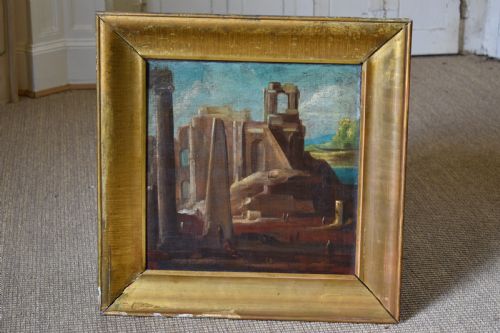
Grand tour architectural artwork captures the temples, arches and landscapes of Italy and Greece that fascinated travellers during the eighteenth and nineteenth centuries. These pieces serve as visual records of classical antiquity and the evolving landscape of European cities.
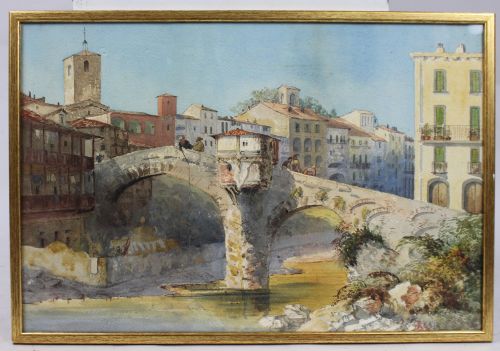
The selection here encompasses oil paintings, detailed watercolours and fine engravings depicting subjects such as the Colosseum, the Forum of Nerva and the Bridge of Sighs. Works range from intimate depictions of specific monuments to sweeping Italianate landscapes populated by classical ruins.
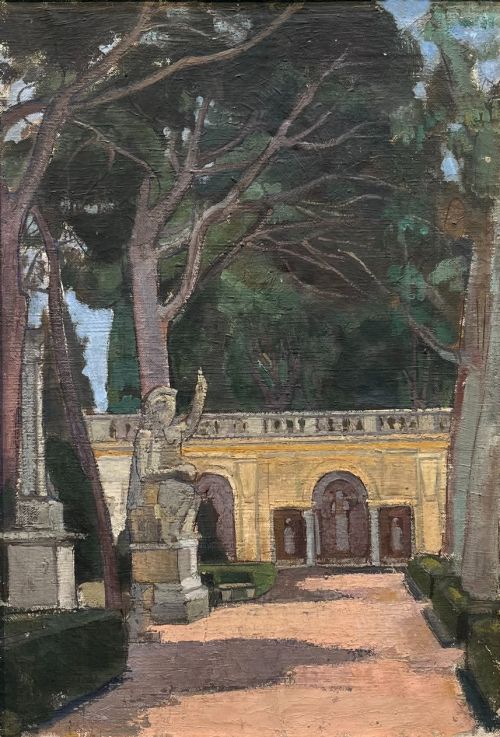
Pieces originate from various periods including the eighteenth and nineteenth centuries, alongside early twentieth-century interpretations. Buyers encounter both original watercolours signed by period artists and structured sets of architectural prints.
Materials and techniques
Artists and printmakers utilised paper, ink and watercolour to capture the fine lines of classical architecture and natural scenery. Many works employ traditional oil on canvas applied with visible brushwork, while others rely on delicate washes of pigment.
The listings span from mid-eighteenth-century engravings to early twentieth-century watercolours, executed in mediums including oil on canvas, ink, and watercolour.
Distinctions in quality
The fidelity of the architectural draughtsmanship distinguishes works executed by trained architectural artists from simpler decorative items. Precision in perspective and the rendering of stone textures elevate the visual impact of a scene.
The reputation of the creator or the circle of origin influences the standing of a piece, with named artists and attributed workshops commanding greater interest. Condition of the paper or canvas, including the retention of original pigment and minimal fading, determines the overall integrity of the artwork.
Giovanni Paolo Panini·Francesco Piranesi·Vittore Zanetti Zilla·Ettore Ascenzi·William Crouch·Edward Rooker·James Basire
The Grand Tour Architectural Artwork Glossary
- Grand Tour
- A traditional trip through Europe undertaken by upper-class young European men of means to flourish their cultural education. This travel generated a demand for local art and topographical views.
- Etching
- A printmaking process where lines are incised into a metal plate with acid before being inked and pressed onto paper. This technique allows for fine, intricate architectural details.
- Watercolour
- A painting method where pigment is suspended in a water-based solution and applied to paper. It was favoured by travellers for creating portable, immediate records of landscapes.
- Gilt Wood
- Wood that has been treated with a thin layer of gold leaf or gold paint. It frequently appears on the antique frames enclosing these historical artworks.
Grand Tour Architectural Artwork: Frequently Asked Questions
What subjects appear in grand tour architectural artwork?
These pieces depict classical ruins, ancient temples, triumphal arches and scenic waterways across Italy and Greece. Popular subjects include the Colosseum, the Roman Forum and Venetian bridges.
Artists also recorded specific excavations and monuments such as the House of the Vetti in Pompeii and the Vatican Loggie.
How were these artworks used historically?
Travellers collected these watercolours, oils and engravings as tangible evidence of their continental journeys. Upon returning home, owners framed and displayed them in libraries and drawing rooms to demonstrate their classical education and refined taste.
They functioned both as personal mementos and as conversation pieces for visitors.
How do I live with antique prints and paintings?
Protect these paper and canvas works by positioning them away from direct sunlight to prevent the fading of watercolours and inks. Maintaining stable indoor humidity prevents the warping of wooden frames and the degradation of paper.
Display them at eye level in rooms with controlled light levels to appreciate their fine architectural details.
How can I tell eighteenth-century engravings apart from later copies?
Early engravings exhibit plate marks pressed into the paper margins where the metal plate met the press. The quality of the laid paper and the crispness of the ink lines indicate the period of production.
Examinations under magnification often reveal the distinct ink dispersion typical of eighteenth-century printing methods compared to later reproduction techniques.