


Black Framed Architectural Art
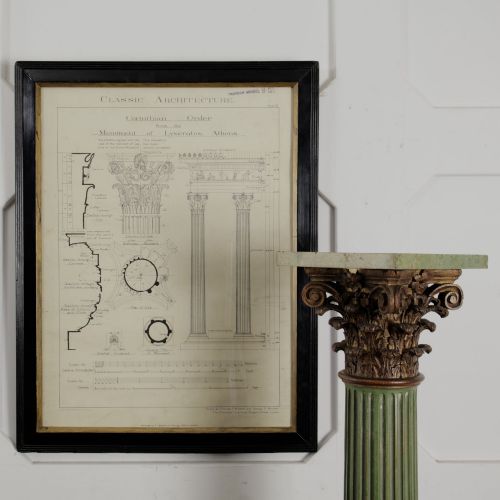
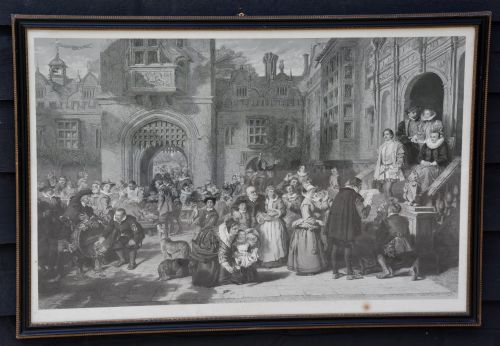
Black framed architectural art brings together classical engravings, ink drawings and watercolours housed within dark wooden borders.
Black Framed Architectural Art
When searching for black framed architectural art, a buyer encounters a diverse range of works spanning several centuries, capturing buildings, ruins and cityscapes. The pieces vary from eighteenth-century engravings of classical temples and cathedrals to nineteenth-century drawings and early twentieth-century etchings.
The most common form on this page is the paper-based print, etching or engraving, supplemented by occasional oil and watercolour paintings on canvas or paper. Subjects range from grand European monuments and Gothic structures to local colleges and river scenes.
Stylistic influences lean heavily towards the neoclassical, Georgian, Victorian and Gothic revival traditions, often reflecting the tastes of the Grand Tour or academic architectural studies.
How they were made
The works rely upon traditional graphic and painterly media, utilising ink, watercolour, oil paint and charcoal applied to paper or canvas. Printmakers employed copper plates for detailed line etchings and engravings, sometimes enhanced with hand colouring.
Enclosing frames are constructed from wood, occasionally incorporating gold leaf highlights to complement the monochromatic or toned palettes of the works within. Glass protects the delicate paper surfaces of the prints, drawings and watercolours.
Periods range from the eighteenth century through the Victorian era to the 1960s.
What varies in quality
Quality rests in the precision of the draughtsmanship and the clarity of the printed line, where master engravers achieve remarkable detail in stonework and perspective. The depth of the ink impression and the preservation of the paper surface also distinguish finer examples from standard prints.
The sophistication of the framing contributes significantly to the overall presence of the piece, particularly where original timber mouldings or period Hogarth frames are retained. Works by named printmakers or institutional draughtsmen demonstrate higher artistic accomplishment.
Ron Folland·T.A Prior·Francesco Piranesi·Sir William Nicholson·Claes Jansz Visscher·Fred Lawson·Francis Dodd·Edgar J. Maybery·Tom M. Hemy·Annie L. Lee·Otto Pilny·Frank Greenwood·John Scott Russell·James Basire·CB Prescott
The Black Framed Architectural Art Glossary
- Etching
- A printmaking process where lines are bitten into a metal plate with acid before being inked and pressed onto paper. This technique allows for fine, flowing detail.
- Engraving
- A method of cutting a design directly into a metal plate using a sharp tool called a burin. The resulting lines hold the ink for sharp transfer.
- Neoclassical
- An artistic style inspired by the classical art and architecture of ancient Greece and Rome. It emphasises symmetry, proportion and monumental forms.
- Grand Tour
- A traditional trip through Europe undertaken by upper-class young men to study art and architecture. Souvenirs included classical prints and architectural views.
- Drypoint
- A printmaking technique where an image is scratched directly into a metal plate with a hard needle. This creates a distinctive, velvety line due to the raised metal burr.
Black Framed Architectural Art: Frequently Asked Questions
What periods do these pieces date from?
The selection spans several centuries, encompassing eighteenth-century engravings, nineteenth-century watercolours and early twentieth-century etchings. Each period brings distinct printing technologies and artistic sensibilities.
Buyers will find that earlier works often focus on classical antiquities, while later pieces explore domestic landscapes and institutional architecture.
How should I hang black framed art?
These pieces suit both traditional wall arrangements and modern minimalist interiors, where the dark frame creates a strong visual boundary. Grouping works of similar scale helps establish a cohesive display.
Direct sunlight should be avoided to prevent fading of the underlying paper, ink and watercolour pigments.
What is an architectural engraving?
An architectural engraving is a printed depiction of buildings, ruins, monuments or interior spaces produced from a carved metal plate. They were frequently utilised in scholarly publications and travel folios.
Many record ancient structures discovered during European travels and archaeological excavations.
Are these works original prints?
Many listings feature original etchings, engravings and lithographs pulled directly from the historical plates during the period of creation. Others comprise original drawings, watercolours and oil paintings.
Each technique leaves specific visual characteristics on the paper or canvas surface.