


Italian Ruin Painting
These Italian ruin painting examples capture crumbling classical architecture and Mediterranean light, prized by collectors seeking picturesque antiquity for their walls.
Italian Ruin Painting
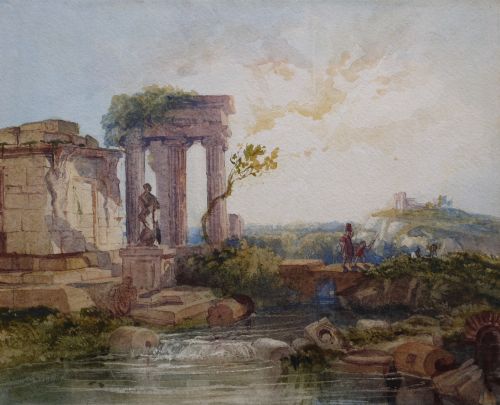
An italian ruin painting depicts classical architecture, temples, and arches set within Mediterranean or Roman landscapes, often populated by small figures. You will frequently encounter nineteenth-century watercolours, gouaches, and oil canvases created as souvenirs for travellers on the Grand Tour.
The subjects range from imaginary capriccios to specific historical sites such as the Colosseum, Pompeii, and the Roman Campagna. Works span from the seventeenth century through to later Victorian interpretations and mid-century echoes.
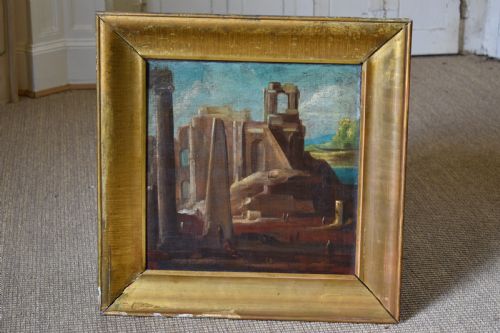
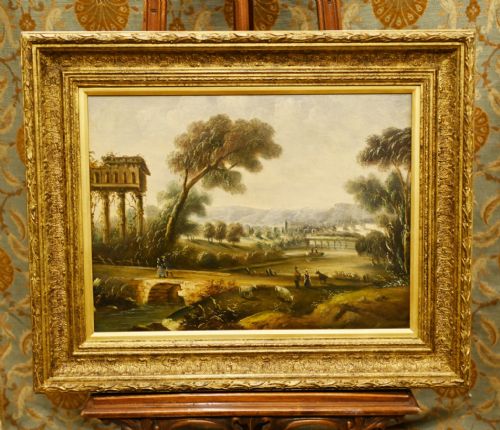
Many examples arrive framed in period wood or gilded surrounds, preserving the traditional presentation of these classical souvenirs. The format varies from intimate individual sheets on paper to large oil paintings designed for grand reception rooms.
Materials and execution
Painters utilised oil on canvas for substantial compositions, building up pigment to describe atmospheric skies and weathered stonework. Watercolours and gouaches on paper captured portable views for travellers, employing delicate washes alongside opaque highlights.
Support materials include aged paper, stretched canvas, and wooden panels, frequently housed within original gilded wood frames. Pigments were applied to render the earthy tones of brick, marble, and sun-baked Italian terrain.
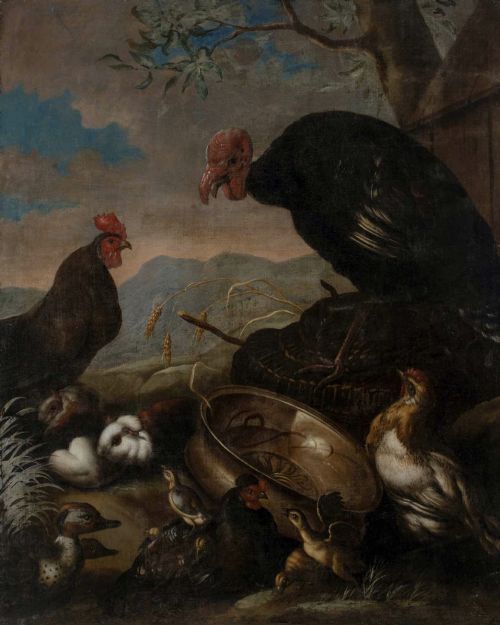
Several fowl and birds occasionally wander among seventeenth-century castle ruins, reminding viewers that historic architecture makes an excellent roost.
Assessing quality and execution
Superior works demonstrate confident handling of perspective in the architectural elements and subtle control of atmospheric light across the landscape. The precision of the draughtsmanship in the classical columns and arches distinguishes masterly hands from formulaic studio production.
Condition plays a role, with untouched surfaces on original canvas or clean paper sheets holding greater appeal than heavily restored examples. The quality of the surrounding antique frame often reflects the original investment in the artwork.
Angelo Maria Crivelli·Franz Knebel·Francesco Zuccarelli·Louis Bélanger·Willem Van Bemmel
The Italian Ruin Painting Glossary
- Capriccio
- An architectural fantasy placing together classical ruins, buildings, and other architectural elements in a fictional compositional arrangement. This style allowed artists to create picturesque scenes free from topographical constraints.
- Grand Tour
- A traditional trip of Europe undertaken by upper-class European young men of sufficient means flourished mainly from the seventeenth through the nineteenth centuries. Travellers purchased local art and antiquities, including paintings, to bring home.
- Gouache
- An opaque water-based paint method using pigment bound in water-soluble gum heightened with white material. It provides bright, solid colour areas well suited to sunlit southern European landscapes.
- Campagna
- The countryside surrounding Rome characterised by rolling terrain, ancient aqueducts, and scattered ruins. It served as a primary sketching ground for visiting artists throughout the centuries.
- Neapolitan School
- A grouping of artists working in Naples known for luminous coastal and topographical views. Their output often included gouache sets documenting local scenery and antiquities for the tourist market.
Italian Ruin Painting: Frequently Asked Questions
What is a capriccio painting?
A capriccio is an architectural composition that combines real classical ruins with imaginary elements to create a picturesque scene. These works were popular among travellers wanting an idealized view of Italy.
Artists arranged temples, arches, and figures into balanced landscapes rather than recording exact topographical views. This approach emphasised atmosphere and classical grandeur.
How do I date a watercolour?
Dating often relies on the paper quality, framing, and stylistic conventions of the period. Nineteenth-century examples frequently record specific archaeological sites discovered or excavated during that era.
Inscriptions on the reverse or signatures by documented artists also help establish a precise timeline. Comparing the costume of any figures in the scene to historical fashion provides further clues.
Where were these paintings displayed?
Historically, these artworks hung in British country houses and town residences as proof of continental travel and classical education. They served as conversation pieces in libraries, drawing rooms, and studies.
Today, they suit traditional interiors, libraries, or hallway spaces where classical themes complement period furniture. Their muted earth tones allow them to integrate easily with diverse wall colours.
Why are gouache sets common?
Gouache sets were produced in quantities for tourists visiting Naples and Rome during the nineteenth century. They offered a vibrant, portable record of Mediterranean views that could be bound in albums or framed together.
Artists created these suites to capture local scenery quickly for the souvenir market. The opaque medium allowed for rich colouration under glass.