

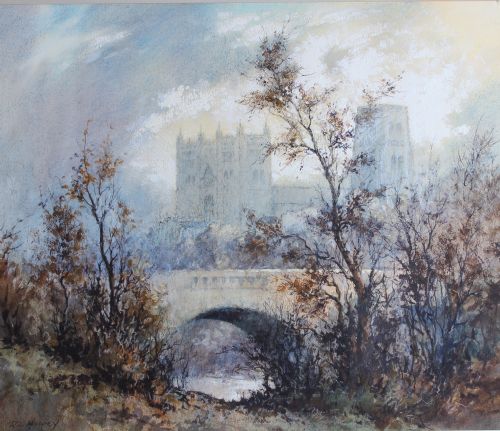


Sepia Watercolour Artwork
These sepia watercolour artwork pieces bring muted tones and historic character to a room, offering genuine works on paper from past centuries.
Sepia Watercolour Artwork
Sepia watercolour artwork comprises paintings, sketches, and drawings created primarily in monochrome brown tones using watercolour pigment and ink on paper. These pieces span from the Georgian and 18th century through the Victorian, Edwardian, and early 20th century periods up to the 1940s.
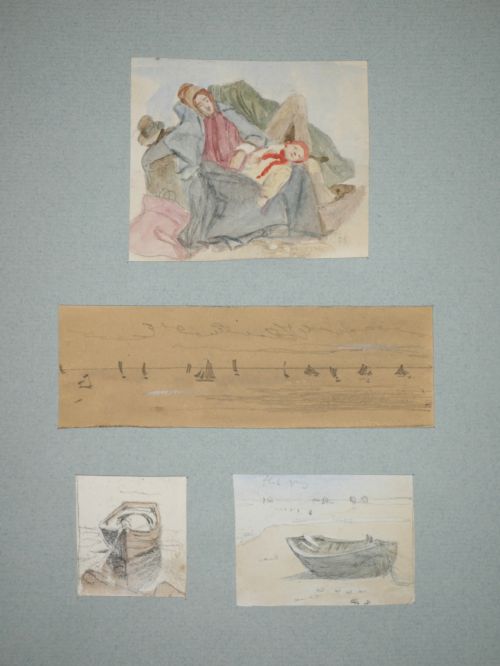
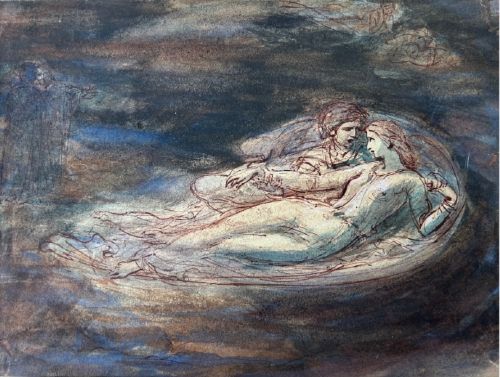
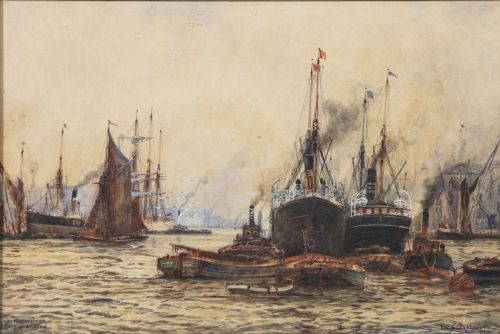
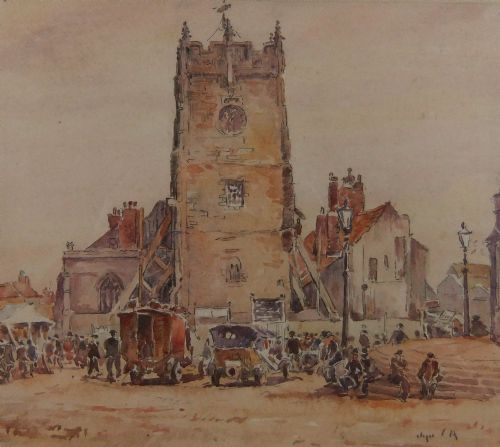
The works on this page most commonly appear as framed maritime scenes, architectural views, and British landscapes created by named artists and anonymous hands alike. Buyers encounter coastal views, townscapes, and intimate portraits executed on paper and housed behind glass.
Subjects range from bustling London ports and Yorkshire harbours to continental buildings and military scenes. The selection preserves works of varied scale, from small sketchbook studies to large framed paintings.
Materials and technique
Artists created these works using watercolour pigment, wash, and ink applied to paper surfaces, frequently supported by initial pencil or pen underdrawing. Many pieces employ sepia tones derived from cuttlefish ink or natural pigments to build monochrome depth.
Framed presentation often incorporates traditional wood frames and glass protection to preserve the delicate paper beneath. Some items utilise burr wood frames characteristic of their period of origin.
Listings feature watercolours on paper spanning from the 18th century through the 19th century and into the 1940s.
Distinctions in quality
Quality rests upon the confidence of the draughtsmanship and the control of wash within the monochrome palette. Stronger works demonstrate assured handling of light and shadow through subtle tonal gradations.
The significance of the subject matter and the documentation associated with the artist influence the standing of an individual piece. Works displaying clear provenance or attribution to established painters command greater attention from collectors.
Bruce Bairnsfather·James Smetham·Frank William Scarbrough·John Smith Atherton·Robert Leslie Howey·Richard Harry Carter·William Frederick Settle·Charles James Lauder·J F Marie Huet Villiers·Francis Wheatley·J W Hogley·John Augustus Atkinson·George Arthur Fripp·Frederick William Booty·Leslie Rackham·William Wyld·Henry Barlow Carter·Thomas Rowlandson·Hercules Brabazon Brabazon·Samuel Palmer·Pio Panfili·W Tatton Winter·Harold E Frecker·Thomas Clavering Alder·George Graham
The Sepia Watercolour Artwork Glossary
- Wash
- A thin, transparent layer of diluted watercolour pigment applied to paper to create smooth background tones or shadows. This technique requires swift execution to maintain even coverage across the sheet.
- Ink and wash
- A dual medium combining pen and ink line work with monochromatic watercolour washes. Artists used this method to establish sharp outlines before softening forms with sepia pigment.
- Works on paper
- A collective term encompassing watercolours, drawings, sketches, and prints created on paper supports. These items typically require framing under glass for protection against light and moisture.
- Gouache
- An opaque watercolour paint containing added white pigment to create a heavier, denser finish. It appears alongside traditional transparent watercolour in select 19th-century pieces.
Sepia Watercolour Artwork: Frequently Asked Questions
How should I display sepia watercolour artwork?
Keep works on paper away from direct sunlight to prevent the sepia pigments and paper supports from fading over time. Hang them in rooms with stable humidity levels to protect the historic materials behind the glass.
Ensure the frame remains securely sealed against dust and insects while allowing the paper to breathe. Professional framing with acid-free mounts preserves the longevity of antique watercolours.
What is the difference between a sketch and a finished watercolour?
Sketches generally serve as preliminary studies made quickly on the spot, capturing rapid observations in pen, pencil, and light wash. They often display visible underdrawing and energetic brushwork.
Finished watercolours receive more detailed application of pigment and tonal layers intended for public exhibition or sale. These pieces present a complete composition with resolved perspective and refined surface textures.
How do I identify the period of a watercolour?
Examine the framing materials, paper watermarks, and clothing styles or architecture depicted within the scene for clues to the date of creation. Signatures, dates inscribed by the artist, and gallery labels on the reverse also provide reliable dating evidence.
Stylistic conventions point toward specific eras, such as the detailed topographical precision of Georgian works or the atmospheric brushwork of Victorian maritime painting. Comparing the handwriting of signatures against historical records confirms authorship.
Were these watercolours intended for framing originally?
Many 18th and 19th-century watercolours began their existence inside bound sketchbooks or portfolios rather than on walls. Artists carried these books on travels to record landscapes and architectural studies during journeys.
Collectors and dealers subsequently framed these individual sheets to display them safely as independent artworks. Surviving sketches often retain edges or binding marks that reveal their sketchbook origins.