


Sepia River Landscape Painting
A sepia river landscape painting captures tranquil waterways in monochromatic brown tones, offering buyers a subtle and atmospheric piece of historic wall art.
Sepia River Landscape Painting
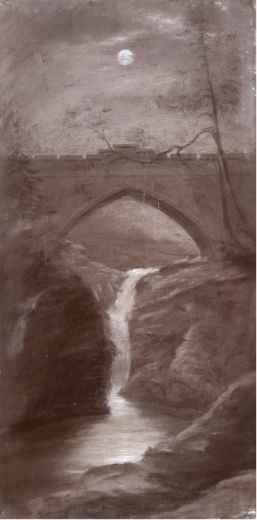
A sepia river landscape painting focuses on waterways, bridges, and maritime scenes rendered through monochrome brown pigments. These works appear across the nineteenth century, including Georgian and Victorian periods, often framed behind glass on paper or canvas.
The selection ranges from early nineteenth-century watercolours and ink studies to mid-twentieth-century marine paintings. Buyers encounter regional British views, from Scottish highlands and Yorkshire rivers to London river pools.
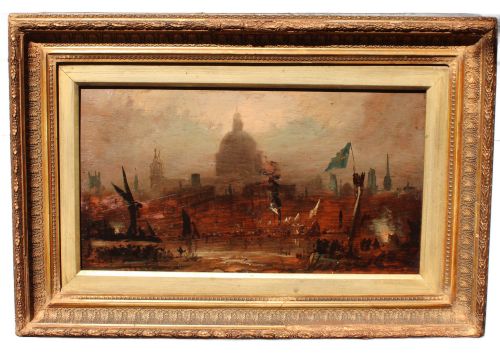
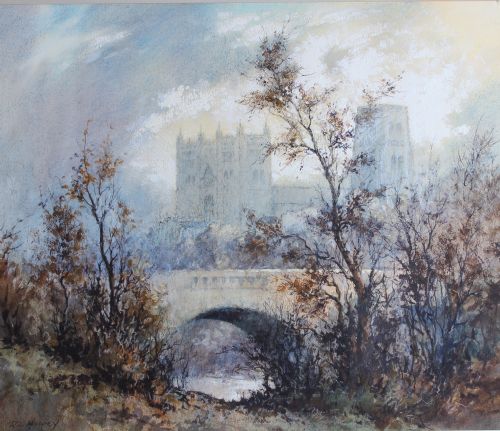
Many compositions depict specific locations such as the Thames, the river Tweed, or Durham Cathedral. Artists utilise watercolour, gouache, charcoal, and oil to build depth within restrained tonal palettes.
Materials and technique
Artists apply watercolour pigment, ink, and gouache onto paper or canvas surfaces. Many works incorporate wood frames and glass protection to preserve the delicate pigment layers.
Makers handle tone through washes and line work rather than full colour, relying on the natural grain of the paper or canvas texture. Selected highlights occasionally utilise gold leaf or contrasting charcoal strokes.
Several river views capture bustling nineteenth-century timber staithes and mayoral processions on the water.
Factors of quality
Quality rests upon the sensitivity of the tonal gradation and the precision of the topographical detail. Master hands achieve atmospheric depth and spatial clarity using a limited monochrome palette.
The integrity of the original paper or canvas and the preservation of the pigment under glass determine the overall merit of the piece. Stronger works display confident brushwork and secure attribution to known nineteenth-century schools or artists.
Robert Leslie Howey·George Arthur Fripp·Leslie Rackham·William Wyld·Henry Barlow Carter·Samuel Palmer·Amos Green·Frank W. Scarborough·Thomas Lound·Julius Caeser Ibbetson
The Sepia River Landscape Painting Glossary
- Sepia
- A brown pigment derived from the ink sac of the cuttlefish, widely used for monochromatic drawings and paintings. It provides the characteristic warm tonal range seen in these historic landscapes.
- Watercolour
- A painting method where the pigments are suspended in a water-based solution, typically applied to paper. It allows for transparent washes that build subtle atmospheric effects.
- Gouche
- An opaque water-based paint that provides solid areas of colour and sharp highlights alongside transparent watercolours. It adds body to details within river scenes.
- Maritime
- Pertaining to the sea, ships, and river navigation. These scenes often record historical shipping activity along major waterways and tidal pools.
Sepia River Landscape Painting: Frequently Asked Questions
What periods do these paintings come from?
The works span from the Georgian era through the nineteenth century into the mid-twentieth century. Most examples date from the Victorian period and the early eighteen-hundreds.
Specific dates and attributions appear across various watercolours, drawings, and oil paintings from British school traditions.
How should I frame and hang them?
Works on paper require wooden frames with glass protection to guard against moisture and light damage. Keeping them away from direct sunlight preserves the sepia tones.
Matching the period of the frame to the nineteenth-century origin enhances the historical character of the wall art.
Are these works signed by artists?
Some paintings bear signatures or attribution notes linking them to named painters, while others remain unsigned period studies. Both signed and unsigned watercolours reflect the broader British school landscape tradition.
Documentation on the mount or reverse often records the specific river location and historical context.
What subjects do the river scenes show?
The compositions feature British rivers, marine pools, abbeys, and industrial waterways such as the Thames and the river Medway. Scenes range from quiet Scottish highlands to busy urban processions.
Artists frequently recorded recognisable historical landmarks and local trade activities along the banks.