
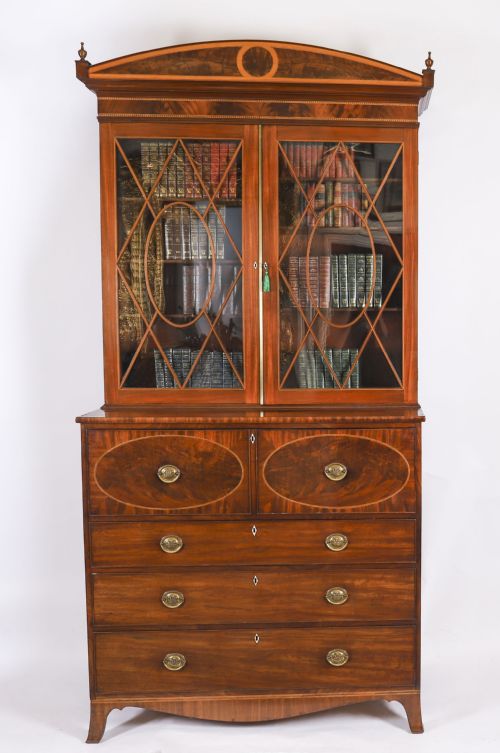
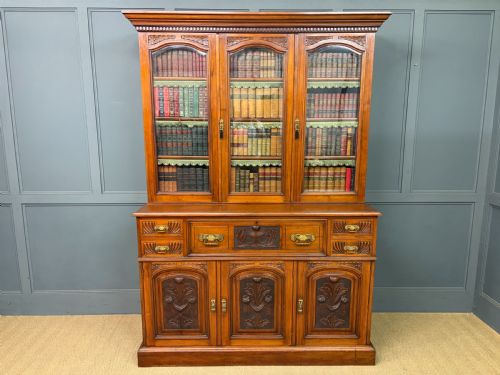
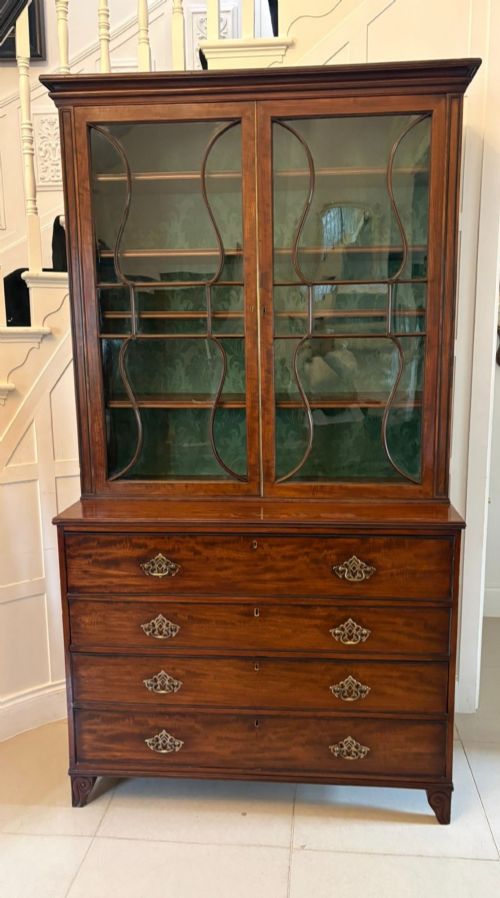
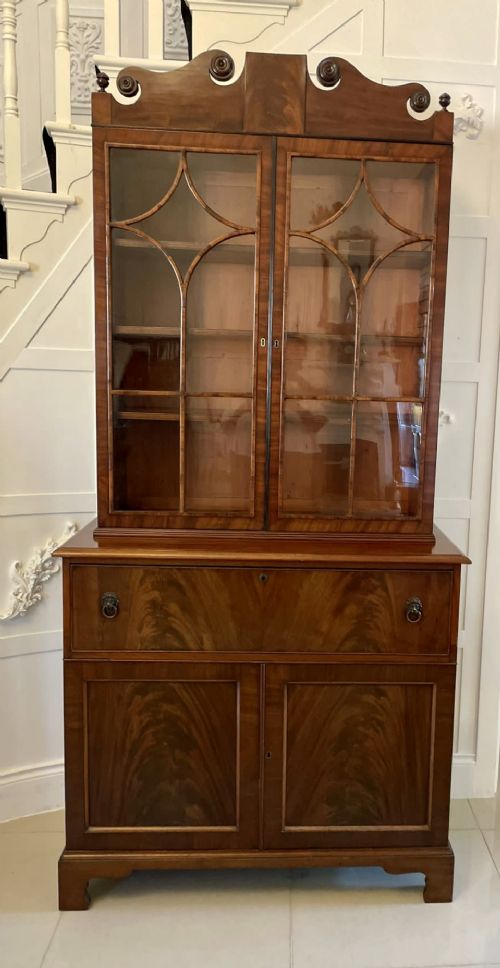
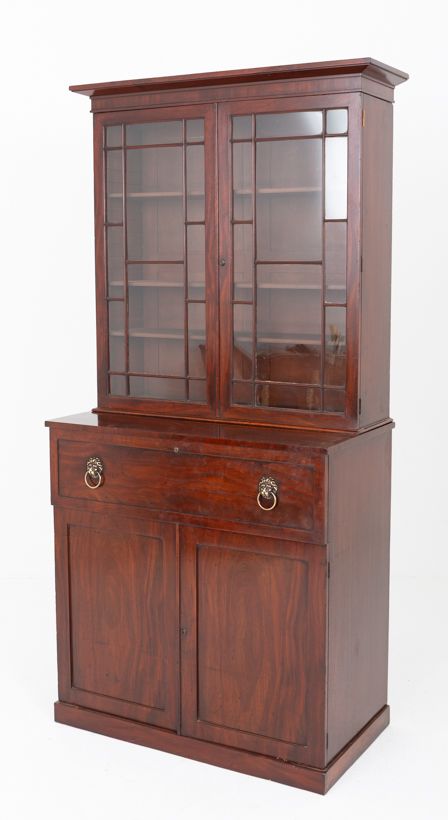
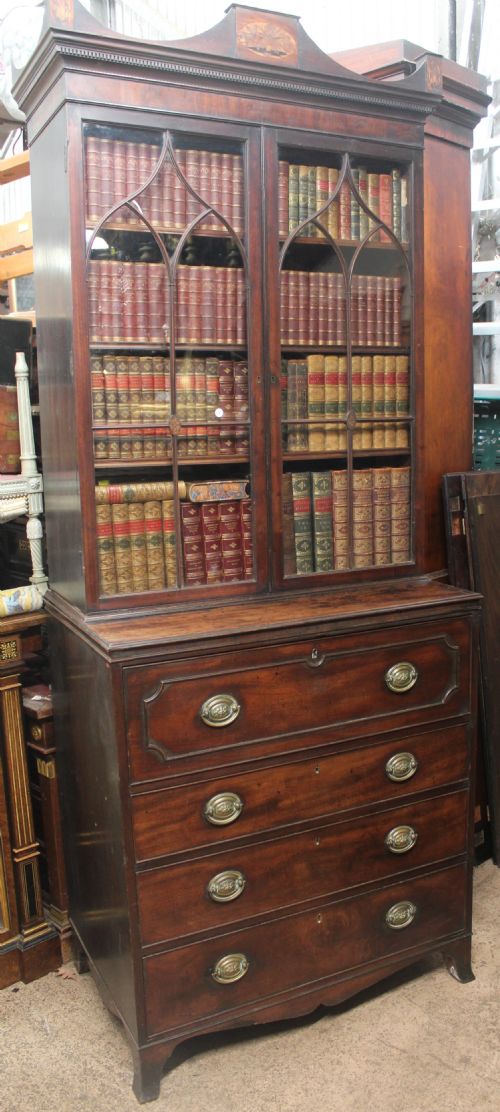
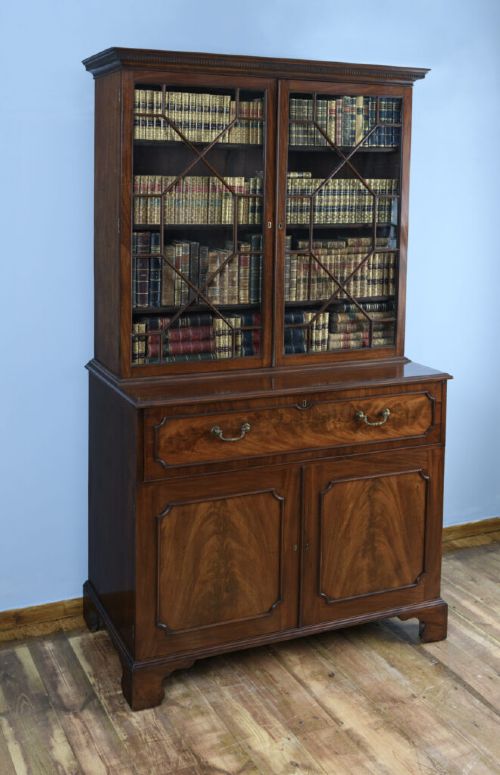
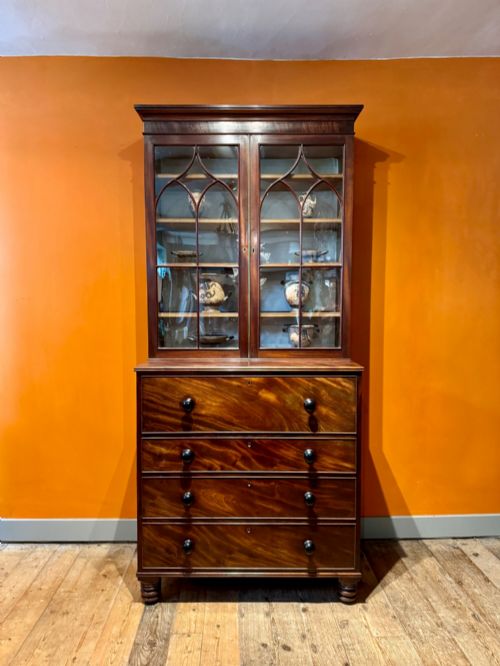
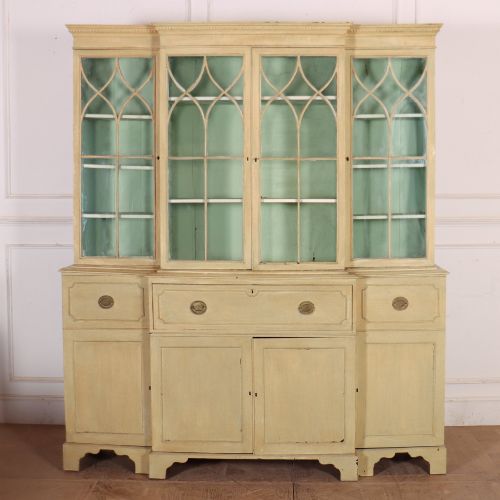
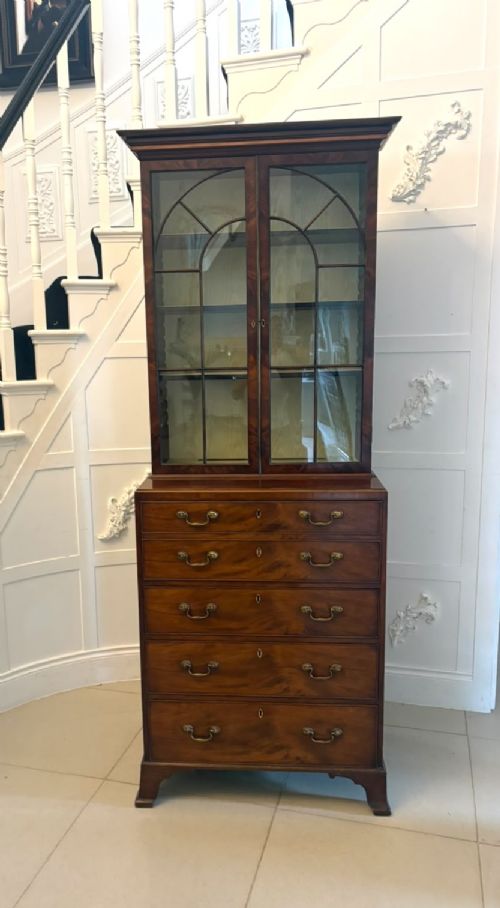


Secretaire Display Cabinet
These secretaire display cabinet pieces combine a working writing desk with a glazed bookcase, offering practical storage and display for the home.
Secretaire Display Cabinet
When you search for a secretaire display cabinet, you encounter versatile hybrid furniture designed for both study and display purposes. The form typically pairs an upper section of glass doors with a lower drop-front writing drawer containing fitted compartments.
Most examples span the Georgian, Regency, and Victorian eras, alongside Edwardian interpretations. You meet grand breakfront bookcase variations alongside compact walnut or mahogany writing cabinets.
The objects serve as libraries, display cases, and writing desks combined into single architectural units. Their interior fittings often include small drawers, pigeonholes, and central writing surfaces.
How they were made
Cabinet makers utilised dense hardwoods like mahogany, walnut, and satinwood, frequently selecting figured flame mahogany or burr walnut veneers for visual depth. Inlaid decoration utilised contrasting woods, while brass hardware secured doors and fitted drawers.
Glazing bars divided upper glass doors into geometric or astragal patterns to frame the contents. Structural stability relied on traditional joinery, housing fitted interior writing compartments behind the drop-front secretaire drawer.
A secretaire drawer conceals miniature secret compartments behind tiny dummy book spines.
What varies in quality
The refinement of cabinet work distinguishes standard utilitarian pieces from exceptional examples. Cabinet makers achieved superior status through balanced proportions, intricate marquetry inlay, and carefully chosen timber veneers.
Interior complexity dictates standing within the range. Fitted writing sections with secret compartments, finely turned small drawers, and precise astragal glazing demonstrate higher craftsmanship than plain interiors.
Gillows·Maple and Co.
The Secretaire Display Cabinet Glossary
- Secretaire
- A writing cabinet containing a drop-front drawer that conceals small drawers and pigeonholes. It folds down to form a desk surface.
- Astragal
- A moulding profile used to divide glass panes within cabinet doors. These thin wooden bars create distinct geometric patterns across the bookcase front.
- Flame Mahogany
- Timber cut from the fork of the mahogany tree to produce a flickering, flame-like grain pattern. Cabinet makers used veneers of this wood on prominent drawer fronts and doors.
- Burr Walnut
- Wood harvested from walnut tree growths that yield highly swirled, knotted grain patterns. It provides rich visual texture on Victorian cabinet surfaces.
- Breakfront
- A large cabinet design where the central section projects forward from the flanking wings. This architectural form adds depth and presence to bookcases.
Secretaire Display Cabinet: Frequently Asked Questions
What is a secretaire display cabinet?
A secretaire display cabinet is a dual-purpose piece of furniture combining an upper glazed bookcase with a lower drawer that pulls down to form a writing desk. These hybrids allow owners to exhibit books or collections while maintaining a private writing space.
Cabinet makers produced them extensively through the Georgian, Regency, and Victorian periods using timbers like mahogany, walnut, and satinwood. The interior typically contains small drawers and pigeonholes hidden behind the drop front.
How do I use one at home?
These cabinets function well in studies, libraries, or living rooms where vertical storage and display space prove useful. The glass-fronted upper section protects books and decorative objects from dust while keeping them visible.
The pull-down writing drawer offers a compact surface for correspondence or laptop use. Closing the drop front conceals papers and writing equipment instantly.
How can I tell different periods apart?
Georgian and Regency examples tend to feature straight lines, mahogany or satinwood veneers, and precise geometric glazing bars. Cabinet work from these eras often incorporates subtle stringing and classical proportions.
Victorian and later pieces frequently display bolder carving, darker walnut timbers, or ornate marquetry. Gothic Revival influences and heavier proportions also signal the later nineteenth century.
What woods were used?
Mahogany served as the primary timber across the eighteenth and nineteenth centuries, often selected in figured or flame varieties for decorative effect. Walnut and burr walnut gained popularity during the Victorian era.
Secondary woods like oak appeared in interior construction, while satinwood provided bright contrast for inlaid details. Edwardian pieces occasionally utilised oak or maple alongside traditional veneers.