
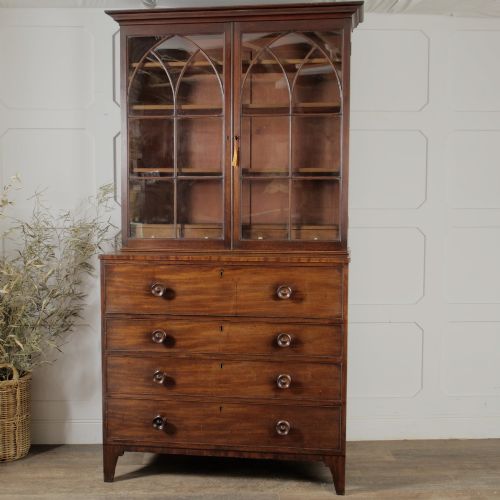
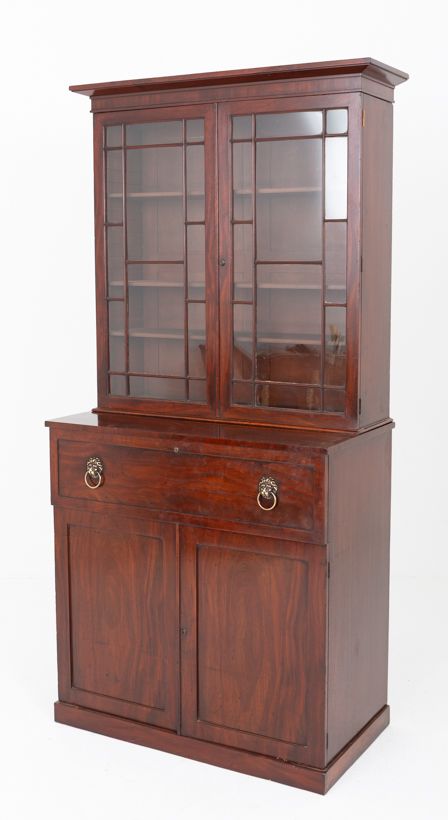
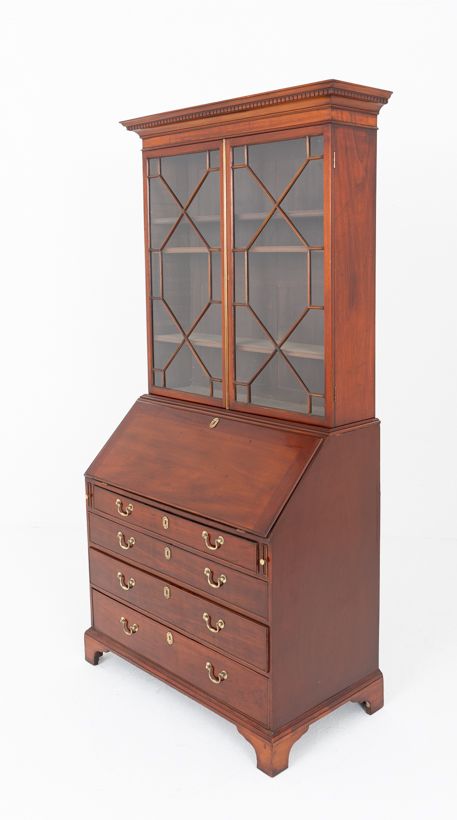
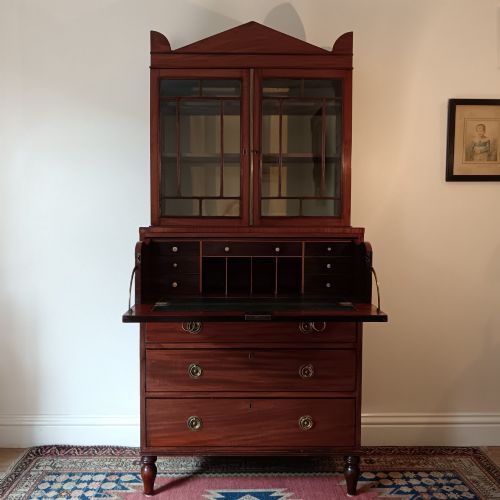
Secretaire Bookcase Desk
A secretaire bookcase desk combines a working writing drawer with upper display shelving, offering a practical library and desk combination for the home.
Secretaire Bookcase Desk
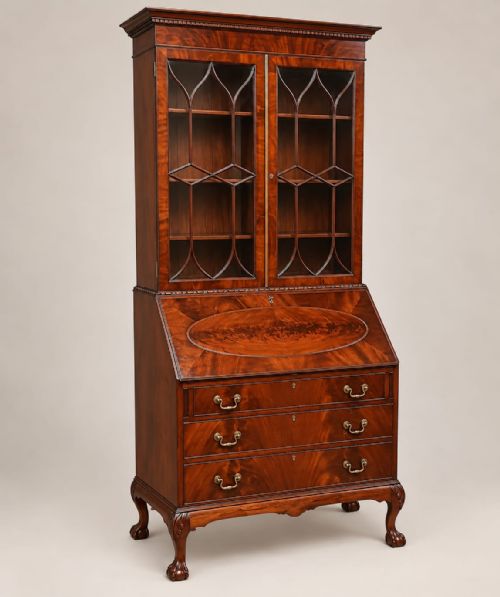
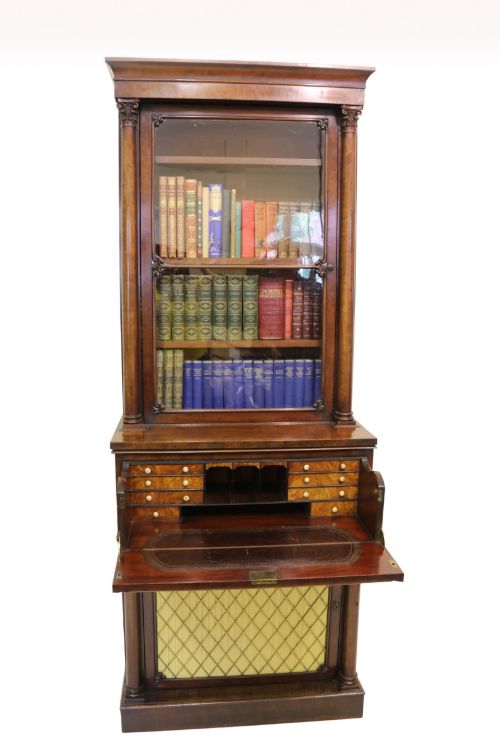
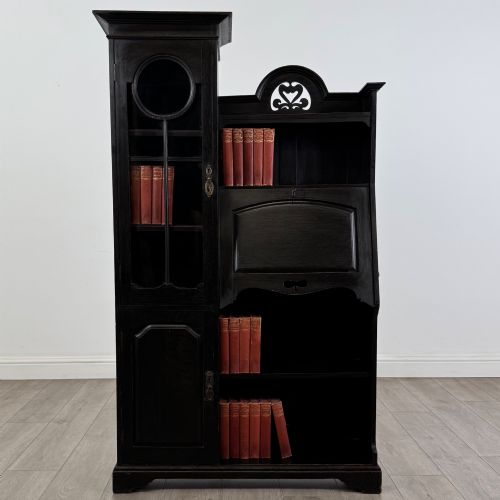
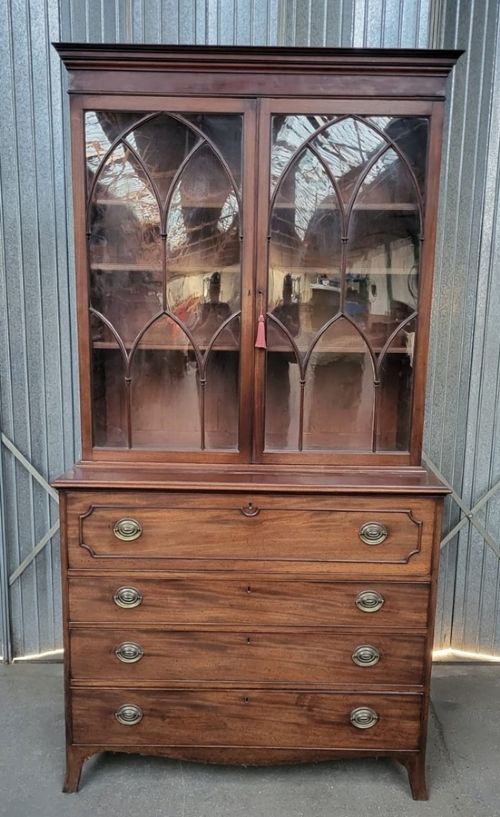
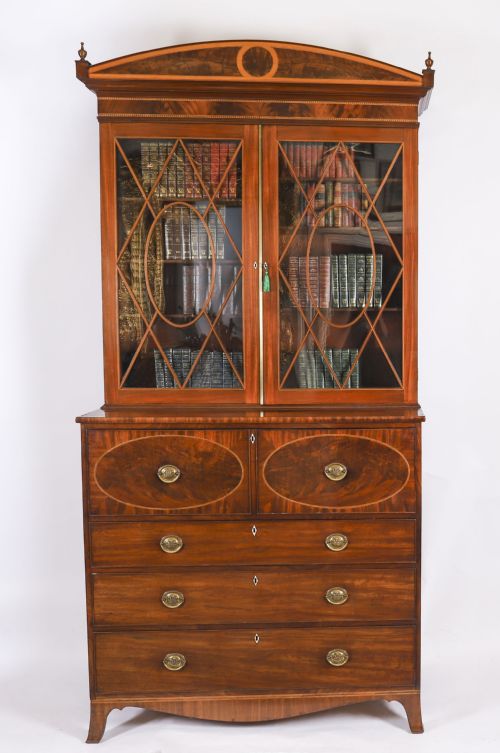
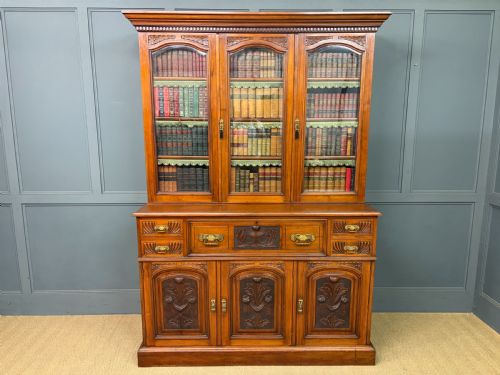
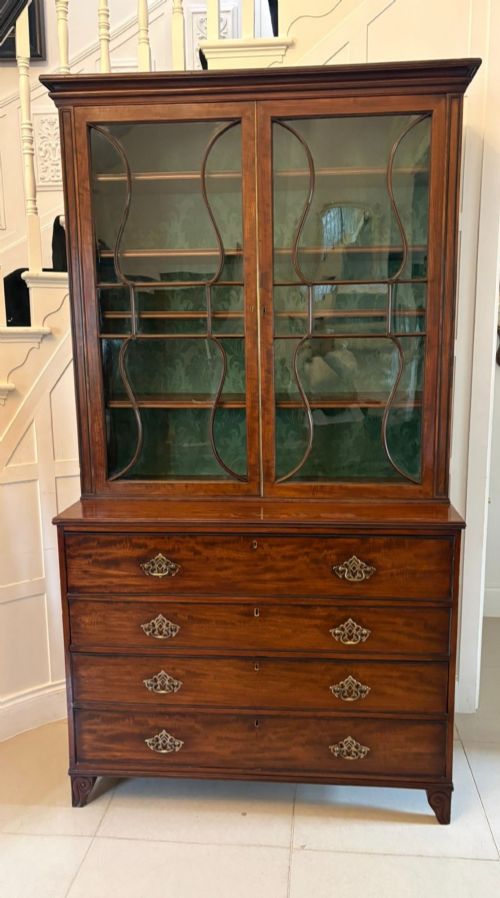
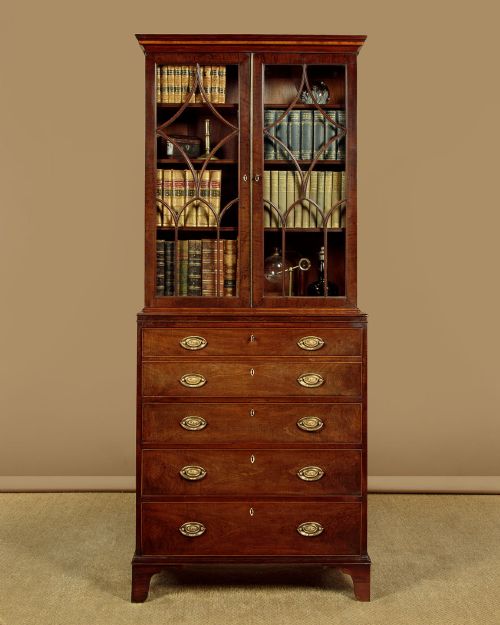
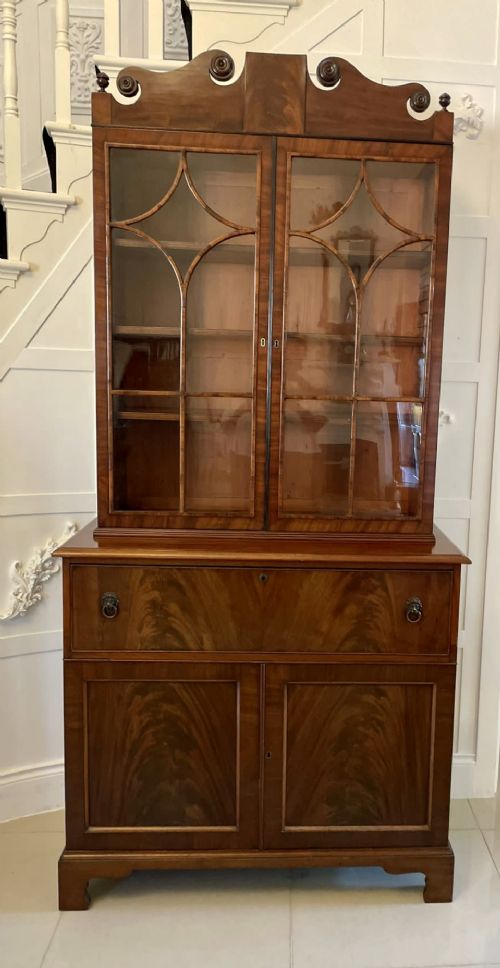
When you search for a secretaire bookcase desk, you encounter tall hybrid furniture designed to house books above while providing a fall-front or drawer-front writing surface below. These dual-purpose pieces span the Georgian, Regency, and Victorian periods, reflecting shifting domestic needs for storage and correspondence.
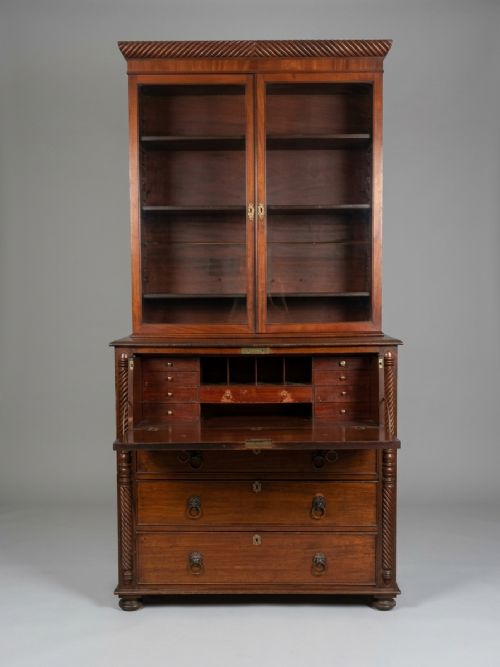
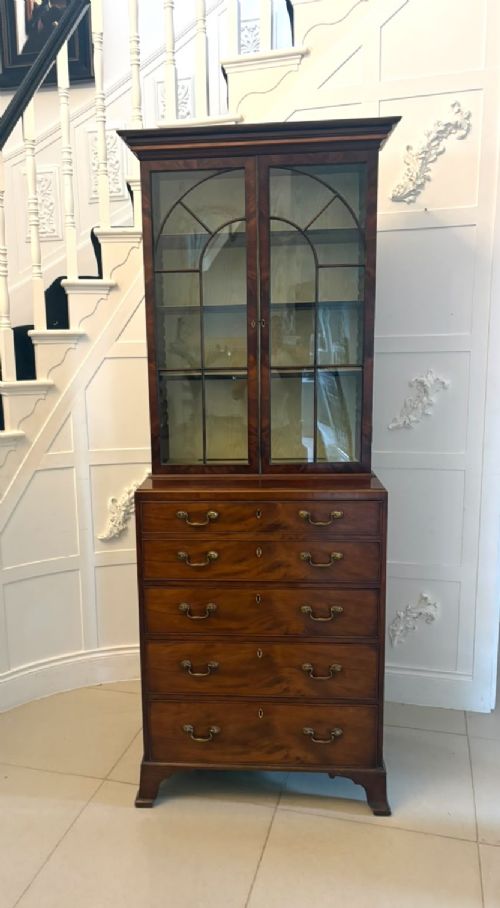
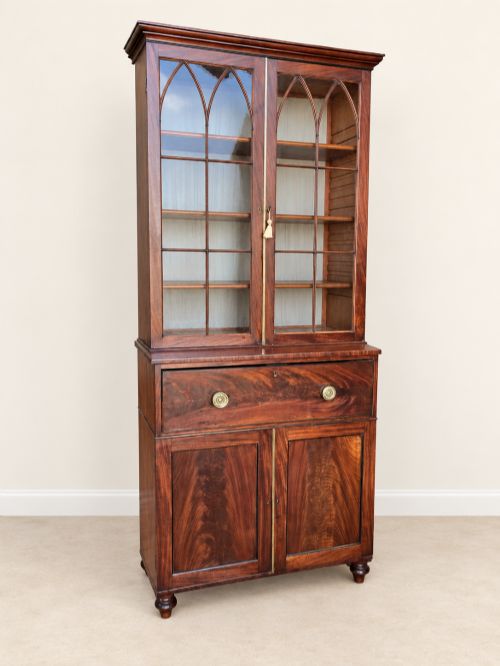
Mahogany remains the dominant wood found across these items, often selected in figured or flame varieties, alongside walnut, satinwood, and oak. You will frequently find glazed upper doors protecting shelving, paired with fitted internal compartments containing small drawers and pigeon holes within the writing section.
Materials and Construction
Cabinet makers utilised dense hardwoods like mahogany and walnut as foundational timbers, frequently applying decorative veneers such as flame mahogany or burr walnut to visible surfaces. Brass hardware appears on handles, escutcheons, and occasional panel accents, while glass is fitted into the upper bookcase doors.
Internal engineering focuses on the drop-down writing drawer, which relies on quadrant hinges, sliding supports, or desk arms to bear weight safely. Joinery incorporates hand-cut dovetails within the numerous small drawers hidden behind the main writing flap.
Listings span the eighteenth, nineteenth, and early twentieth centuries, featuring Georgian, Regency, and Victorian eras built primarily in mahogany, walnut, and oak.
Judging Quality
The standard of timber selection heavily influences the worth of a piece, separating plain boards from richly figured flame mahogany or burr walnut veneers. The complexity of the internal fittings, including secret compartments and finely turned small drawers, distinguishes standard cabinet work from superior examples.
Proportion and glazing bar design in the upper doors dictate visual elegance, where slender wooden astragals show greater craftsmanship than heavy frames. Signed pieces or those carrying attribution to known workshops demonstrate a higher level of historical execution.
George Oakley·Gillows·Maple and Co·Hobbs and Co
The Secretaire Bookcase Desk Glossary
- Secretaire
- A writing drawer or compartment featuring a drop-front panel that conceals small drawers and pigeon holes. It transforms a standard chest or bookcase into a compact desk.
- Astragal
- Moulding strips used to divide panes of glass in glazed cabinet doors. Slender astragals require precise carpentry.
- Flame mahogany
- A distinctive wood veneer grain pattern resembling flickering flames. It is achieved by cutting through branches or boughs at specific angles.
- Fitted interior
- The arrangement of miniature drawers, central cupboards, and pigeon holes housed inside the writing section. These compartments often include hidden document wells.
Secretaire Bookcase Desk: Frequently Asked Questions
How do I use the writing desk?
The main writing surface pulls or drops forward on hinges to reveal a fitted interior of small drawers and pigeon holes. Internal supports or lid arms sustain the weight while you write.
After use, papers are stored inside the compartment and the front flap closes upward, concealing your work and restoring the neat exterior of a standard cabinet.
Where were these cabinets placed?
These tall pieces typically stood in libraries, studies, or withdrawing rooms where books and writing materials were kept close at hand. Their vertical proportions made efficient use of floor space while holding significant volumes.
Because they combined a bookcase and a desk into a single footprint, they suited rooms where separate furniture items would overcrowd the floor.
How do I distinguish Georgian from Victorian pieces?
Georgian examples usually display restrained classical proportions, astragal glazed doors, and understated bracket feet or plinths. Timbers lean heavily toward figured mahogany and satinwood with subtle stringing.
Victorian pieces often introduce heavier carvings, darker walnut timbers, and more robust plinth bases or turned feet. Interior fittings may also incorporate mid-nineteenth-century lock mechanisms and construction techniques.
What is inside the writing drawer?
Behind the drop-front panel lies an array of miniature drawers arranged around a central open space or small cupboard. These compartments were designed for storing letters, inkwells, and stationery.
Some interiors feature secret compartments or removable document slides accessed by lifting internal floor boards within the desk section.