

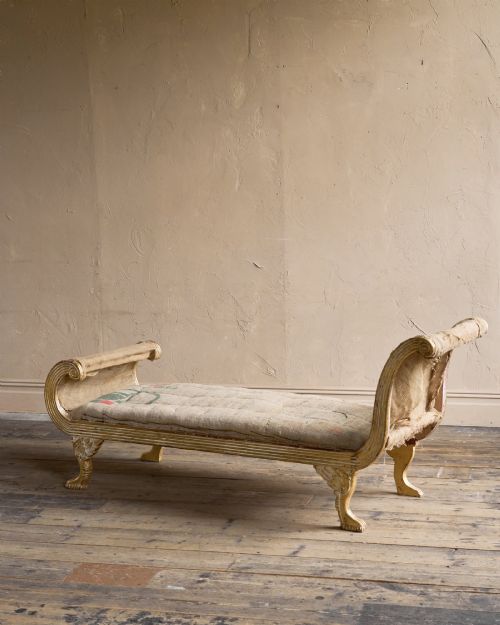
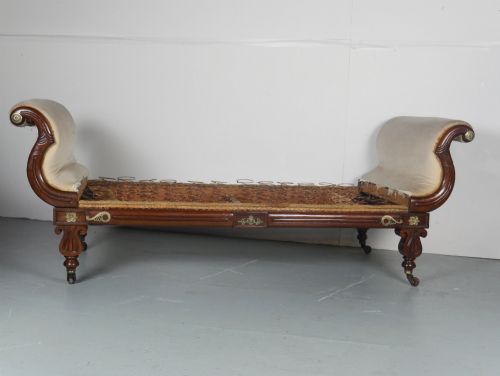
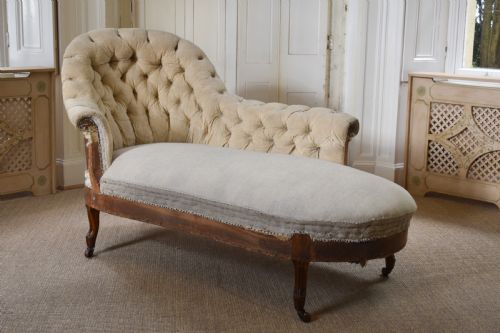
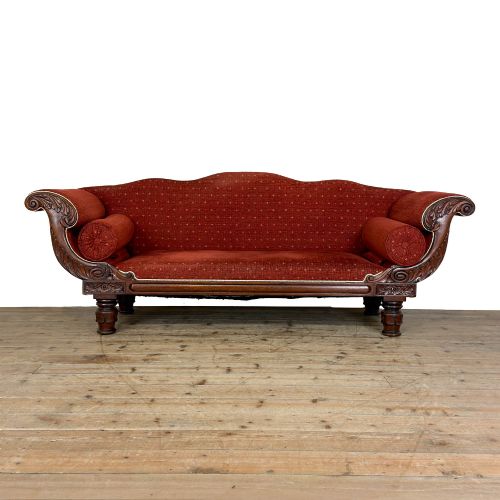
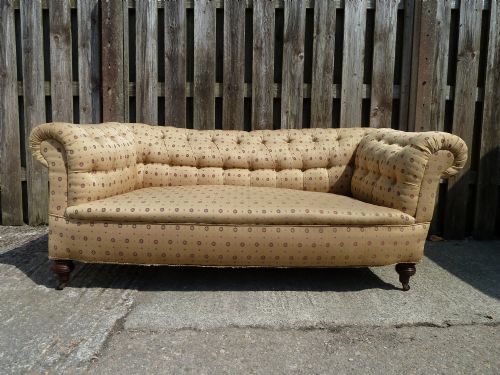
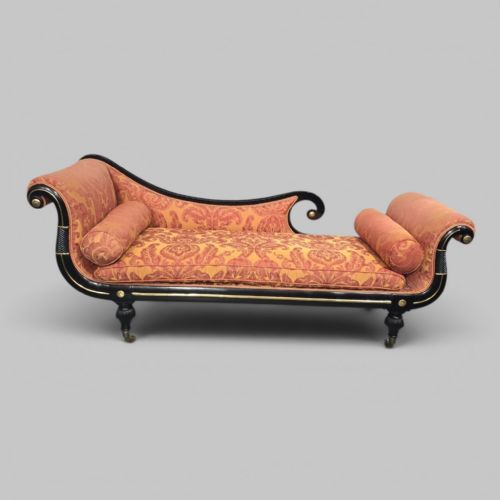

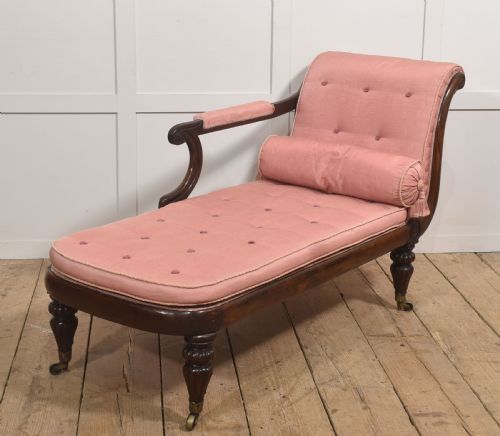
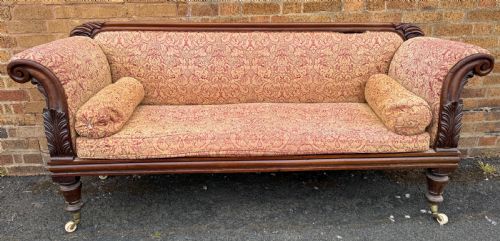

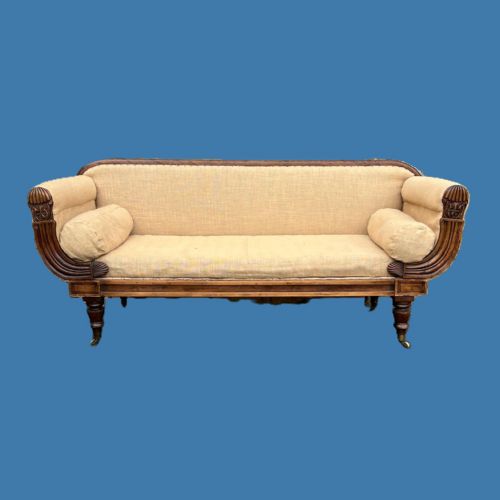

Scrolled Arm Daybed
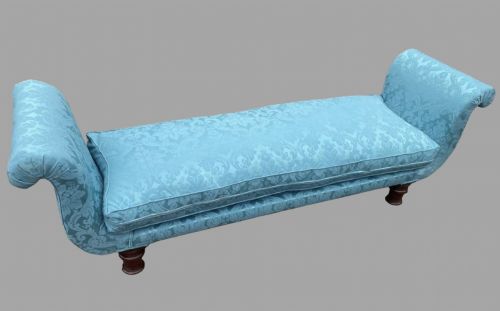
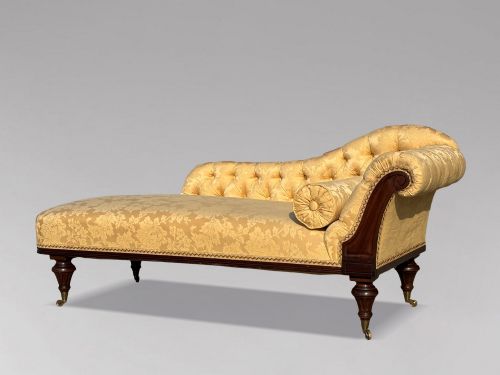
A scrolled arm daybed brings neoclassical drama to a room, offering a sloping rest for daytime reclining.
Scrolled Arm Daybed
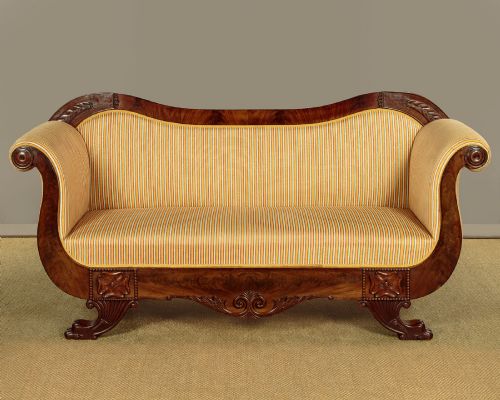
When you search for a scrolled arm daybed, you encounter nineteenth-century seating designed for reclining in the home, spanning the Regency, William IV, and Victorian periods. These pieces take various forms including chaise longues, double-ended sofas, and lit bateaux, rooted in classical French and English furniture traditions.
The version you are most likely to meet on this page is a mahogany or rosewood framed piece from the early to mid nineteenth century, often featuring carved scroll ends. Makers constructed these for principal rooms, combining the supportive back of a sofa with the extended seat of a daybed.
How they were made
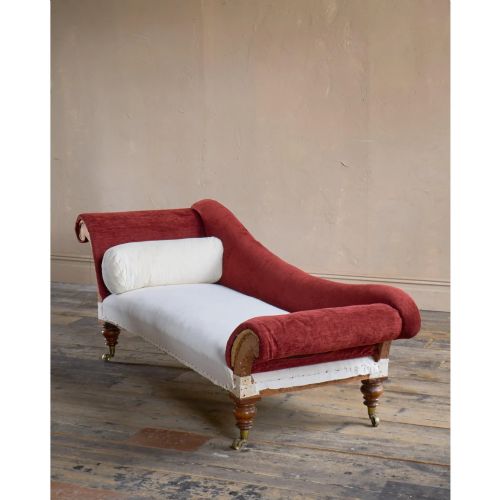
Cabinet makers built the structural frames of these daybeds using dense timbers such as mahogany, rosewood, and ebonised wood, sometimes simulating exotic grains on native hardwoods. They shaped the signature scrolls and carved details directly into the solid wood frames.
Upholstery completed the piece, with craftsmen applying fabric, velvet, and damask over traditional stuffing. Brass accents and detailed frame carving frequently finished the design.
Scrolled Arm Daybed Retail Price Guide 2026
Typical asking prices for scrolled arm daybed among the pieces listed under this phrase on Sellingantiques today, from the lower quarter to the upper quarter. They describe what is for sale here now, not the wider market.
Among full-sized daybeds, this selection includes an ebonised miniature chaise longue built precisely like its larger nineteenth-century counterparts.
What varies in quality
The distinction between ordinary and superior pieces rests on the crispness of the wood carving and the choice of primary timber. Solid rosewood or finely figured mahogany framing with deep, sharp relief carving indicates workshop execution of a higher order.
Proportion and structural line dictate the visual success of the piece, where sweeping scroll arms balance harmoniously with the main seat. Pieces attributed to notable workshops demonstrate a superior flow in the timber grain across curved sections.
Holland and Sons·Gillows·Willian Trotter
The Scrolled Arm Daybed Glossary
- Scroll end
- A sweeping, curved wooden terminal on a sofa or daybed arm that mirrors classical neoclassical motifs. This feature defines the silhouette of Regency and William IV seating.
- Simulated rosewood
- A painted or stained finish applied to a more common timber, such as beech, to imitate the grain and colour of genuine rosewood. Cabinet makers used this technique to achieve a luxury appearance at a lower cost.
- Lit bateau
- A French daybed or bed style with high, equal or curving head and footboards resembling the shape of a boat. These pieces date predominantly to the early nineteenth century.
- Damask fabric
- A reversible, figured fabric traditionally woven on a jacquard loom with patterns formed by contrasting warp and weft threads. It appears frequently on period upholstery.
Scrolled Arm Daybed: Frequently Asked Questions
Where did people place these daybeds?
Nineteenth-century households positioned these pieces in drawing rooms, boudoirs, and grand parlours where family members could rest during the day without retiring to a bedroom.
They served as elegant seating for reading or receiving visitors in private reception rooms.
How do I tell Regency from Victorian pieces?
Regency pieces, dating from the early nineteenth century, typically display clean neoclassical lines, simulated rosewood finishes, and restrained brass inlay or carved scrolls.
Victorian versions, emerging later in the century, often feature heavier rosewood construction, darker ebonised surfaces, and more robust upholstery treatments.
Are these daybeds comfortable for daily use?
These daybeds provide firm support derived from traditional nineteenth-century upholstery techniques, differing significantly from modern deep-cushioned loungers.
They are best suited for upright sitting with light support or brief reclining periods.