




Gilt Window Seat
A gilt window seat brings architectural grace to a bay or hallway, offering a compact perch finished in gleaming gold leaf.
Gilt Window Seat
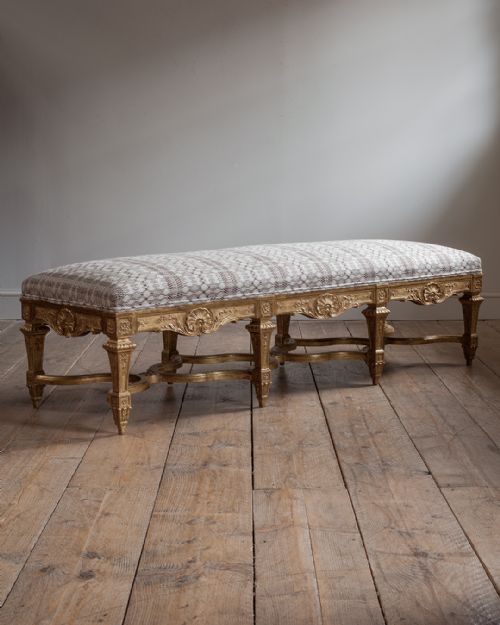
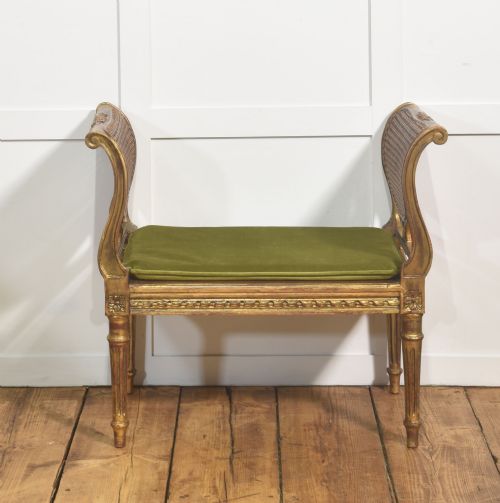
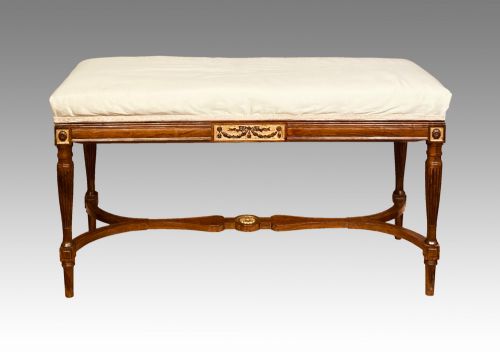
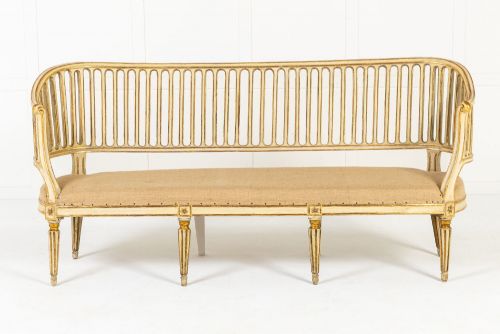
A gilt window seat sits low in a room, designed specifically to fit the shallow depth of a bay or the end of a bed. These seating forms range from compact single stools to longer two-seater settees and curule X-frame designs.
The selections span from the 18th century through the Edwardian period, with the 19th century heavily represented by French and Italian designs. Neoclassical, Regency, and Louis XVI styles dominate the forms, bringing classical symmetry to domestic interiors.
Materials and Construction
Makers shaped these frames primarily from giltwood or painted wood, applying thin sheets of gold leaf over a prepared gesso base. Giltwood frames contrast with parcel-gilt examples where only carved highlights receive the gold treatment against a darker wood or painted ground.
Upholstery methods varied from traditional fabric and velvet textiles to woven cane panels set into the wooden frames. Brass components occasionally reinforce the structural joints of these low seats.
Listings feature gilt window seats spanning from the 18th century through the Edwardian period, constructed in giltwood, painted wood, and cane.
Judging the Workmanship
Quality rests in the crispness of the wood carving and the depth of the gilding applied to the frame. Hand-carved giltwood with intricate neoclassical motifs demonstrates a higher tier of craftsmanship than simpler painted or parcel-gilt alternatives.
The integrity of the underlying frame and the quality of the textile or cane work dictate the overall refinement of the piece. Surviving examples with well-preserved gesso layers hold greater visual cohesion.
Charles Nosotti
The Gilt Window Seat Glossary
- Giltwood
- Wood that has been coated with thin gold leaf. This finish creates a bright metallic surface popular in formal sitting rooms.
- Curule
- An ancient Roman style of X-shaped stool or chair. These seats feature intersecting legs that form a supportive cradle for a cushion.
- Parcel Gilt
- Woodwork that is only partially gilded. This technique leaves areas of natural wood or paint exposed to contrast with the gold sections.
- Gesso
- A plaster mixture applied to wood frames to create a smooth base for gilding. Carvers cut fine details directly into this hardened layer before applying gold leaf.
- Canework
- Woven cane panels used for seats or backs. This technique provides a light, breathable surface on French and Edwardian examples.
Gilt Window Seat: Frequently Asked Questions
Where do you place a window seat?
These low seats suit narrow spaces such as hallways, landings, or the foot of a bedroom bed. Their shallow proportions allow them to sit neatly beneath window frames without blocking natural light.
They also serve as occasional seating in drawing rooms where a full-sized sofa proves too bulky for the layout.
How do I identify a French style?
French pieces often display Louis XVI or Empire characteristics, featuring tapered fluted legs, carved ribbon motifs, and giltwood frames. Upholstery frequently utilises velvet or pastel textiles.
Italian variants tend toward bolder Rococo curves and gesso ornamentation, while English Regency pieces lean into classical restraint with parcel-gilt details.
Are these seats comfortable to sit on?
Most frames were built for formal rooms, offering firm support rather than deep lounging comfort. Many accommodate upholstered pads or cushions covered in velvet or decorative fabric.
Duet stools and wider settees provide ample room for two people despite their compact footprint.
How do I care for giltwood?
Keep gilt surfaces away from direct sunlight and moisture to prevent the gold leaf from tarnishing or flaking. Dust the carved details gently with a dry, soft brush.
Avoid liquid cleaning products, as moisture damages the underlying gesso preparation.