

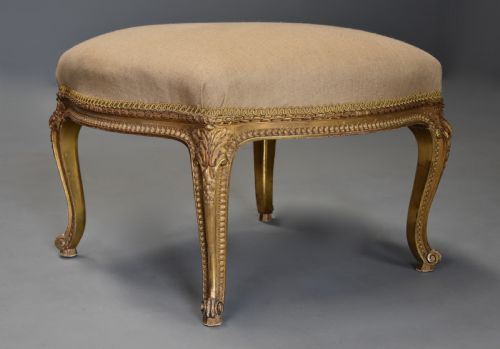


Carved Gilt Stool
A carved gilt stool brings immediate theatrical flair to a room, offering a gilded wooden frame paired with plush upholstery across various historic revivals.
Carved Gilt Stool
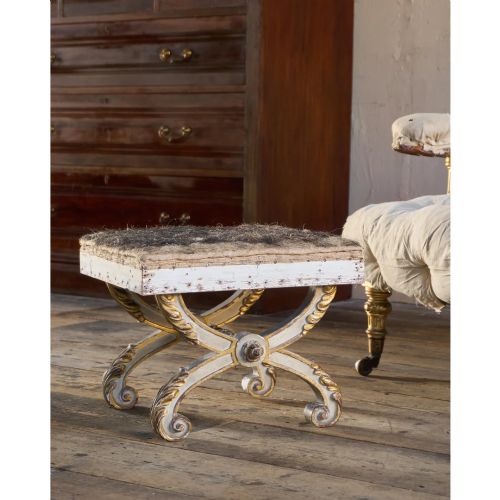
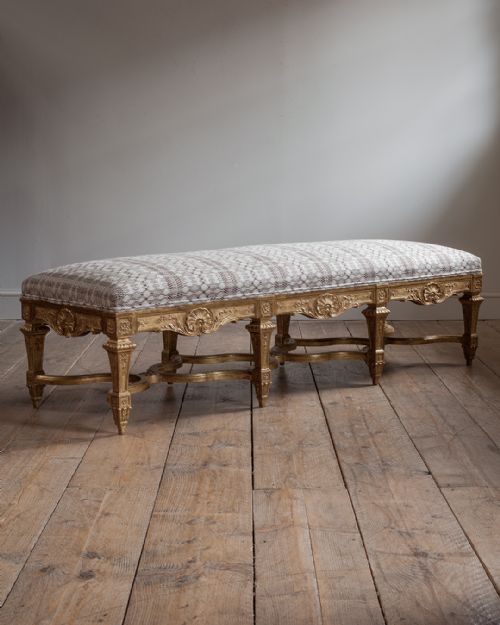
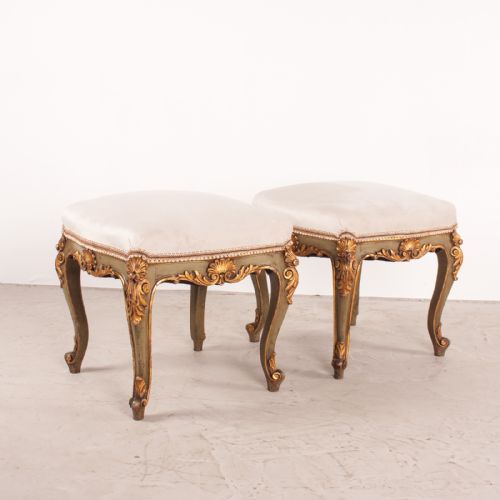
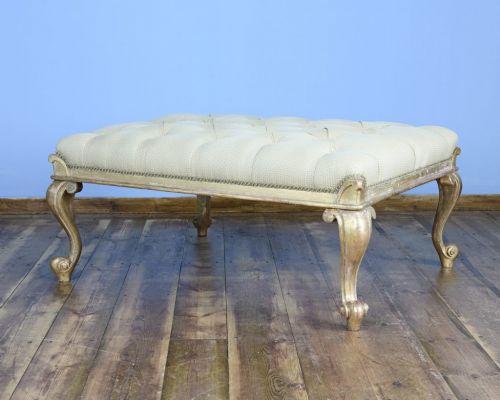
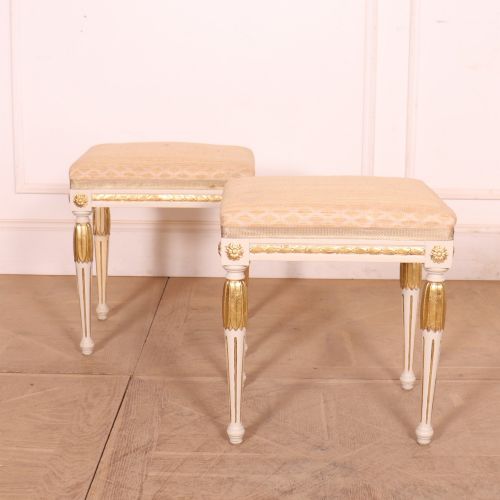
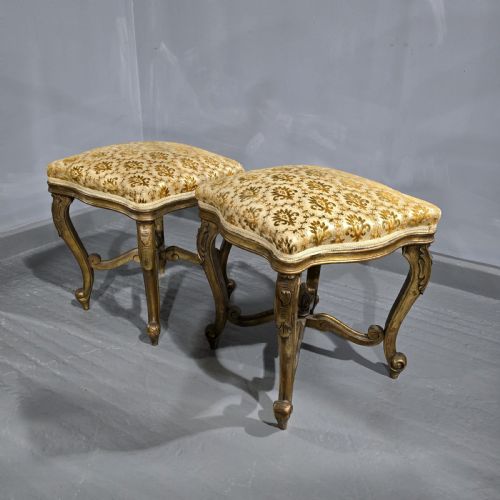
A carved gilt stool spans the nineteenth century and the Georgian era, appearing in forms such as footstools, long benches, window seats, and curule X-frame designs. These pieces frequently emerge in French styles like Louis XV, Louis XVI, and Empire, alongside Gustavian Swedish variants and grand Italian or English country house iterations.
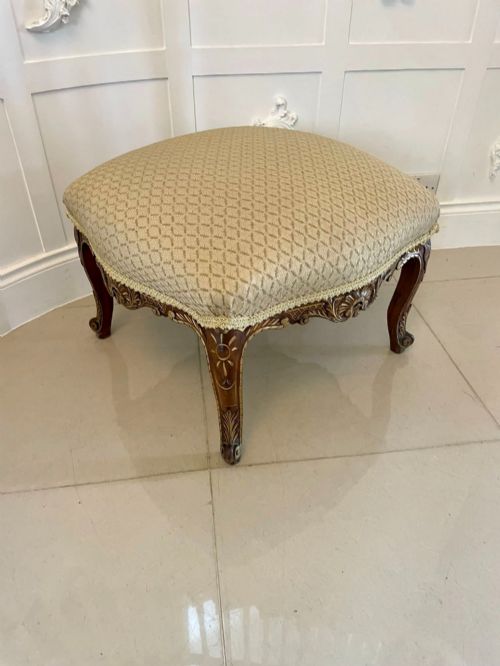
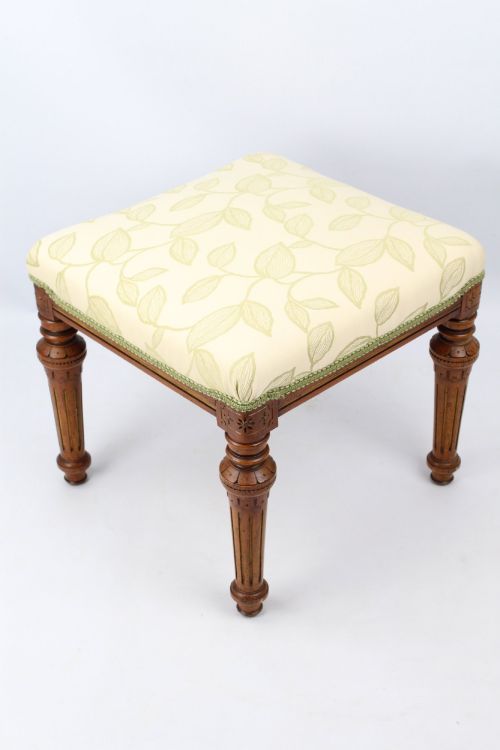
The version most commonly met on this page is the nineteenth-century French or Victorian giltwood stool, often featuring carved wooden frames, cabriole or straight fluted legs, and traditional upholstery.
Makers recorded in the archive and current listings include Miles & Edwards, Loidrault Freres Paris, A.M.E. Fournier, and John Tesch, marking the transition from intimate dressing room seating to grand salon furnishings.
Materials and construction
These items rely on timber frames shaped by carving and joinery, utilising woods such as oak, walnut, and general giltwood beneath surface decoration. Craftsmen applied gold leaf or gesso to the carved wooden structures to achieve the characteristic metallic sheen.
Upholstery completed the construction, incorporating traditional textiles like velvet, silk, and general fabric fixed over padding to create comfortable seating surfaces on footstools, ottomans, and duet stools.
Listings feature eighteenth- and nineteenth-century forms including oak, walnut, and giltwood alongside silk, velvet, and painted finishes.
Distinctions in quality
The standard of a carved gilt stool rests upon the crispness and depth of the wood carving, where hand-tooled execution on giltwood or gesso distinguishes bespoke workshop output from simpler production. Maker attribution or stamps from known houses elevate certain pieces through documented provenance.
Quality also appears in the integrity of the gilded surface and the proportion of the frame, from grand scale pieces to smaller dressing table seats.
Miles & Edwards·Loidrault Freres Paris·A.M.E. Fournier·John Tesch
The Carved Gilt Stool Glossary
- Giltwood
- Wood that has been coated with gold leaf or gold paint. This finish creates the bright metallic surface seen across nineteenth-century and revival seating.
- Curule stool
- An ancient Roman shape of X-frame seating adapted in nineteenth-century revival furniture. These pieces often feature crossed structural legs and heavy gilding.
- Gustavian style
- A Swedish interpretation of French neoclassical design characterised by lighter painted or gilded wood and restrained ornamentation. It dominates Scandinavian pieces from the nineteenth century.
- Parcel gilt
- A decorative technique where only specific portions of a wooden object are gilded, leaving the underlying walnut, oak, or painted wood exposed elsewhere.
- Gesso
- A plaster-like mixture applied to wood frames to provide a smooth base for gilding. It allows for intricate, sharp relief carving beneath the gold leaf.
Carved Gilt Stool: Frequently Asked Questions
What is a curule stool?
A curule stool utilises an X-shaped frame derived from classical Roman design, often featuring carved giltwood or gesso details.
These pieces were used as portable seats of authority and later revived during the nineteenth century for formal interiors.
How do I identify a French style stool?
French style stools usually display Louis XV or Louis XVI characteristics, such as cabriole legs, carved floral motifs, and giltwood finishes.
They often appear alongside matching armchairs or as window seats in formal nineteenth-century rooms.
Where were these stools used historically?
These items functioned primarily in formal drawing rooms, dressing rooms, and grand salons as footstools, window seats, or duet benches.
Their decorative gilt surfaces were designed to catch candlelight and reflect the status of the household.
What is Gustavian style?
Gustavian style represents the Swedish adaptation of French neoclassical design, favouring lighter proportions and restrained carved detail.
These pieces typically present painted wood or subtle gilding rather than heavy baroque ornamentation.