


French Piano Stool
A french piano stool brings elegance to any room, offering adjustable seating alongside classic craftsmanship.
French Piano Stool
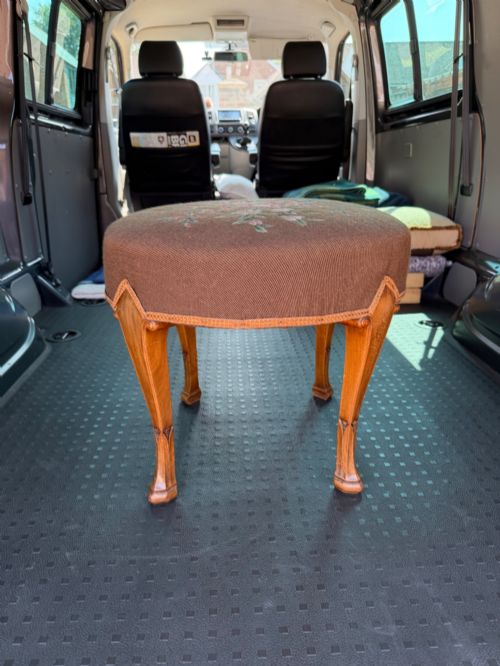
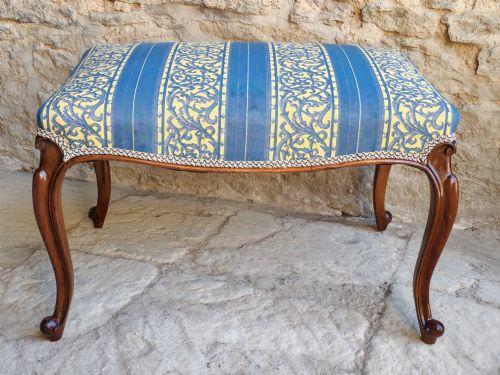
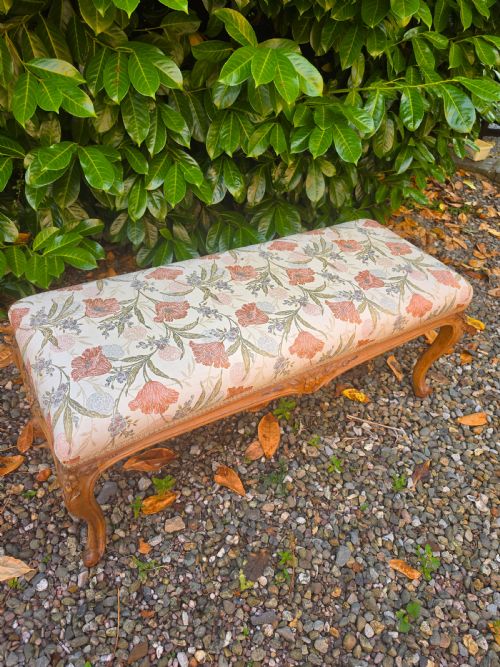
When you search for a french piano stool, you are looking at seating designed for keyboard players, often featuring adjustable mechanisms or swivelling seats. The pieces on this page span the Victorian period, the nineteenth century, and the early twentieth century, taking forms such as duet stools, benches, and circular revolving seats.
The versions you are most likely to meet combine traditional timber frames with upholstered tops. They draw upon styles like Regency, Empire, and Rococo Revival, reflecting French design influences across walnut, mahogany, and giltwood structures.
Makers utilised various configurations, from single seats to longer duet benches. These furnishings served both practical musical purposes and ornamental roles in period drawing rooms.
How they were made
Frames rely on hardwoods such as walnut and mahogany, alongside giltwood and ebonised finishes. Carved cabriole legs and brass mounts appear frequently across the pieces.
Upholstery incorporates fabric, textile, velvet, and leather over padded surfaces. Adjustable screw mechanisms allow the seat height to alter for the player.
Swan neck details on brass mounts give some piano stools a graceful posture that makes you smile.
What varies in quality
The refinement of the carving separates standard joinery from finer examples. Hand-carved details on walnut and mahogany frames show greater sculptural depth.
The complexity of the mechanical parts defines the upper tier. Smooth action in adjustable screw tops and revolving seats marks superior construction.
The French Piano Stool Glossary
- Cabriole leg
- A furniture leg that bends outward and tapers downward to a foot, inspired by animal limbs. This form appears often on Victorian and revival seating.
- Giltwood
- Wood that has been covered with a thin layer of gold leaf or gilt paint. It provides a bright, decorative finish on nineteenth-century frames.
- Duet stool
- A wider seat designed to accommodate two people playing a keyboard together. These longer benches provide extended upholstered surfaces.
- Ormolu
- Cast bronze that has been gilded with gold, used as decorative mounts. It appears on empire-style mahogany pieces.
- Revolving piano stool
- A seat featuring a mechanism that turns in a circle, allowing the player to rotate. Some examples use a central screw to adjust height simultaneously.
French Piano Stool: Frequently Asked Questions
What is a french piano stool?
A french piano stool is a specialised seat designed for musicians, often featuring an adjustable mechanism to alter the height while playing at a keyboard.
These pieces combine decorative woodwork with upholstered tops, drawing on styles from the nineteenth and early twentieth centuries.
How do adjustable screw top stools work?
The revolving seat top is connected to a threaded metal screw shaft housed within the central column. Turning the seat clockwise or anticlockwise raises or lowers the sitting height.
This simple mechanical action allowed nineteenth-century players to find a comfortable posture before the instrument.
Where were these stools used?
They originated in parlours and music rooms alongside upright and grand pianos. Their compact footprint also suited use as window seats or dressing stools.
Today, they function as versatile accent seating in living spaces and hallways.
How do I identify a Victorian piece?
Victorian examples often feature dark hardwoods like walnut and mahogany, combined with turned or cabriole legs. Stylistic revivals such as Rococo and Empire commonly influence the carved details.
Construction methods from this era rely on traditional joinery and heavy timber frames.
What materials are used for upholstery?
Upholstery materials on these seats include velvet, leather, and woven textiles. These fabrics are stretched over padded foundations supported by the wooden frame.
Original coverings are sometimes replaced during restoration to preserve the usable condition of the seat.