
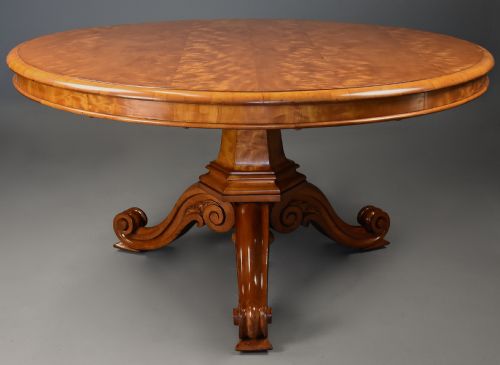
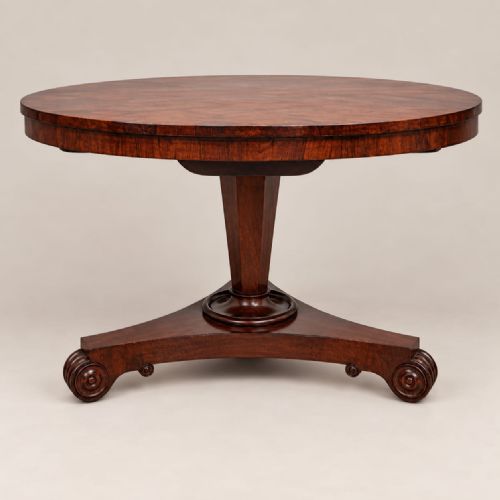
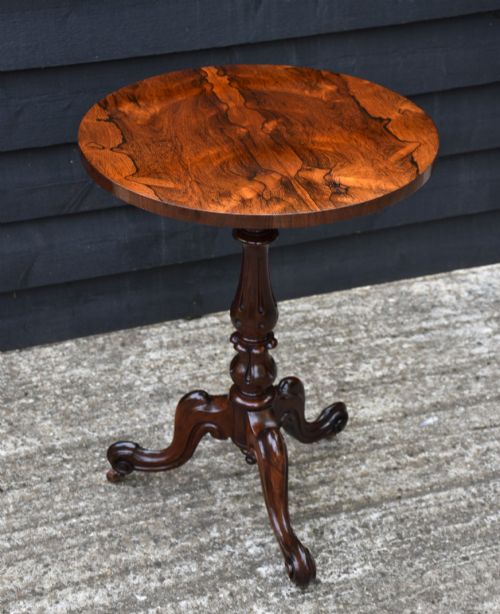
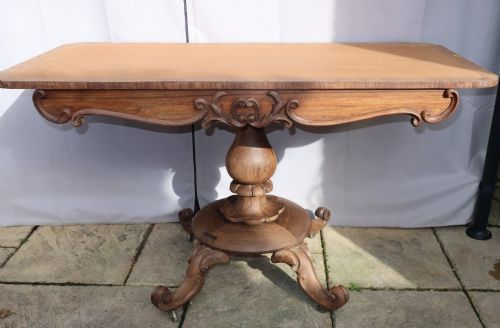

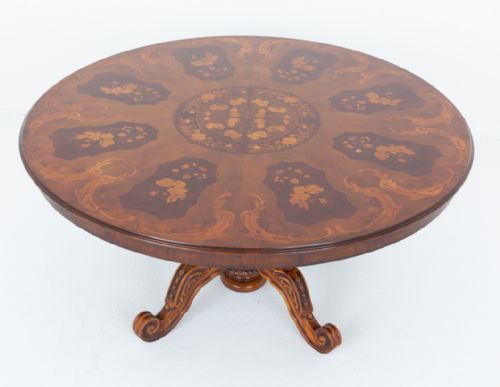


Scroll Foot Pedestal Table
A scroll foot pedestal table provides a sturdy central column grounded by carved feet, commonly discovered in mahogany or rosewood.
Scroll Foot Pedestal Table
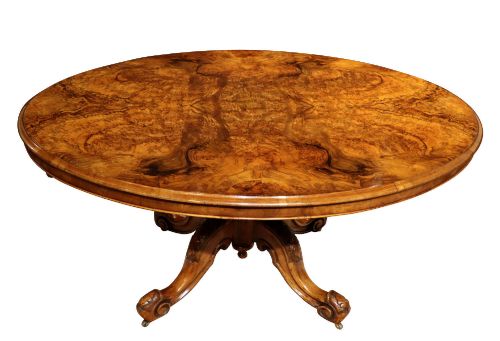
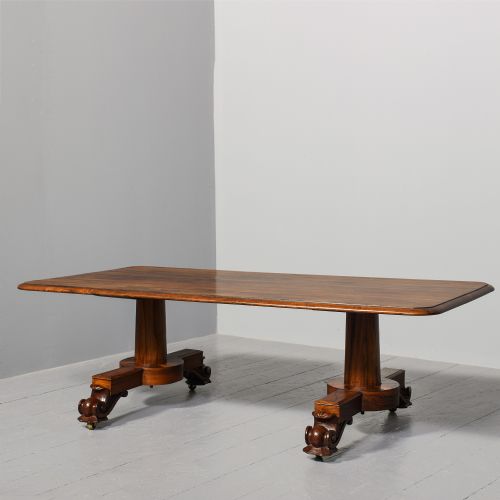
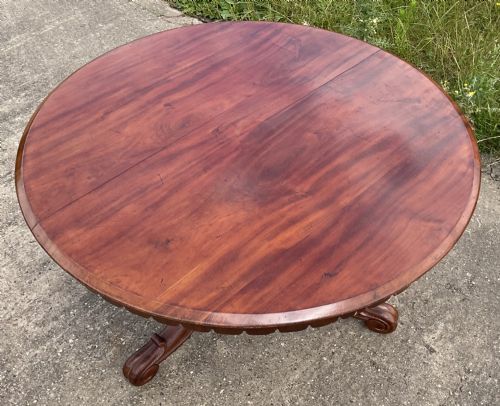
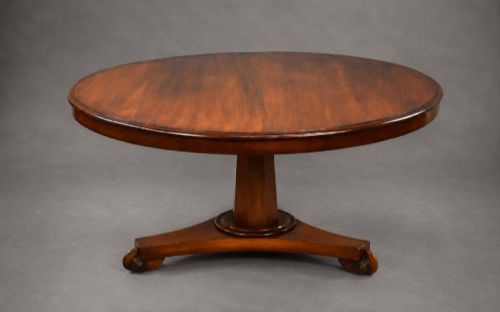
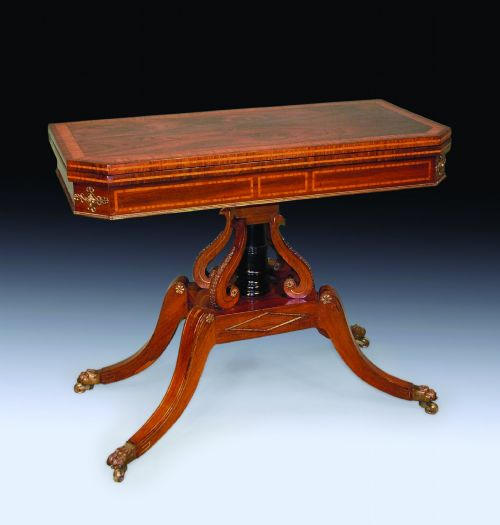
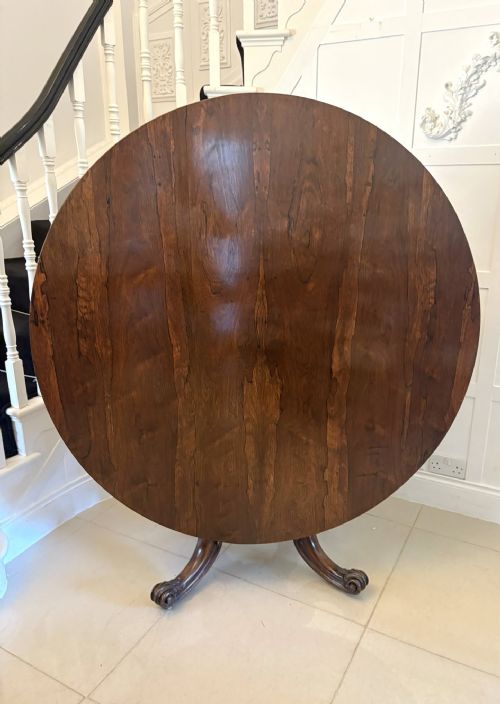
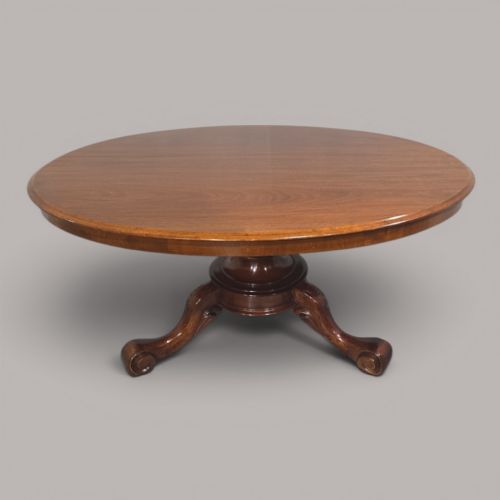
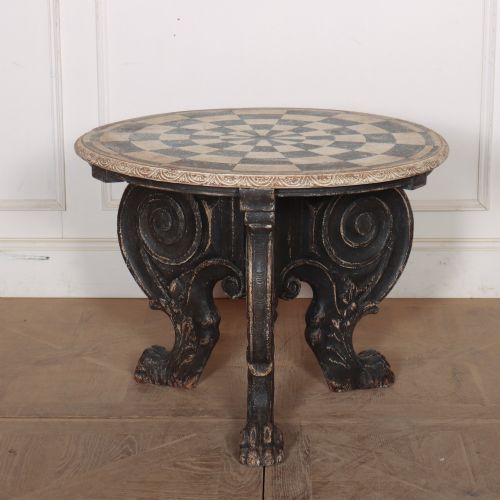
A scroll foot pedestal table is typically encountered as a centre table, dining table, or occasional table dating from the nineteenth century, including Victorian and Regency periods. These pieces stand upon a central pillar supported by distinct scroll feet.
The selection ranges from circular dining tables and breakfast tables to card tables, wine tables, and coffee tables. Mahogany and rosewood are the dominant timbers, accompanied by walnut, burr walnut, and satinwood.
How they were made
Cabinet makers utilised dense hardwoods like mahogany and rosewood, often applying veneers such as burr walnut and satinwood to create patterned surfaces on circular or oval tops. Carved details on the pedestal bases and scroll feet required skilled hand chiselling.
Tilt-top mechanisms and fold-over tops involved precise joinery to ensure stability when the table was in use. Brass castors were frequently fitted beneath the scroll feet for mobility.
Several tables include clever tilt-top mechanisms, built so a dining table could fold flat and hide against the wall like a polite wooden wallflower.
What varies in quality
The depth and crispness of the hand carving on the pedestal base and scroll feet distinguish finer examples from simpler production. Timber selection also matters, particularly the grain figuration in rosewood, burr walnut, and radially veneered surfaces.
Proportion and structural rigidity determine overall merit, ensuring the central pillar and foot arrangement support the top securely without wobble.
The Scroll Foot Pedestal Table Glossary
- Quadrapod base
- A four-way pedestal support resting on feet, commonly seen on larger breakfast and dining tables. This arrangement offers enhanced stability for heavy timber tops.
- Tilt-top mechanism
- A hinge system allowing the table top to pivot into a vertical position when not in use. This clever design saved valuable floor space in nineteenth-century interiors.
- Card table
- A folding table designed for evening games, featuring a baize-lined interior surface. Many examples from the Regency and Victorian periods utilise a central pedestal and scroll feet.
- Veneer
- A thin layer of decorative wood applied to a secondary timber base. Craftsmen utilised burr walnut and satinwood veneers to produce striking grain patterns.
Scroll Foot Pedestal Table: Frequently Asked Questions
What is a scroll foot pedestal table?
It is a freestanding table supported by a central column that terminates in curved scroll feet at the base. These pieces date predominantly from the nineteenth century and encompass various forms like dining, card, and occasional tables.
The design balances a solid timber pillar with decorative carving, often executed in rich woods such as mahogany, rosewood, and walnut.
How were these tables used originally?
They served multiple functions in period interiors, acting as dining surfaces, breakfast tables, or centre tables placed in the middle of a room. Fold-over and tilt-top versions provided flexibility for smaller spaces or evening card games.
Their central pillar design allowed chairs to be arranged comfortably around the perimeter without hitting table legs.
How do I identify a Victorian example?
Victorian pieces frequently feature rich mahogany or burr walnut timbers, often with heavy circular or oval tops resting on carved quadrapod bases. Stylistic elements may include robust mouldings and rich grain figures characteristic of mid-nineteenth-century cabinet making.
Makers of this era also incorporated tilt-top functions and brass castors beneath the scroll feet.
How do I care for rosewood and mahogany?
Keep timber tables away from direct sunlight and heat sources to prevent the wood and veneers from drying out or splitting. Dust regularly with a soft cloth and apply appropriate wax sparingly to maintain the finish.
Avoid placing damp items directly on the polished surface to protect the historic polish.