




Scroll Arm Desk Chair
A scroll arm desk chair brings functional elegance to a study, offering supportive curved armrests and sturdy timber frames.
Scroll Arm Desk Chair
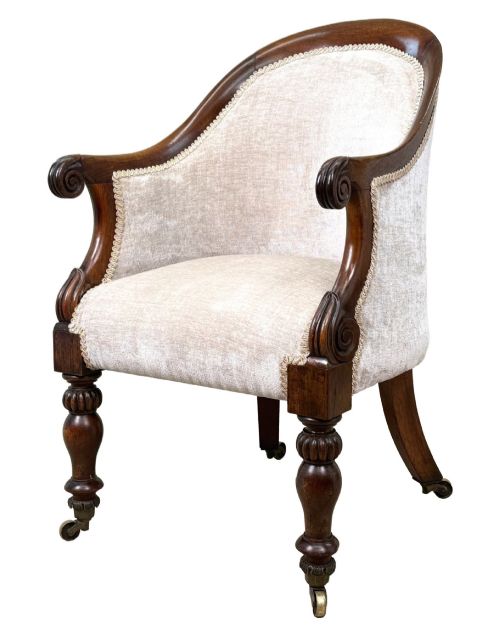
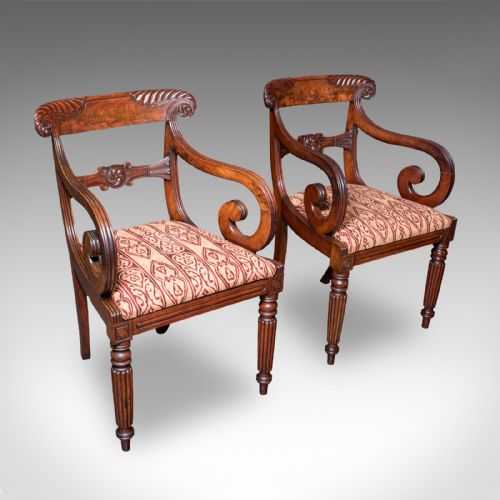
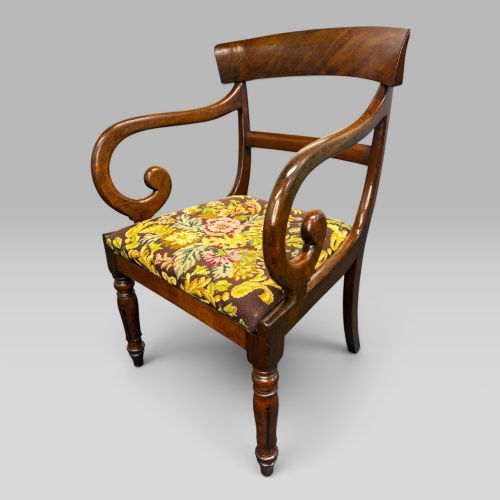
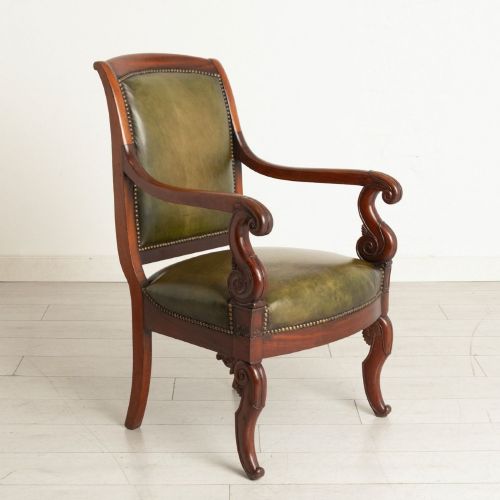
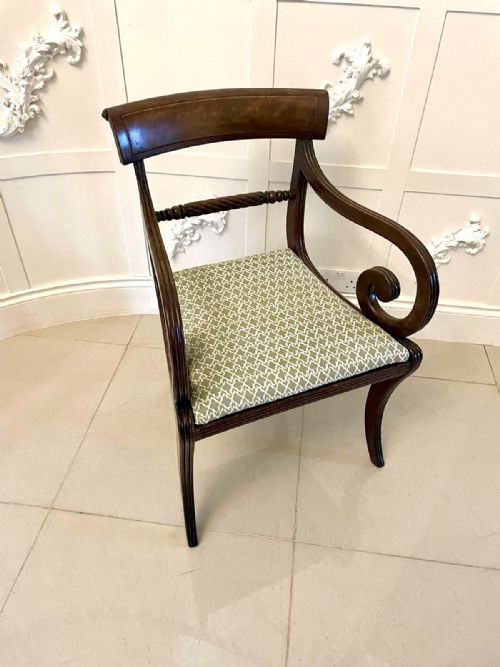
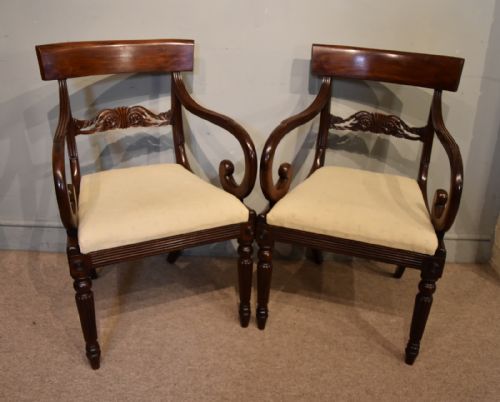
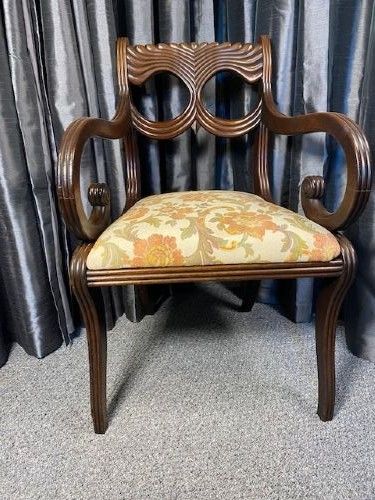
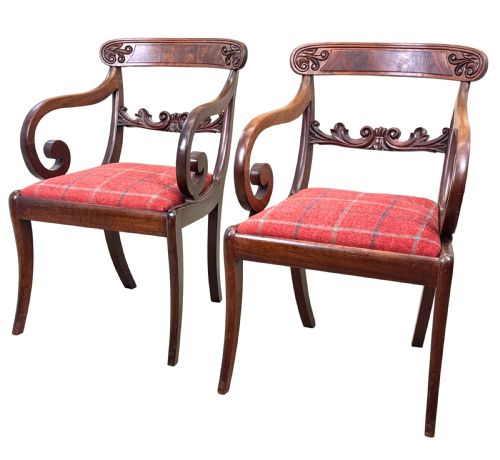
A scroll arm desk chair is primarily defined by its distinct sweeping armrests, designed to provide comfort while working at a table or writing desk. The pieces encountered here span the Regency, William IV, and Victorian periods, alongside broader nineteenth-century examples.
Most selections are constructed from mahogany, though oak, rosewood, and ebonised wood also appear among the library chairs, carvers, and elbow chairs. These items frequently double as reading or library seats, reflecting their versatile historical domestic roles.
Materials and construction methods
Cabinetmakers predominantly utilised solid mahogany and rosewood, shaping the frames to support the characteristic curved armrests and sabre legs. Brass inlays occasionally accent the dark timber surfaces, adding fine detail to the structure.
Upholstery techniques vary from traditional drop-in pads and hessian webbing to leather, velvet, fabric, and needlepoint insertions. Wood turning and jointing form the robust skeleton beneath these textile or hide coverings.
Scroll Arm Desk Chair Retail Price Guide 2026
Typical asking prices for scroll arm desk chair among the pieces listed under this phrase on Sellingantiques today, from the lower quarter to the upper quarter. They describe what is for sale here now, not the wider market.
Several chairs feature scroll arms so tightly wound they resemble old parchment scrolls waiting to be read.
Distinguishing quality factors
The degree of craftsmanship shows in the fluidity of the carved scroll arms and the precise execution of timber joints. Timber selection also dictates merit, with rich grain patterns and dense hardwoods separating superior examples from standard workshop production.
Originality of the upholstery substrate and hardware further separates pieces. Items retaining their early leather or needlepoint alongside untampered frames command greater attention from discerning buyers.
The Scroll Arm Desk Chair Glossary
- Carver chair
- An armchair, often designed with open sides and intended for dining or desk use. These pieces feature prominently alongside dedicated library seats.
- Sabre leg
- A concave, outwardly curving leg shape commonly found on Regency furniture. This profile provides both stability and a light visual appearance.
- Elbow chair
- An alternative term for an armchair, referencing the prominent armrests. These seats typically offer lower back supports suited to writing tasks.
- Needlepoint
- A type of canvas work embroidery used for upholstery. It provides durable decorative surfaces on historical seat pads.
- Ebonised wood
- Timber treated to resemble ebony through staining or painting. This dark finish appears on various nineteenth-century frames.
Scroll Arm Desk Chair: Frequently Asked Questions
Where were these chairs used?
These seats were primarily placed in studies, libraries, and private offices for writing and reading tasks.
Their sturdy timber construction and supportive armrests made them practical for daily use at a desk.
How do I date a scroll arm desk chair?
Dating relies on observing structural characteristics, timber choices, and leg styles such as sabre configurations or turned supports.
Period markers like Regency brass inlay or Victorian framing help narrow down the decade of production.
Can I use an antique desk chair daily?
Many examples remain robust enough for regular sitting when the underlying frame and joints are secure.
Careful consideration of the seat height and upholstery condition ensures comfortable everyday integration.
What is the difference between a carver and a library chair?
Library chairs often feature more substantial padding and enclosed armrests intended for prolonged reading sessions.
Carver chairs generally present lighter open frames originally built for dining or occasional desk duties.