


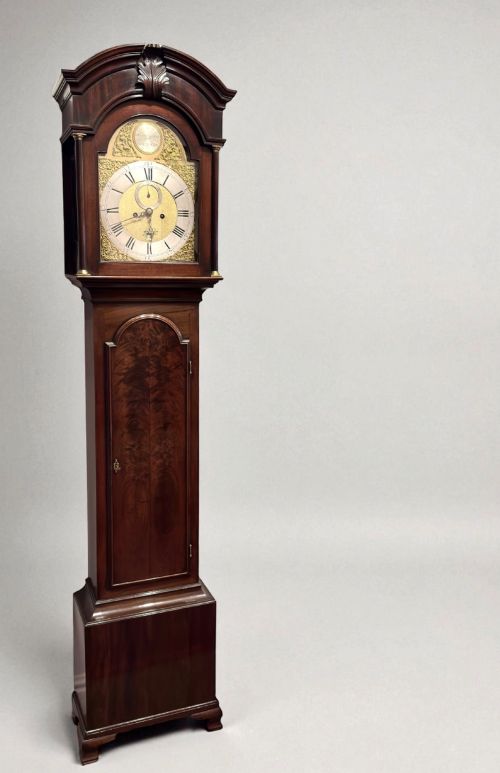
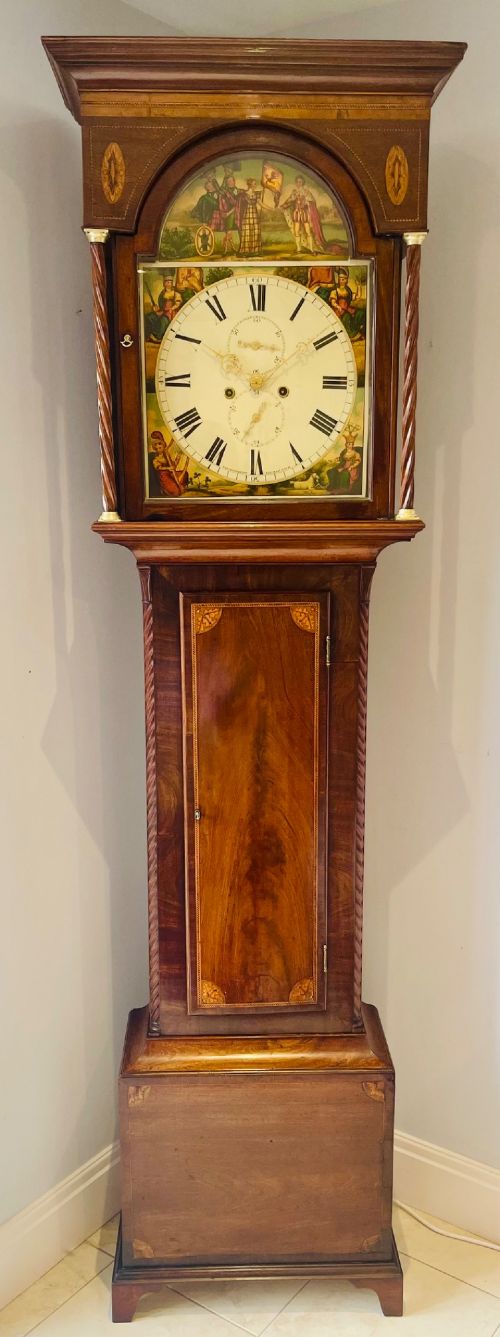
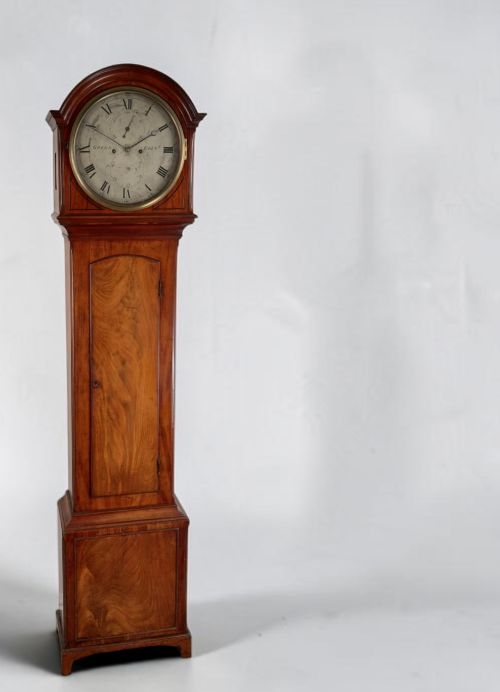
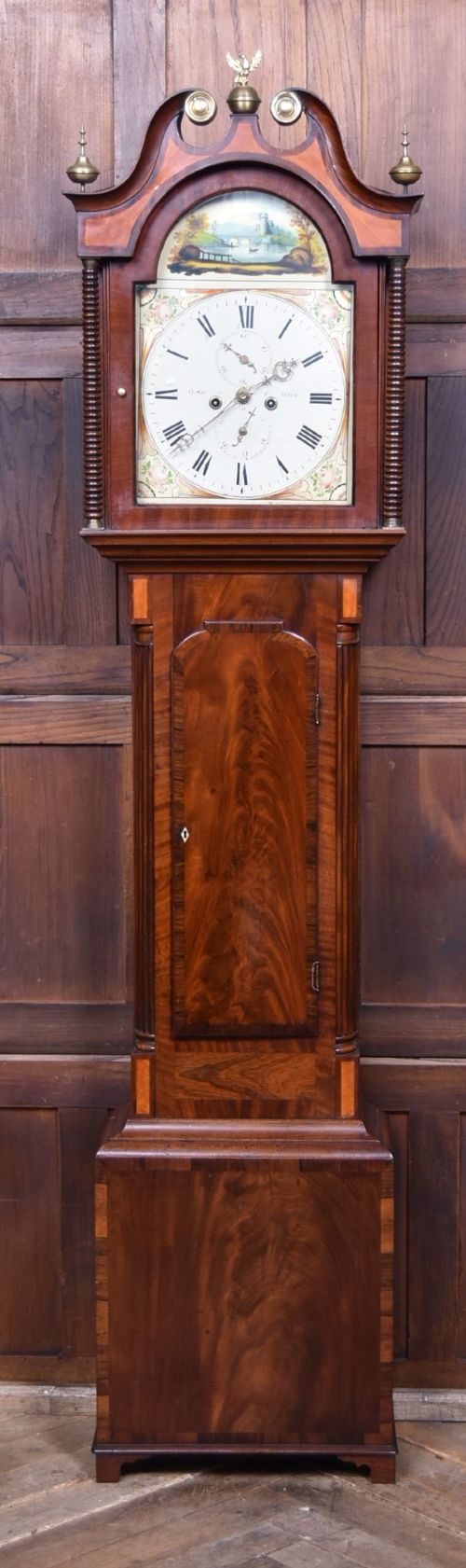




Scottish Mahogany Grandfather Clock
These tall floor-standing timepieces combine regional cabinetmaking with precision movements.
Scottish Mahogany Grandfather Clock
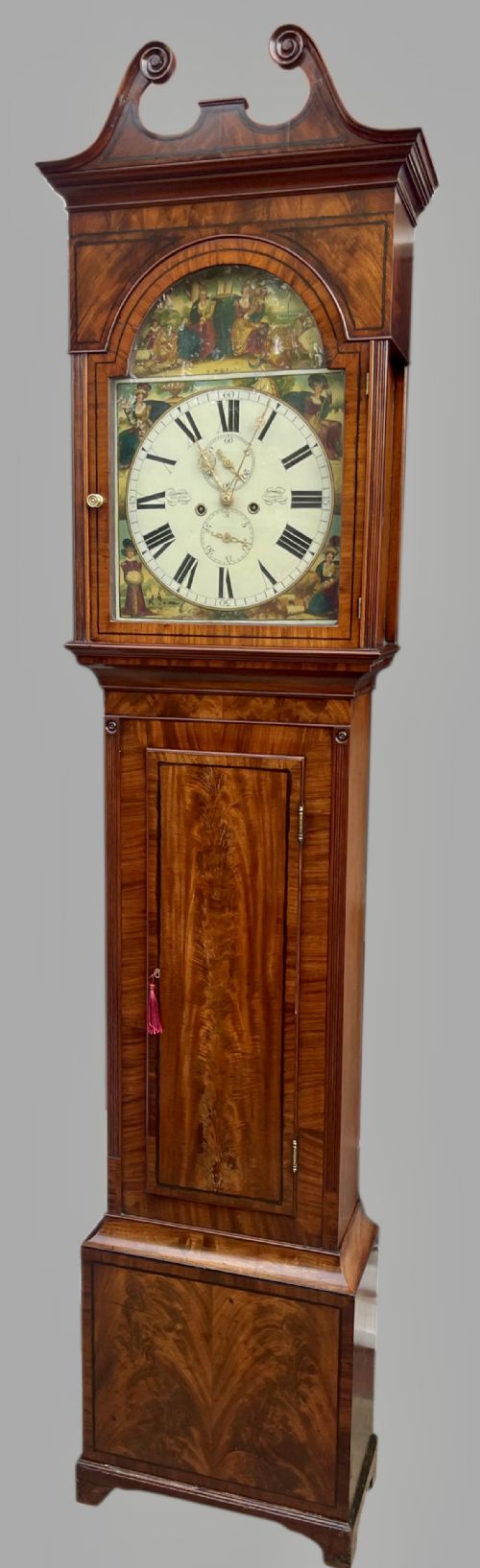
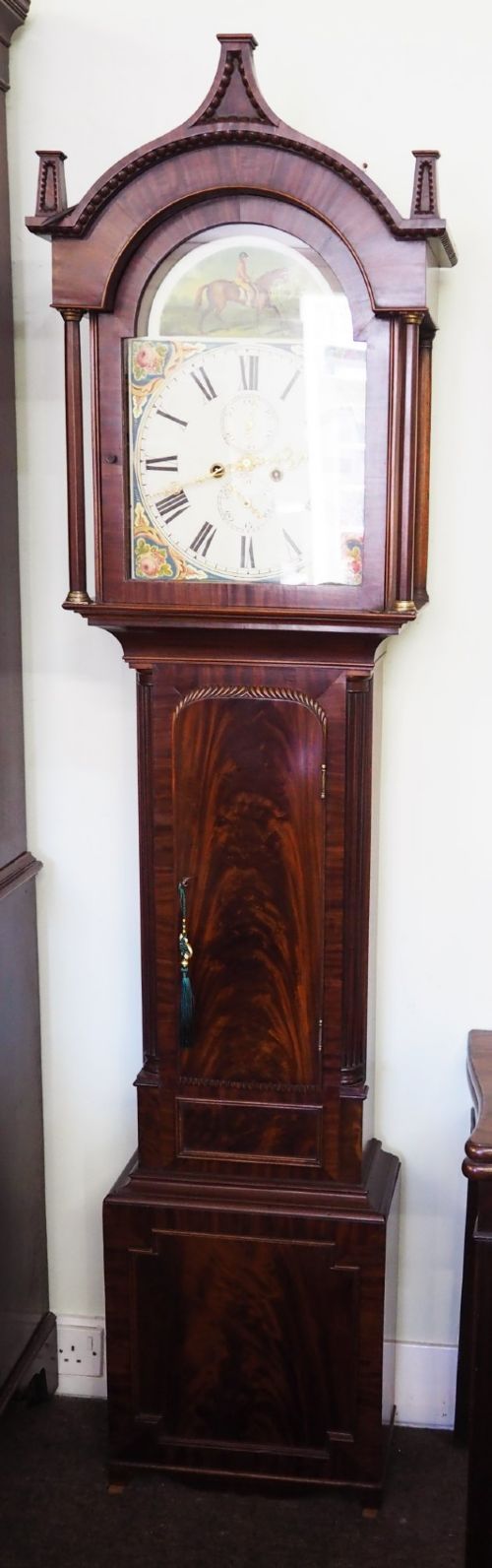
A scottish mahogany grandfather clock stands tall in a hall or living room, housing a weight-driven movement inside a wooden case. These pieces date across the Georgian, Regency and Victorian periods, reflecting shifting regional tastes in domestic timekeeping.
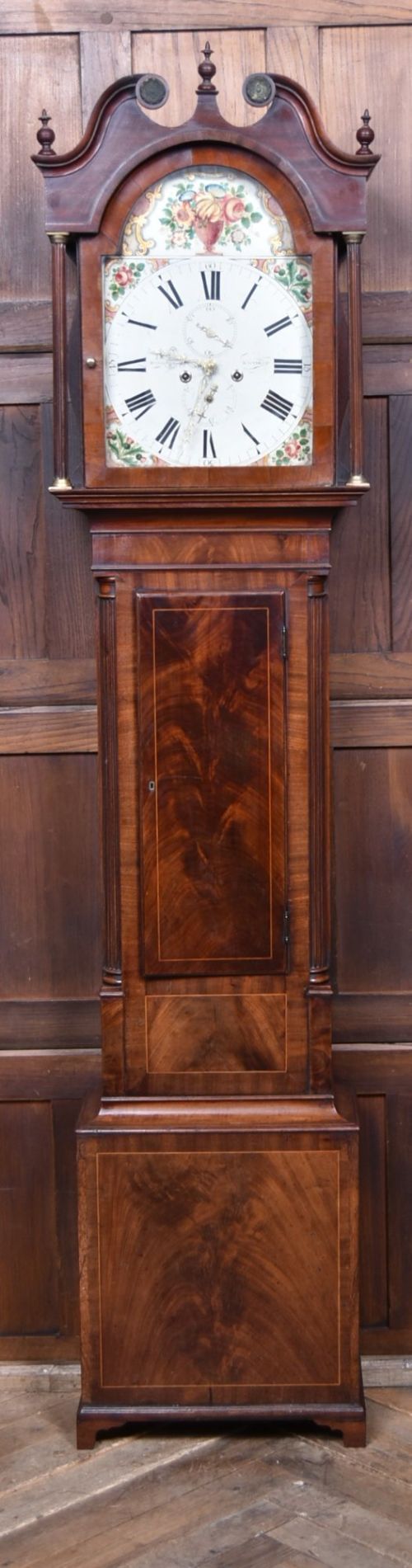
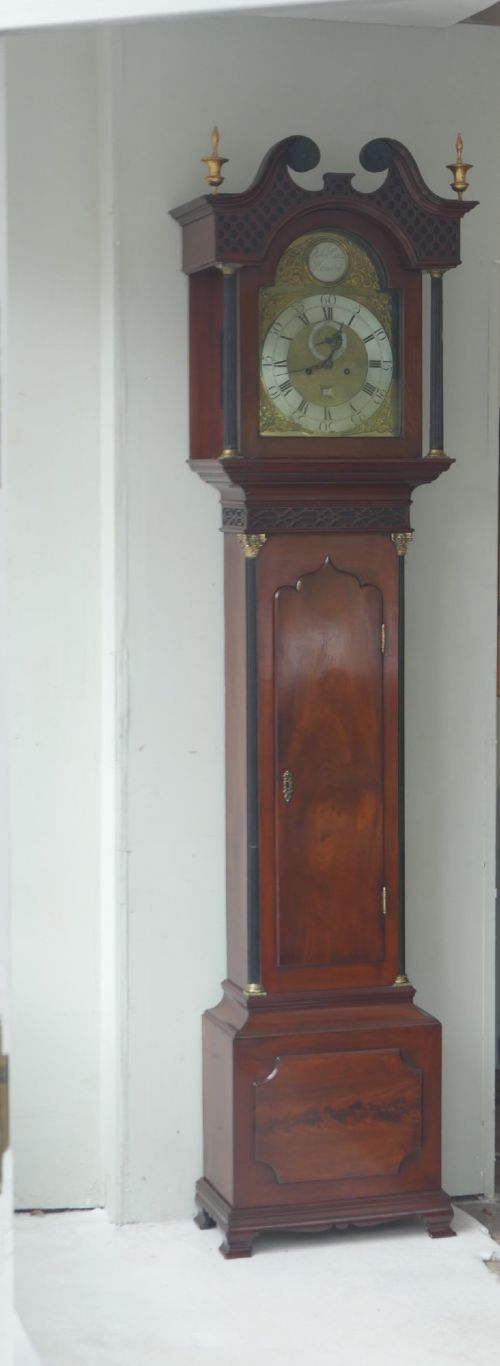
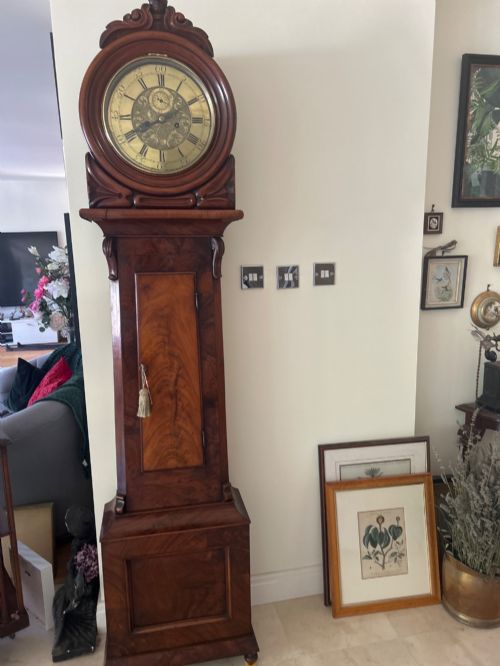
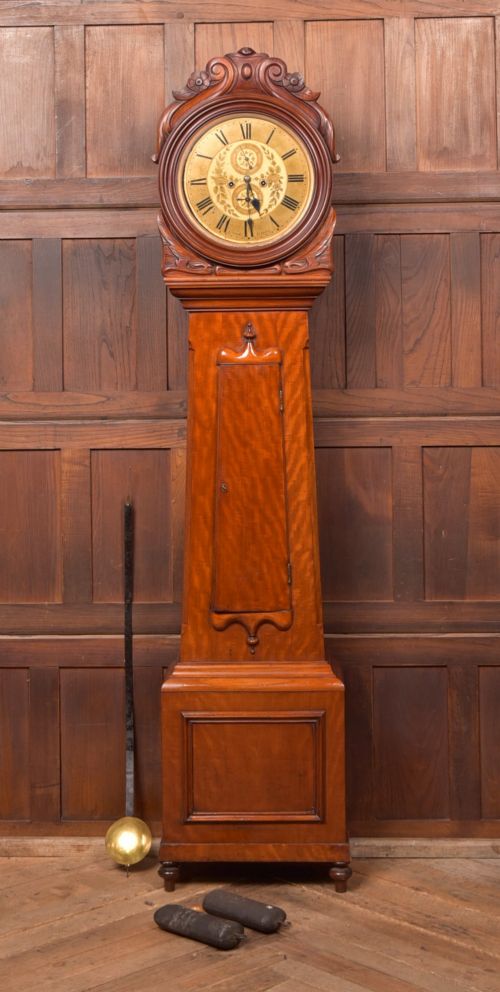
Makers from towns across Scotland signed dials from Aberdeen down to Dumfries, producing substantial cases with brass and painted iron faces. The drumhead format appears alongside traditional arched dials, showing regional variations in hood design.
Quality variations
The sophistication of the cabinetwork separates standard production from finer workshop output, particularly where flame mahogany veneers and marquetry inlay align across the trunk door and base. Crisp casting on brass dial spandrels and detailed engraving on the signature plate indicate higher skill.
Movement reliability and the finish of the internal gear train distinguish better clocks from simpler iterations. Signed dials by recorded Scottish makers add historical weight, whereas unsigned or later assembled examples hold lesser standing among collectors.
Scottish Mahogany Grandfather Clock Retail Price Guide 2026
Typical asking prices for scottish mahogany grandfather clock among the pieces listed under this phrase on Sellingantiques today, from the lower quarter to the upper quarter. They describe what is for sale here now, not the wider market.
Materials recorded across the inventory include solid mahogany, flame mahogany, brass, painted iron, silvered metal, enamel and glass.
Hendrie Ogg Dunfermline·Gordon of Aberdeen·Green of Edinburgh·D Straiton Montrose·Tait Peebles·Robb Montrose·Andrew Thom·William McEwan·Matt Wylie Paisley·Joseph Gibson Ecclefechan·David Morice·Whitelaw of Edinburgh·John Breakenrig·Ninian Davidson·James Wood·William Chisholm·Robert Thomson·W M Smith·Aitchison of Glasgow·J Purdy of Carluke·James Cuthbert·Robert Clark Newburgh·Jame Hay Leuchars·W Wighton Edinburgh·David Husband
The Scottish Mahogany Grandfather Clock Glossary
- Longcase clock
- A tall pendulum clock enclosed in a wooden case designed to stand on the floor. These instruments are frequently termed grandfather clocks in domestic settings.
- Drumhead clock
- A style featuring a circular dial housing mounted directly upon the trunk, appearing frequently in nineteenth-century Scottish examples. The circular casehead sits distinctly above the waist door.
- Regulator
- A precision timekeeper designed for exact time measurement, often fitted with a deadbeat escapement and maintaining power. These movements prioritise accuracy above domestic chime complications.
- Moon dial
- A rotating painted disc beneath the arch of the dial that tracks the phases of the lunar month. This mechanism required specialised gearing connected to the primary movement.
- Spandrel
- An ornamental corner piece placed in the space between a circular dial and the rectangular frame. These decorative brass castings changed in style across the eighteenth and nineteenth centuries.
Scottish Mahogany Grandfather Clock: Frequently Asked Questions
How do I wind an eight day grandfather clock?
Use the winding key to raise each weight by turning the arbors clockwise until the weights reach their upper limit near the top of the trunk.
Take care not to overwind the movement, stopping promptly when resistance increases firmly against the key.
Where should I place a longcase clock in my home?
Position the clock against a sturdy interior wall away from direct sunlight, heating vents and exterior doors to protect the wood and movement.
A stable floor surface ensures the pendulum swings evenly without catching against the sides of the case.
How do I tell an 18th century clock from a Victorian one?
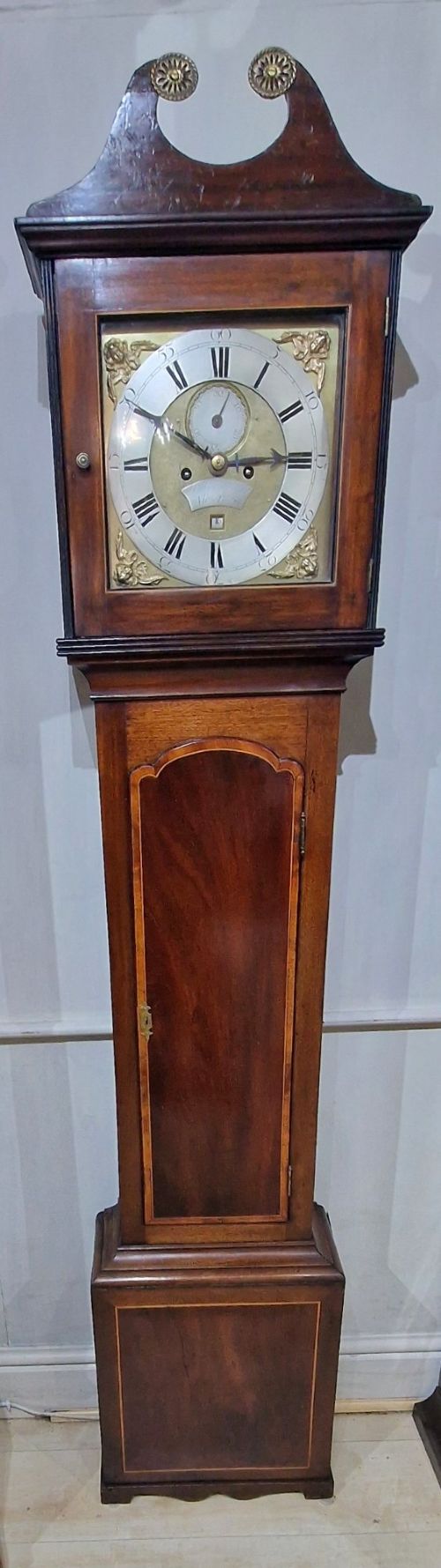
Eighteenth-century examples typically feature square brass dials with applied cast spandrels and proportioned proportions in the mahogany trunk.
Victorian pieces often introduce painted iron drumhead dials, heavier proportions and denser mahogany veneers reflecting nineteenth-century machinery.
Why does my clock go out of beat?
Floorboards shift or settling timber causes the case to lean slightly, altering the symmetrical drop of the pallet against the escape wheel.
Adjust the leveling feet or wedge the base until the ticking sound maintains a perfectly even tick-tock rhythm.