



Scottish Highlands Wall Art
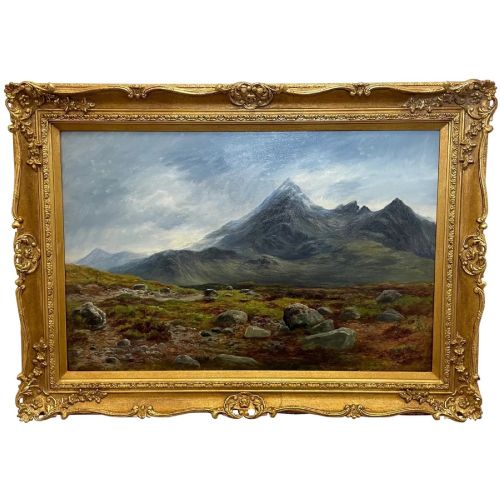
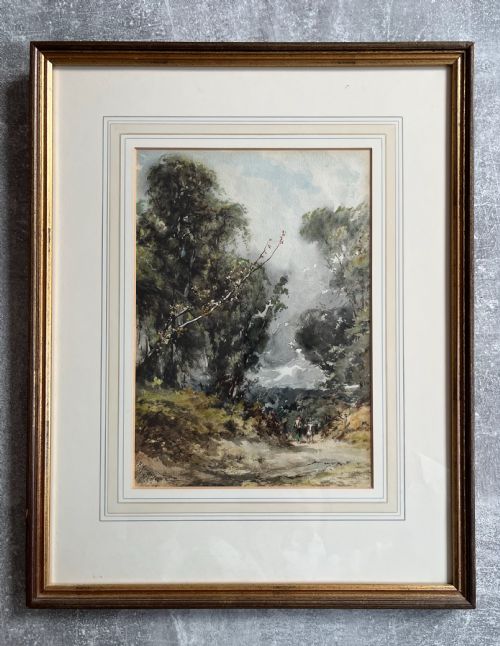
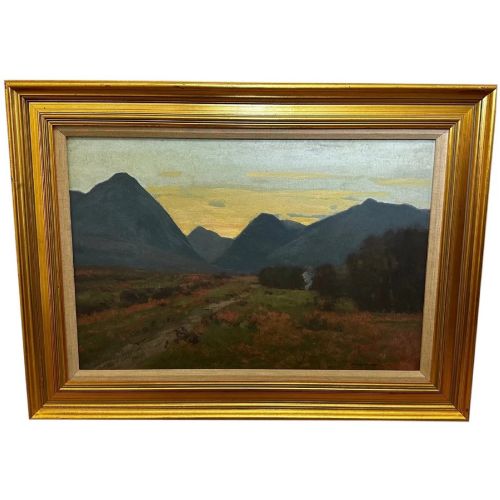
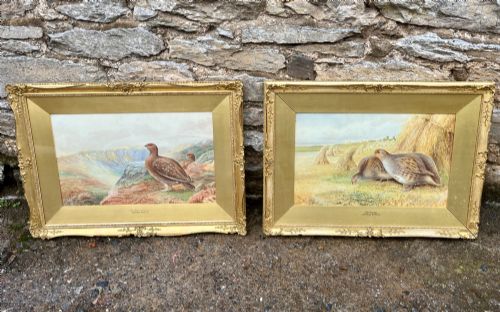
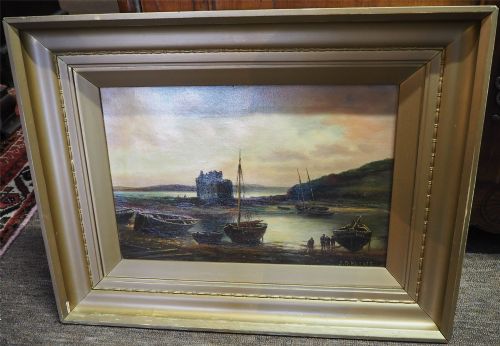
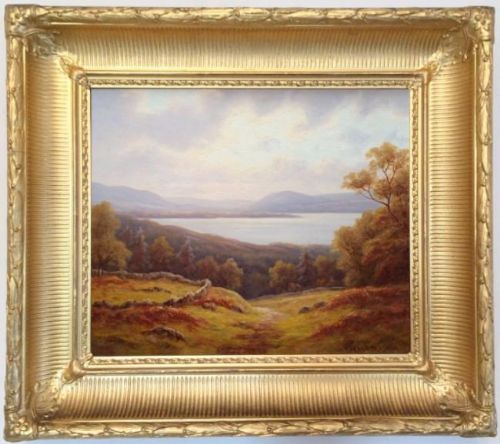
These scottish highlands wall art pieces capture rugged northern landscapes through Victorian and Edwardian oil paintings and watercolours.
Scottish Highlands Wall Art
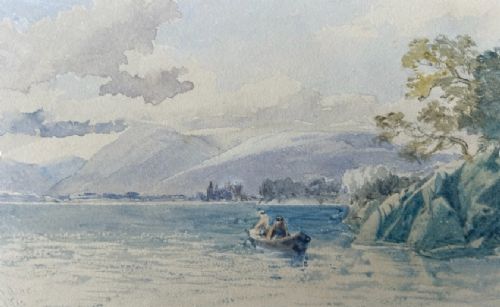
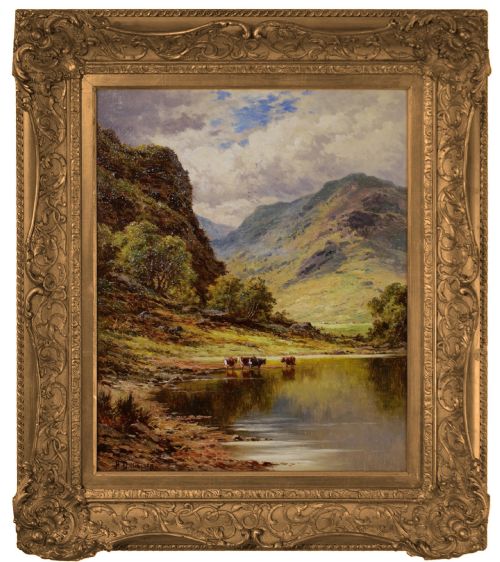
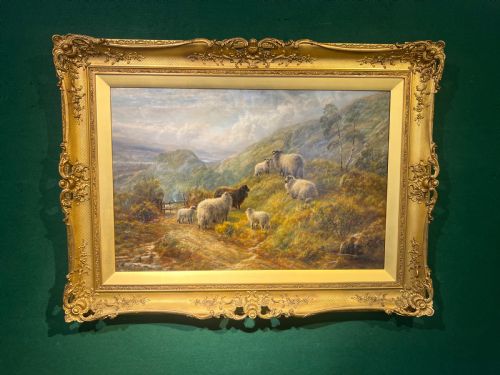
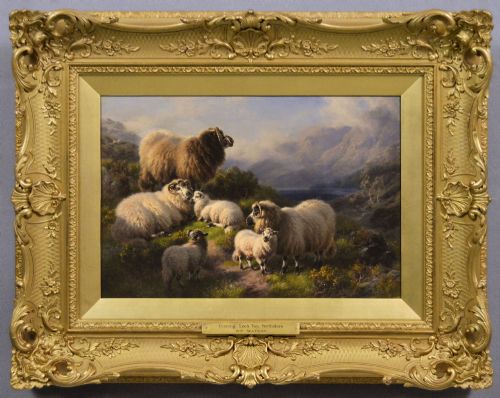
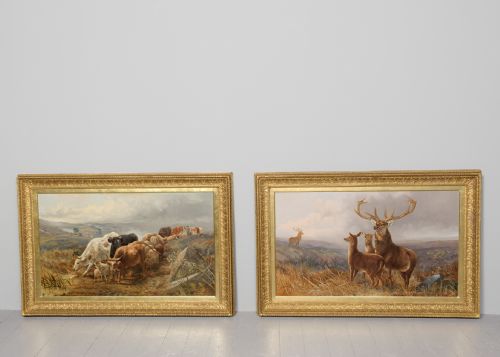
Scottish highlands wall art comprises oil paintings, watercolours, and gouache works depicting lochs, mountains, and rural scenes. These pieces capture the distinctive topography and changing light of northern terrain through landscape traditions.
The selections encountered here span the Victorian era, the nineteenth century, and early twentieth century works into the nineteen-thirties. Formats include framed canvases, wood panels, and paper works executed by named artists and regional schools.
Subjects range from tranquil highland cattle and sheep grazing near water to dramatic mountain peaks and misty glens. These artworks reflect the nineteenth-century romantic fascination with remote Scottish wilderness.
How they were made
Artists applied oil paint to stretched canvas or wooden panels, building rich textures and deep tones for dramatic skies and dark waters. Watercolours and gouache on paper capture lighter, transparent atmospheric effects across rural views.
Many works incorporate original gilded frames featuring ornamental gesso mouldings that complement the detailed landscape subjects. These traditional mounts secure and display the painted surfaces according to period framing conventions.
Listings feature Victorian and Edwardian oil paintings on canvas and wood panel alongside watercolour and gouache works on paper.
What varies in quality
Quality differentiates through the artist's ability to render natural light, atmospheric depth, and topographical accuracy within the Highland scenery. Finer works display confident brushwork and precise anatomical detail in figures, cattle, and dogs.
The handling of canvas preparation, pigment preservation, and the integrity of the original gesso framing influence the overall standard. Superior examples maintain vibrant colour harmonies and stable paint layers without extensive restoration.
William Beattie-Brown·George Fotherly Hargitt·Thomas Miles Richardson Jnr·Tom Campbell·George Houston·Henry H. Parker·Robert Watson·William Watson Jnr·Robert Cleminson·George Rankin·Everett Watson Mellor·William George Tennick·Archibald Kay·James Kyd·W.E. Evans·William Grant Murray·Tom Seymour·James Bell Anderson·Sidney Yates Johnson·John Charles Tunnard·Nasmyth·Sir David Murray·Alfred de Breanski Snr·Frederick Richard Lee·Thomas Sidney Cooper
The Scottish Highlands Wall Art Glossary
- Gesso
- A plaster-like mixture applied to wooden frames as a base for intricate moulding and gilding. This material provides the foundation for ornate period frames.
- Gouache
- An opaque watercolour medium containing pigment mixed with a binding agent and white filler. Artists utilise this to achieve solid blocks of colour and bright highlights on paper.
- Panel
- A flat wooden board used as a rigid support for oil paintings instead of woven canvas. These sturdy surfaces frequently survive in nineteenth-century country house art.
- Romanticism
- An artistic movement focusing on emotion, individualism, and the awe-inspiring power of untamed nature. Scottish landscapes became a central subject for this aesthetic.
- Watercolour
- A painting method where fine pigment is suspended in a water-based solution on paper. This technique yields translucent washes that evoke mist and highland weather.
Scottish Highlands Wall Art: Frequently Asked Questions
What subjects appear in scottish highlands wall art?
These artworks depict sweeping mountain ranges, misty lochs, rural cottages, and grazing highland cattle or sheep. The scenes record the remote terrain and changing weather of northern regions.
Artists focused on capturing the romantic atmosphere of glens, coastal inlets, and historic castles through detailed brushwork and atmospheric lighting.
How should I hang these paintings at home?
Display these framed oil paintings and watercolours on neutral walls where adequate natural light or picture lighting enhances the canvas. Keep them away from direct sunlight and damp environments to protect the paint and canvas.
Ensure heavy gilded frames are secured to wall studs using appropriate fixings to support the weight of nineteenth-century wood and gesso structures.
How do I identify the period of a landscape?
Examine the framing style, canvas preparation, and painting technique alongside any signatures or dates recorded on the reverse. Victorian works often feature ornate gesso frames and romantic lighting.
Twentieth-century examples tend towards looser impressionistic brushwork while maintaining traditional highland motifs and naturalistic colour palettes.
Were these paintings created outdoors?
Artists often sketched preliminary watercolours or pencil drawings on location in the Highlands before completing large oil paintings in their studios. Field studies captured immediate weather conditions and topographical details.
Studio work allowed painters to refine compositions, apply layered glazes, and incorporate decorative frames suited to domestic display.