





Scottish Highland Watercolour
A Scottish highland watercolour captures the rugged terrain and atmospheric light of the north, offering buyers a evocative window into nineteenth and twentieth century landscapes.
Scottish Highland Watercolour
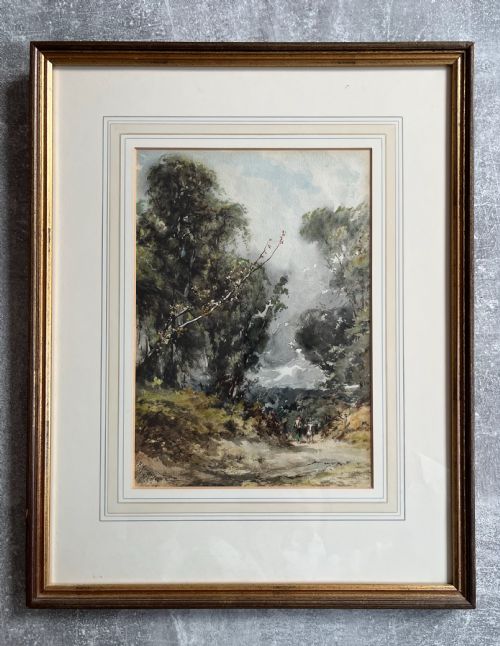
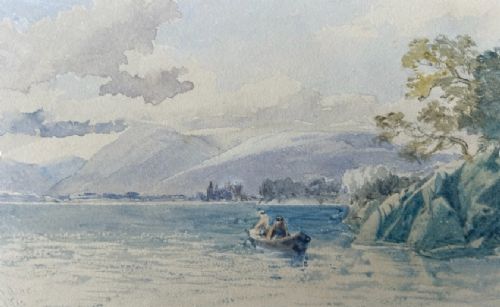
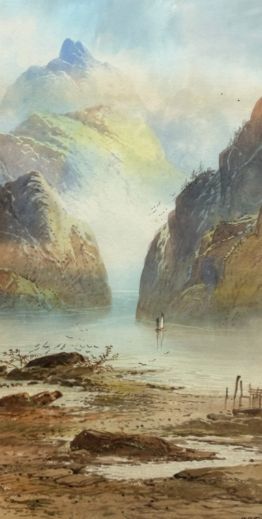
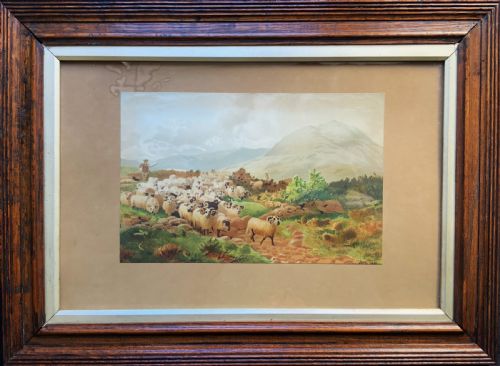
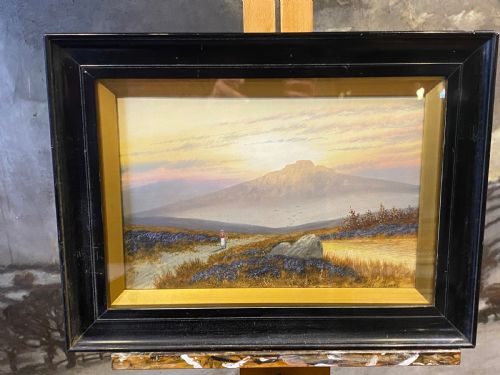
When you search for a scottish highland watercolour, you encounter framed paintings on paper depicting lochs, mountains, shepherds, and cattle. These works document the romanticism of northern topography through the eyes of artists working from the Georgian era through to the mid twentieth century.
The version you are most likely to meet on this page is a nineteenth century or Victorian landscape painting, often signed by the hand of a named British artist. These pieces frequently record specific locations such as Loch Awe, Loch Leven, and Ben Nevis.
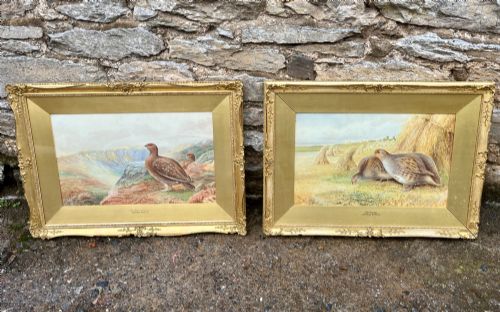
Beyond grand mountain vistas, the genre extends to intimate depictions of rural life, including game birds, crofts, and figures walking through the countryside. Such works bridge the gap between topographical record and traditional British fine art.
Materials and technique
Artists executed these works primarily with watercolour pigment upon paper, occasionally supplemented with gouache to build opaque highlights on mountain mists and water. The translucent washes allowed painters to capture the shifting weather and damp atmosphere characteristic of northern regions.
Completed paintings were traditionally protected behind glass and housed within wooden frames, frequently finished in giltwood or gold leaf to enhance the luminous quality of the pigments within.
Several cattle appear remarkably well groomed for creatures wandering damp highland bogs.
Judging quality
Quality rests upon the sureness of the brushwork and the artist's command of light and weather, separating masterly depictions of misty lochs from stiff, formulaic topographical illustration. Stronger works convey real atmospheric depth rather than merely outlining distant mountains.
Condition remains paramount, particularly the stability of the paper support and the absence of heavy foxing or fading caused by harsh light. Original framing and clear signatures by known painters elevate a piece above anonymous studio output.
George Fotherly Hargitt·Thomas Miles Richardson Jnr·William Henry Earp·George Rankin·Stanley Orchart·AJ Thornton·Henry Birtles·Alfred Graham·Aster Richard Chilton Corbould·John B MacDonald·Thomas Pritchard·Stephen Enoch Hogley·T E Churnside·Kenneth Holmes·James Drummond·F Walters·John Carlisle·James Baker Pyne·L Vallance·Waller Hugh Paton·James Cadenhead
The Scottish Highland Watercolour Glossary
- Watercolour
- A painting method in which the paints are made of pigments suspended in a water-based solution. It relies on the white of the paper to provide luminosity through thin, translucent washes.
- Gouache
- A water-based paint consisting of pigment and other inert material designed to be opaque. It is frequently found combined with watercolour to add dense highlights to clouds and water.
- Giltwood
- Wood that has been carved and then covered with a thin layer of gold leaf or gesso and gold paint. It provides a traditional reflective border for nineteenth century framing.
- Foxing
- Small brownish spots that appear on old paper due to chemical reactions over time. Collectors monitor its spread to ensure the pigment itself remains undamaged.
- Monogram
- A motif made by overlapping or combining letters to form a logo or signature. Many nineteenth century artists used these initials rather than a full signature on smaller sketches.
Scottish Highland Watercolour: Frequently Asked Questions
How do I date an old watercolour?
Dating relies primarily on visible signatures, artist biographical dates, and framing styles typical of the Victorian or Edwardian periods. Paper stock and inscriptions on the reverse also offer clues.
Comparison with documented works by the same hand in archives helps narrow the decade of creation.
Where should I hang these paintings?
Hang these works away from direct sunlight to prevent the watercolour pigments and paper from fading over time. A stable indoor environment with low humidity protects both the paper and the giltwood frame.
Display them at eye level in rooms where atmospheric lighting complements the muted tones of northern landscapes.
What subjects are most common?
Mountain and loch views dominate the genre, often featuring Highland cattle, sheep, and shepherds tending flocks. Coastal scenes and rural crofts also appear frequently.
Artists favoured locations that allowed them to study dramatic weather and rugged terrain.
Are these paintings always Scottish?
While the majority depict recognizable Scottish locations such as Killin and Loch Etive, the artists themselves often worked across Britain. Their style aligns with traditional British landscape painting of the nineteenth century.
The subject matter defines the genre rather than the birthplace of the artist.