


Scottish Art Pair
A scottish art pair brings together matched works that capture landscape and subject with balance, offering dual presence for a wall or mantel.
Scottish Art Pair
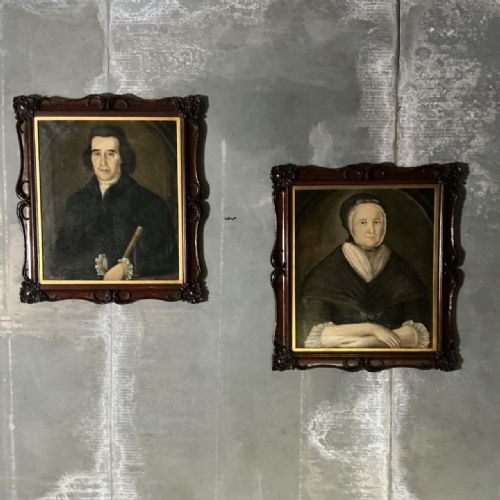
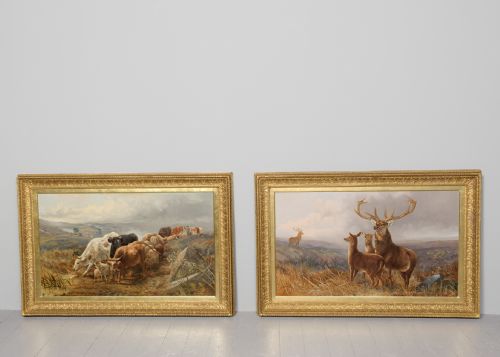
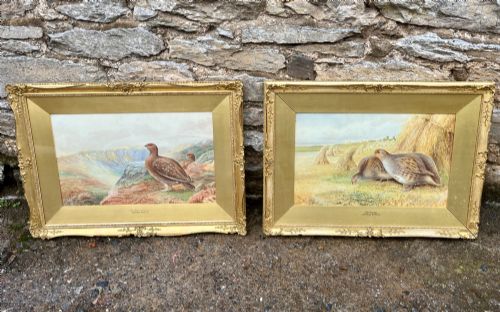
A scottish art pair brings together matching oil paintings, watercolours, and gouache works created to be displayed side by side. These pieces frequently capture Highland scenes, cattle in the glen, game birds, and portraits from the nineteenth and early twentieth centuries.
Beyond paintings, the selection spans decorative objects such as sterling silver bowls, brass bookends, terracotta urns, and ceramic figures in the Arts and Crafts taste. Buyers encounter matched groupings originating from periods including the Victorian era, the Edwardian years, and the interwar period.
The most common finds on this page are framed oil paintings and watercolours depicting Scottish landscapes and naturalism, alongside metalwork and ceramics associated with Scottish workshops. Each pair reflects the dual composition popular for symmetrical interior display during the nineteenth and twentieth centuries.
Materials and construction methods
Painters utilised oil on canvas, watercolour on paper, and gouache, often enclosing their works in period giltwood and gesso frames. These frames contribute substantial weight and decorative detail to the artworks.
Metalworkers and potters shaped sterling silver, brass, terracotta, and ceramic into bowls, bookends, vases, and candlesticks. Techniques involve casting, hammering, and hand-painting, particularly seen in pieces originating from Edinburgh and Glasgow workshops.
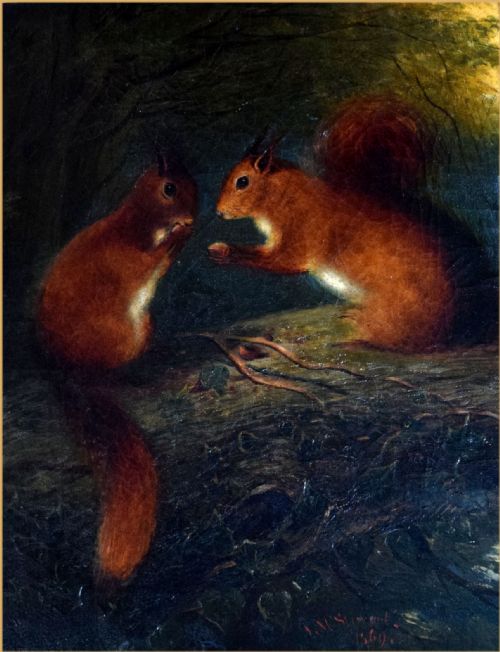
Red squirrels feeding and Scottish terriers make frequent appearances, proving that historical interiors had plenty of room for small, determined animals.
Distinctions in craftsmanship and condition
Quality rests in the precision of the brushwork and the preservation of the original surface, whether canvas, paper, or metal. Stronger examples display confident handling of light and subject matter, while metal and ceramic pairs show crisp casting and intact glazes.
The harmony of the pair dictates overall desirability. Matching frames, uniform ageing, and balanced composition separate the finest matched groupings from assembled sets.
Robert Cleminson·George Rankin·Frank Hider·Robert Buchan Nisbet·Sidney Pike·Robert Watson·Daniel Sherrin·AJ Thornton·Stinton·John Mc Ghie·James Malcolm Stewart·Catherine L. Charles
The Scottish Art Pair Glossary
- Gesso
- A plaster-like mixture applied to wood frames before gilding or painting. It provides a smooth base for intricate moulded decoration.
- Giltwood
- Timber that has been coated with a thin layer of gold leaf or gold paint. It appears frequently on nineteenth-century picture frames.
- Gouache
- An opaque water-based paint that dries to a matte finish. Artists use it to achieve vibrant colour and solid coverage on paper.
- Arts and Crafts
- A design movement prioritising traditional craftsmanship and simple forms. It influenced silverwork, woodwork, and ceramics across Scotland during the late nineteenth and early twentieth centuries.
- Monart
- A style of mottled glass produced in Scotland. These vases display distinctive cloud-like colour patterns within the vessel walls.
Scottish Art Pair: Frequently Asked Questions
What subjects appear most often in these paintings?
Landscapes, Highland cattle, and game birds dominate the canvas and watercolour works in this category. Artists frequently depicted the Scottish terrain and its wildlife.
Portraits also emerge from nineteenth-century hands, recording local figures alongside rural views.
How do I display a pair of frames?
Matched paintings require balanced spacing at eye level to maintain symmetry on the wall. Keeping them together preserves the compositional intent of the artist.
Matching frames should share similar lighting conditions to highlight the gilding and gesso work evenly.
What defines the Arts and Crafts style here?
Arts and Crafts pieces emphasise hand-wrought metals, oak, and pottery with honest construction. Silver bowls, salvers, and candlesticks from Edinburgh and Glasgow embody this ethos.
Simplicity of form and visible craftsmanship distinguish these items from mass-produced wares.
How can I tell the period of a painting?
Frame construction, canvas preparation, and the pigments used offer primary clues to age. Nineteenth-century works often feature heavy giltwood frames and realistic landscape styles.
Signatures and dates inscribed by artists provide definitive chronological markers.
Were these objects always created as pairs?
Artists often produced companion pieces to hang together, balancing light and subject across two canvases or sheets of paper. Decorative items like bookends and spill vases were similarly cast or turned as matched sets for domestic use.
Some groupings represent near pairs gathered for their shared scale and palette.