
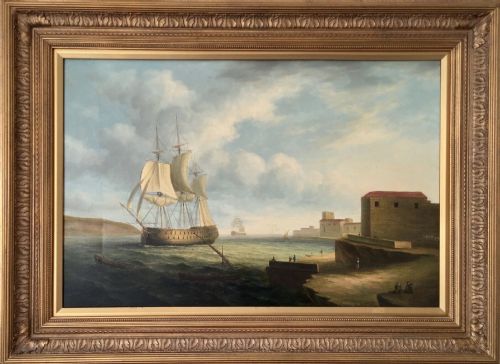
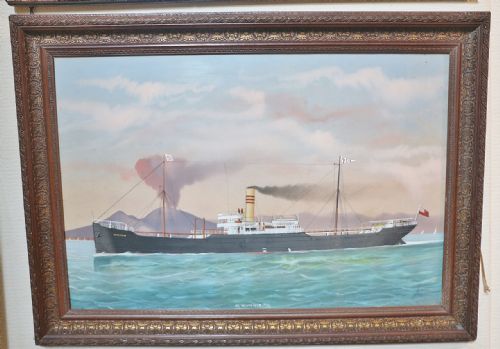
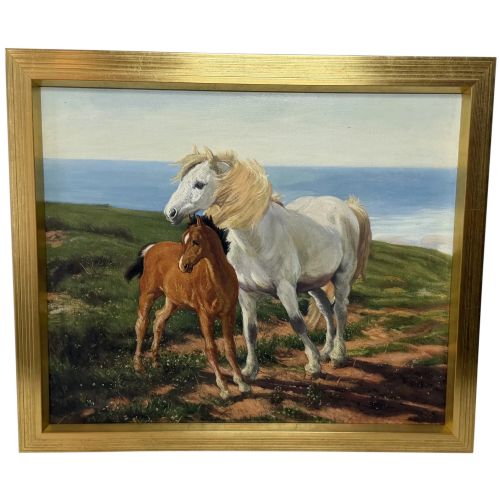





Framed Coastal Portrait
These framed coastal portrait works capture shores and figures in oil and watercolour, bringing maritime atmosphere straight to a wall.
Framed Coastal Portrait
A framed coastal portrait combines maritime scenery or coastal figures with traditional painting methods, spanning Victorian and Edwardian periods up to mid-twentieth-century works. These pieces frequently depict fishermen, ships at anchor, cliffs, and coastal life set within period wooden or gilt frames.
The selection here encompasses British School maritime scenes, Dutch marine oils, and continental coastal views. Buyers encounter works rendered on canvas, panel, and paper, capturing specific historical vessels and seaside locales from the nineteenth and twentieth centuries.
How they were made
Artists painted these works using oil on canvas, oil on panel, and watercolour on paper, often layering oil paint to achieve maritime textures and atmospheric lighting. Canvases and panels rest inside wooden or gilded frames that complement the tonal depth of the seascape.
Makers utilised traditional stretching, mounting, and framing techniques using wood, gilt, and gilded wood. These protective surrounds often feature period mouldings designed to house and preserve the artwork.
Listings feature works spanning the nineteenth and twentieth centuries, utilising oil paint, canvas, wood, paper, and gilt.
What varies in quality
The distinction between pieces rests upon the handling of light, shadow, and maritime detail by the artist. Skilled brushwork captures the movement of water and the character of coastal figures with greater precision.
Framing also influences the character of the piece, with original giltwood surrounds offering distinct period craftsmanship compared to later replacements. The integrity of the canvas or panel and the depth of the pigment contribute to the overall presence of the work.
Raymond Moritz·Sir Edwin Landseer·Francesco Guardi·Manuel Azpiroz·Charles Jones·John Mc Ghie
The Framed Coastal Portrait Glossary
- Oil on Canvas
- A painting technique using pigments suspended in a drying oil applied to a stretched cloth support. This method allows for rich colour blending and textured brushwork.
- Giltwood
- Wood that has been coated with a thin layer of gold leaf or metallic powder. It frames many traditional paintings and reflects ambient light.
- British School
- A term describing artists trained or working within Britain, sharing stylistic traditions across specific centuries. It groups together regional portraitists and marine painters.
- Marine Painting
- Artwork depicting ships, seascapes, naval battles, or coastal views. This genre demands specific attention to nautical rigging and water dynamics.
- Watercolour
- A painting method where water-soluble pigments are applied to paper. It produces translucent washes of colour well suited to lighter coastal atmospheres.
Framed Coastal Portrait: Frequently Asked Questions
How do I hang a heavy framed oil painting?
These works require secure wall fixings, such as screws anchored directly into wall studs or heavy-duty masonry plugs, to support the weight of the wood and canvas.
Position the painting at eye level to ensure the coastal subject sits comfortably within the room's proportions.
Where should I place a coastal painting at home?
Select a wall with stable ambient light, away from direct sunlight and damp areas, to protect both the canvas and the wooden frame.
Rooms with neutral wall colours allow the darker tones and gilt highlights of nineteenth-century frames to stand out clearly.
How do I clean a giltwood frame?
Dust the frame gently with a dry, soft-bristled brush to remove surface particles without disturbing the gilded surface.
Avoid using liquid cleaners or abrasive cloths, which can damage the delicate gold leaf application.
How can I tell a Victorian frame from a later one?
Victorian frames typically display heavier wooden mouldings, hand-applied gesso, and distinct corner construction methods compared to modern reproductions.
Examining the reverse reveals older fixings, oxidized nails, and the natural ageing of the timber.