




Scottish Maritime Art
Scottish maritime art captures coastal life and open waters through oils and watercolours spanning the Victorian era to the mid twentieth century.
Scottish Maritime Art
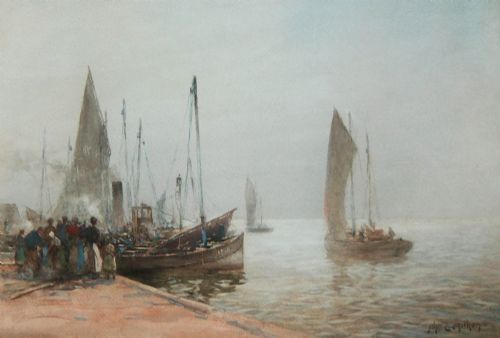
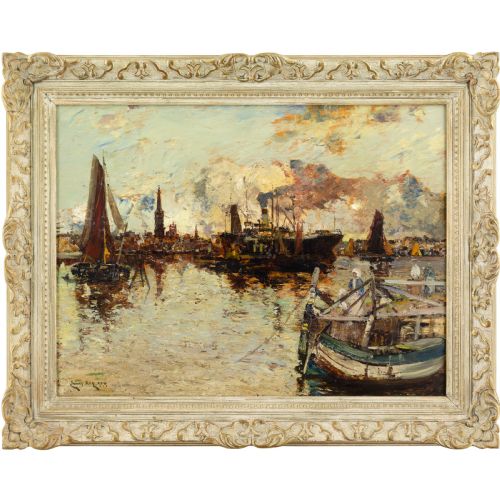
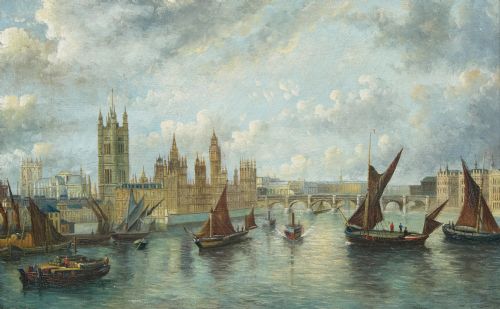
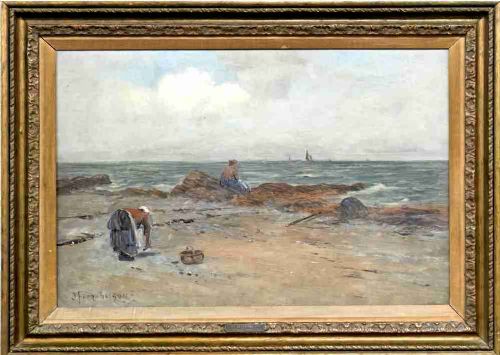
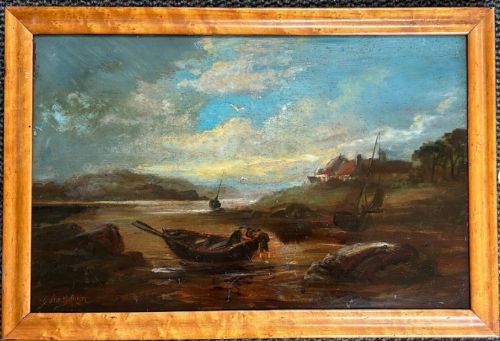
Scottish maritime art encompasses paintings that record coastal scenes, fishing boats, and marine views rooted in Scotland's rich nautical heritage. When you explore scottish maritime art, you encounter coastal villages, estuarine harbours, and open waters rendered by artists working from the nineteenth century into the twentieth century. These works document specific locations such as Anstruther, the Firth of Forth, and Loch Earn alongside historic vessels like the ship Mary Wylie.
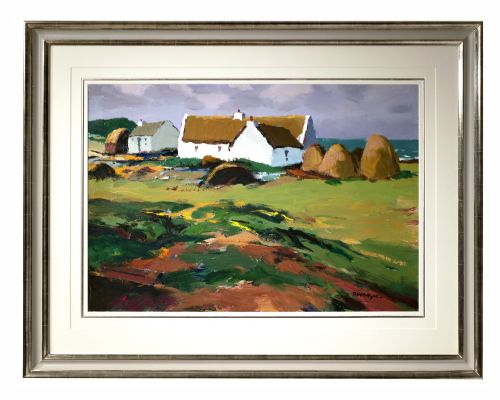
The selections available here range from Victorian watercolours to Modern British and Scottish School compositions. You are most likely to meet oil paintings on canvas or wood panel, alongside watercolours on paper, capturing local fisher folk and coastal vistas. These pieces vary in scale from intimate watercolours to substantial framed canvases reflecting distinct regional locations.
How they were made
Painters of these marine subjects utilised oil paint applied to canvas, wood panels, or boards, alongside watercolour applied to paper supports. Canvas grounds provided a durable surface for rich oil pigments in works depicting bustling estuaries and ships off the coast. Wood panels offered a firm foundation for detailed nineteenth-century harbour scenes, while paper supported delicate fluid washes in coastal watercolours.
Framing often involved gilt wood mouldings that complemented the tonal depth of the paintings and protected the edges of the canvas or paper. Artists employed precise brushwork to delineate rigging, coastal architecture, and atmospheric light effects over Scottish waters. Many works bear signatures, monograms, or period inscriptions that identify the maker and the specific coastal location.
Represented artistic traditions include the Scottish School, British Impressionism, and Victorian Marine styles spanning multiple decades.
What varies in quality
Quality in these coastal paintings rests upon the artist's handling of atmospheric light, marine architecture, and compositional balance. The finest works demonstrate a confident command of medium, whether capturing the luminous expanse of an estuary at sunset or the intricate rigging of a sailing vessel. Lesser examples may rely on formulaic depictions of waves and shores with less attention to specific topographical or nautical detail.
The strength of provenance and documentation also distinguishes superior pieces within this genre. Works bearing clear attribution to established members of the Scottish Academy or recognised British marine painters carry greater artistic significance. Furthermore, the preservation of the original paint surface and the appropriate matching of period gilt wood frames contribute to the overall integrity of the piece.
James E. Aitken·James Kay RSW·Donald McIntyre·Joseph Farquharson·Stanley Orchart·Sam Bough·Owen Bowen·Richard Ball Spencer·James Kinnear·John Mc Ghie·James G. Faulds
The Scottish Maritime Art Glossary
- Marine painting
- Artwork depicting ships, coastal views, harbours, and open seas. These works range from precise ship portraits to expressive coastal landscapes.
- Oil painting
- Pigments bound with drying oils applied to canvas, wood panel, or board. This medium allows for rich colour depth and layered textures.
- Watercolour
- Pigments suspended in a water-based solution applied to paper. This technique produces translucent washes and delicate atmospheric effects.
- Wood panel
- A rigid wooden support used by artists instead of canvas. Panels provide a stable surface favoured for detailed nineteenth-century compositions.
- Gilt wood
- Wood decorated with gold leaf or metallic gold paint. Frames finished in this manner frequently house traditional oil paintings and watercolours.
Scottish Maritime Art: Frequently Asked Questions
What periods do these Scottish marine paintings cover?
The works span from the Victorian period through the nineteenth century and into the mid twentieth century. They reflect shifting artistic movements including British Impressionism and the Scottish School.
Individual pieces date from specific years across this timeline, capturing changing styles in maritime and landscape depiction over several decades.
Which materials were commonly used by these artists?
Artists utilised oil paint on canvas, wood panels, and boards, alongside watercolours on paper supports. Gilt wood frames frequently accompanied these works.
The choice of material often dictated the texture and scale of the finished coastal scene or ship portrait.
How can I identify the specific location in a painting?
Many paintings include contemporary titles, inscriptions, or signatures that reference specific places such as Anstruther, Loch Earn, or Leith. Artists often recorded these details on the reverse or within the composition.
Studying local landmarks and vessel names helps connect the artwork to its historic Scottish setting.
Are these works signed by the artists?
A significant number of pieces feature artist signatures, monograms, or period attributions inscribed on the front or back. Documentation often links the painting to known nineteenth and twentieth-century painters.
Unsigned works are frequently attributed through stylistic analysis and historical provenance records.