




Scarborough Marine Painting
These scarborough marine painting works capture the dramatic Yorkshire coast and busy North Sea harbours through traditional 19th-century and early 20th-century hands.
Scarborough Marine Painting
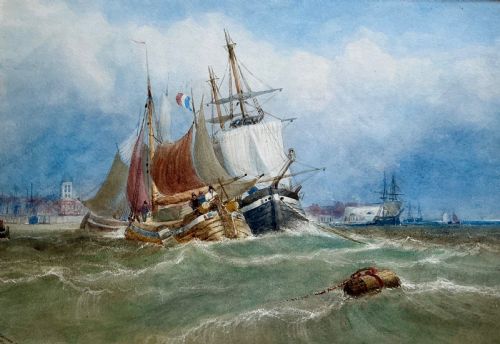
A scarborough marine painting brings home the salty air and shifting tides of the Yorkshire coastline through historical watercolours and oil on canvas works. You are looking at maritime scenes depicting local bays, harbour entrances, and shipping traffic captured by British artists during the Victorian and Edwardian eras.
The most common examples on this page are delicate watercolour paintings on paper, often framed in gilt or giltwood. These works frequently document specific local viewpoints such as South Bay, Cayton Bay, or the bustling harbour itself.
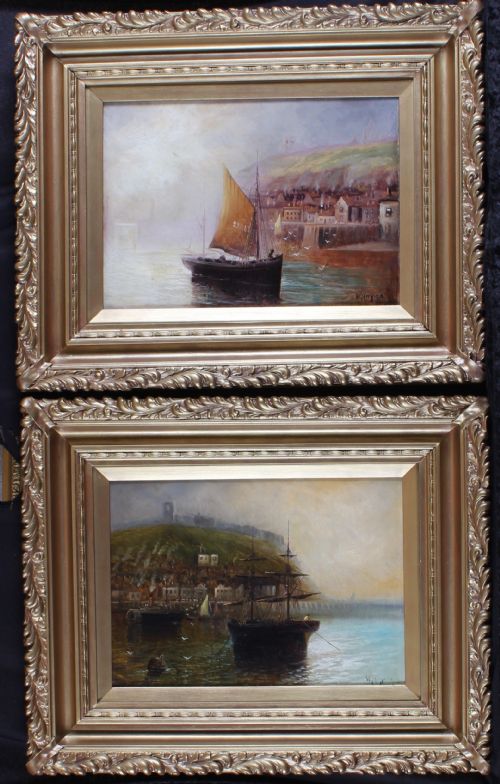
The selection also spans oil paintings that offer heavier textures and deeper palettes, representing choppy waters and moonlight scenes along the coast. Dating predominantly from the late nineteenth and early twentieth centuries, these pieces place the viewer directly onto the historic quaysides.
Materials and methods
Artists relied primarily on watercolour pigment applied to paper or oil paint laid upon stretched canvas. These traditional media allowed creators to capture both the translucent wash of coastal skies and the heavy, light-reflecting swells of the North Sea.
Surviving works are typically housed in wooden frames, frequently enhanced with gilt or complete giltwood finishes to complement the maritime subject matter. The combination of stable canvas or heavy paper with robust wood framing ensures these historic pieces survive in clear detail today.
At least one artist shared a surname with the town itself, painting the very harbour waters that bore his family name.
Distinguishing quality
The distinction between standard works and superior pieces rests entirely upon the artist's command of light, atmosphere, and maritime architecture. Stronger examples demonstrate a confident handling of choppy water and accurate rigging on shipping vessels, rather than generic coastal outlines.
Condition and medium also set pieces apart, with vibrant watercolour pigment retaining its original strength or oil paintings exhibiting well-preserved canvas surfaces. Original framing in period giltwood adds further distinction to the finer examples in the range.
Henry Barlow Carter·Ernest Dade·Alfred Robert Quinton·Frank W Scarborough·Joseph Newington Carter·Frederick William Booty·John James Wilson·Walter Meegan·Fred Dade
The Scarborough Marine Painting Glossary
- Watercolour
- A painting method in which the paints are made of pigments suspended in a water-based solution. This medium allows for transparent washes that suit luminous coastal skies and calm sea states.
- Giltwood
- Wood that has been covered with a thin layer of gold leaf or gilt. It provides a bright, ornate border that enhances the darker tones of oil paintings.
- Maritime Art
- Depictions of the sea, ships, and coastal views. This genre includes historical records of harbour activity and naval engagements.
- Victorian
- Relating to the reign of Queen Victoria, spanning the mid to late nineteenth century. Pieces from this era often show a high degree of realist detail in marine subjects.
- Edwardian
- Pertaining to the reign of King Edward VII during the early twentieth century. Art from this period continues traditional maritime realism with looser, atmospheric brushwork.
Scarborough Marine Painting: Frequently Asked Questions
How do I care for a watercolour painting?
Keep watercolours away from direct sunlight to prevent the pigments from fading over time. Ensure they hang in rooms with stable humidity to protect the paper and backing.
What is the difference between oil and watercolour marine works?
Oil paintings utilise thick paint on canvas, offering rich textures and deep colour ranges suited to stormy seas. Watercolours use pigment on paper, providing a lighter, more transparent finish.
How do I identify a Victorian marine painting?
Victorian pieces typically display precise realism in rigging and coastal architecture, often signed and dated within the nineteenth century. The framing and paper types also match nineteenth-century manufacturing standards.
Where were these coastal scenes usually painted?
Artists worked directly along the Yorkshire coast, focusing on Scarborough landmarks like South Bay, Cayton Bay, and the local harbour. Many painters also travelled between London pools and northern fishing ports.