




Yorkshire Coast Seascape Art
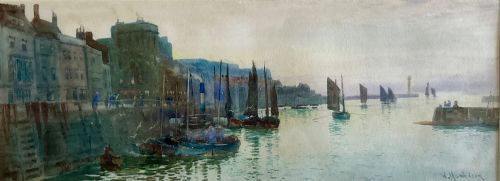
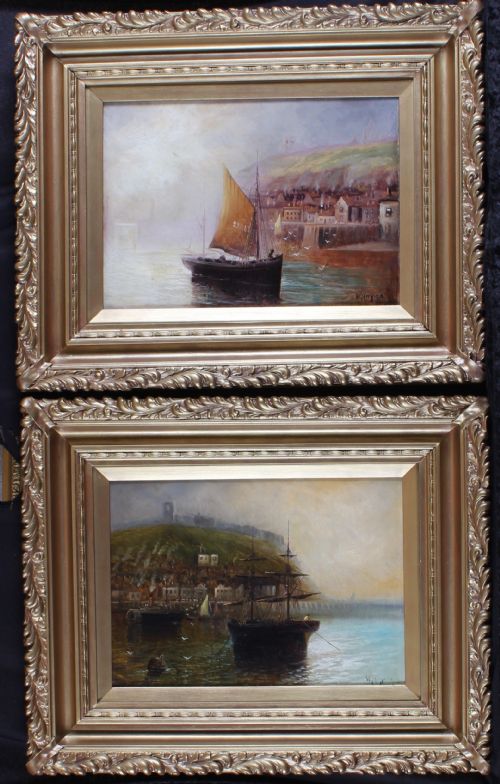
Yorkshire coast seascape art brings together nineteenth-century and twentieth-century watercolours and oil paintings capturing local harbours, fishing fleets, and coastal villages.
Yorkshire Coast Seascape Art
Yorkshire coast seascape art encompasses paintings depicting regional locations such as Whitby, Scarborough, Runswick Bay, Staithes, and Robin Hood's Bay. The subjects focus predominantly on maritime life, including cobles, herring drifters, and sea-weed gatherers along the shore.
The selection ranges from Victorian and Edwardian marine realism to British impressionism spanning the nineteenth and twentieth centuries. These works appear as watercolours on paper and oil paintings on canvas or artist board.
Materials and Methods
Artists utilised watercolour pigments applied to paper to achieve transparent washes depicting coastal light and sea spray. Alternatively, oil paint on canvas or artist board offered heavier texture for choppy waters and darkening skies.
Many works incorporate framing in wood, frequently with gilt finishes, complementing the period character of the paintings. Signatures appear frequently, denoting the individual hand of the painter.
Materials recorded across the inventory include watercolour on paper, oil paint on canvas, and oil on artist board.
Judging Quality
Quality rests upon the artist's ability to render the specific atmosphere of the Yorkshire coast rather than generic marine scenes. Stronger examples display confident handling of light on water and accurate depiction of local vessels like cobles.
Condition of the paper or canvas also dictates standing, with well-preserved pigment and minimal fading preserving the visual impact of the original composition.
William Matthison·Robert Leslie Howey·Frank H Mason·Frederick William Booty·Kate E Booth·William Kay Blacklock·Julian Drummond·Edward T Jones·Walter Meegan·Alec Caruthers Gould·Fred Dade·Edith E Hoyle
The Yorkshire Coast Seascape Art Glossary
- Coble
- A traditional type of open fishing boat native to the north-east coast of England. These vessels feature flat bottoms and high bows suited to launching from surf beaches.
- Watercolour pigment
- A water-soluble colour medium used on paper supports. It allows for delicate gradations of tone useful in marine atmospheres.
- Oil on canvas
- Pigments bound in drying oil applied to a woven fabric stretched across a wooden frame. This technique permits rich colour layering and visible brushwork.
- British impressionism
- A painting style influenced by French movements but adapted by British artists to domestic light and weather. It prioritises loose brushstrokes and everyday coastal subjects.
- Marine art
- Artistic work depicting ships, shipping, and coastal scenery. This genre forms the primary focus of the regional scenes found in this category.
Yorkshire Coast Seascape Art: Frequently Asked Questions
Where do these coastal scenes usually show?
The works depict familiar Yorkshire locations including Whitby, Scarborough, Runswick Bay, Staithes, and Robin Hood's Bay. These specific settings anchor the maritime subjects in recognisable regional geography.
Artists frequently recorded local landmarks such as Henrietta Street in Whitby or the scars exposed at low tide. This regional focus distinguishes them from generic marine paintings.
What mediums were used for these paintings?
Painters employed watercolour pigments on paper alongside oil paint on canvas or artist board. Watercolours capture the luminous skies and coastal mist characteristic of the North Sea.
Oil paintings provide heavier textures suited to recording choppy waters, shipping vessels, and stormy weather. Both mediums reflect the prevailing artistic practices of the Victorian and twentieth-century periods.
How do I date a Yorkshire coastal painting?
Dating relies on stylistic markers, artist signatures, and recorded active periods spanning the nineteenth and twentieth centuries. Edwardian and Victorian examples often exhibit traditional marine realism.
Later mid-century works reflect evolving British impressionism and modern approaches to landscape painting. Framing styles and inscriptions on the reverse also offer clues to the creation date.
How should I display maritime art at home?
These paintings suit traditional wall display, pairing well with wooden frames and period interiors. Adequate wall space allows the composition and brushwork to remain visible from a distance.
Placement should avoid direct sunlight to protect watercolour pigments and oil canvases from fading over time. Proper hanging ensures the artwork remains stable and secure.