
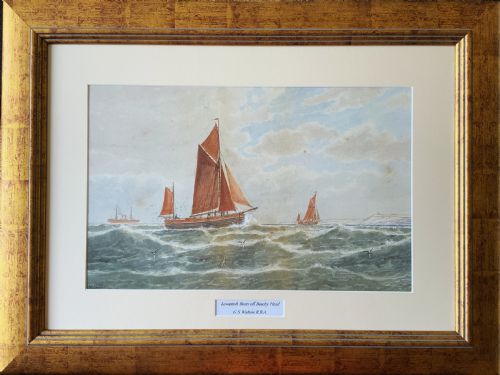


Sailing Boat Watercolour Painting
A sailing boat watercolour painting captures maritime movement on paper, bringing coastal light and nineteenth or early twentieth-century harbour life straight into a room.
Sailing Boat Watercolour Painting
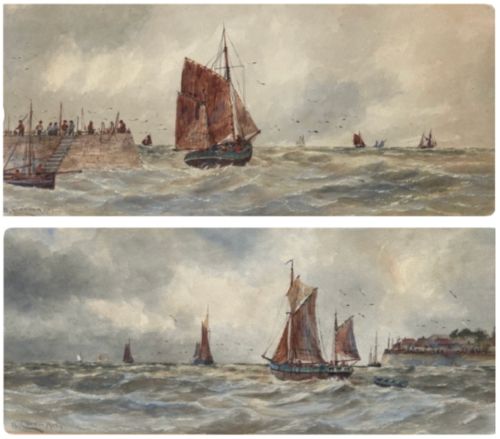
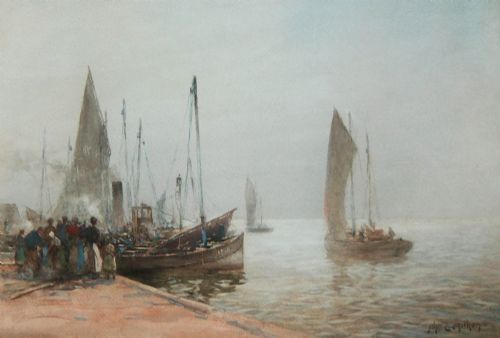
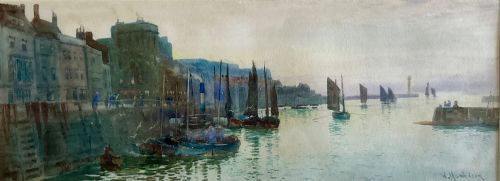
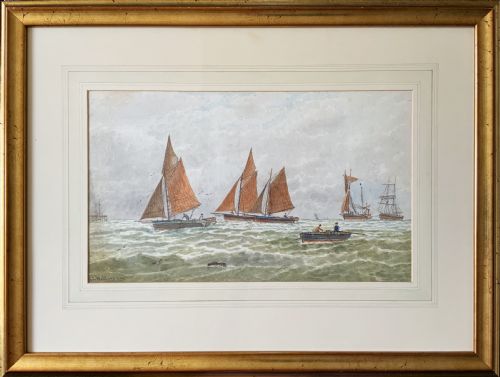
A sailing boat watercolour painting on this page typically dates from the Victorian or Edwardian eras, spanning the late nineteenth century through to the early decades of the twentieth century. These works depict coastal scenes, harbour approaches, and open seas with vessels ranging from fishing luggers to masted ships.
The compositions focus on British and European waters, including familiar coastal spots like Whitby, Scarborough, St Ives, and continental harbours in Holland and Venice. Most examples are executed on paper, framed under glass, and often presented in wood or gilt wood frames.
Buyers encounter both intimate sketches and detailed finished works by named British marine artists alongside initialled or unsigned pieces from the same period. The subjects record a working maritime past when sail and early steam shared the coastal waters.
How they were made
Artists applied watercolour pigment onto paper, often combining transparent washes with bodycolour or gouache highlights to capture the shifting light on water and sky. Paper served as the primary support, requiring careful stretching before painting to prevent buckling under wet washes.
Framing utilised wood and gilt wood mouldings, protecting the delicate watercolours beneath glass from atmospheric moisture and dust.
The selection spans the Victorian and Edwardian periods, including pieces dated across the nineteenth and early twentieth centuries.
What varies in quality
The success of a sailing boat watercolour painting rests upon the artist's handling of atmospheric light and movement in water, distinguishing a lively sketch from a stiff transcription. Tonal balance between the sky, the surface of the sea, and the detailed rigging of the vessels determines the visual depth of the composition.
Condition plays a central role, particularly the preservation of the original pigments against fading and the absence of heavy foxing across the paper. The quality of the framing, whether an appropriate period gilt wood moulding or a later replacement, completes the presentation.
James E. Aitken·Thomas Bush Hardy·Frank H. Mason·Clara Montalba·George Stanfield Walters
The Sailing Boat Watercolour Painting Glossary
- Watercolour pigment
- Finely ground colour particles mixed with a water-soluble binder, applied in washes to paper.
- Gilt wood
- Timber frames finished with a thin layer of gold leaf or metallic gilt, typical of period framing.
- Marine art
- Paintings and watercolours focused on ships, shipping, sea views, and coastal harbours.
- Foxing
- Brown spots and discolouration that develop on older paper due to chemical reactions over time.
Sailing Boat Watercolour Painting: Frequently Asked Questions
How should I frame and hang a watercolour?
Watercolours require protection behind glass to shield the paper from dust and ambient moisture in the room. Hang them away from direct sunlight to prevent the pigments from fading over time.
Using conservation-grade mounts keeps the paper from touching the glass directly. This simple step prevents humidity damage and preserves the integrity of the painting.
How do I identify a Victorian marine watercolour?
Victorian marine works usually feature traditional sailing vessels, fishing craft, or masted ships rendered in naturalistic tones. The paper stock and framing materials often match nineteenth-century manufacturing methods.
Signatures, artist monogram initials, or framing labels provide further clues to the date and origin. Many pieces also record specific coastal locations in the title or margin.
Were these paintings made as sketches or finished works?
Artists produced both quick preliminary watercolours outdoors and highly detailed finished paintings in the studio. Both forms were collected during the nineteenth and early twentieth centuries.
Quick studies often capture immediate weather conditions and movement with loose brushwork. Finished pieces present a more structured view of harbours and shipping.
What subjects appear most often in these paintings?
Coastal scenes featuring sailing boats, fishing luggers, and harbour entrances dominate the works from this period. Artists frequently recorded busy British ports alongside Dutch waterways and Venetian canals.
The transition from sail to steam also appears in works showing mixed shipping activity. These scenes document the working coastal trade of the era.