



Scandinavian Pine Table
A scandinavian pine table brings rustic warmth and enduring utility to a room through centuries-old Nordic design and honest timber construction.
Scandinavian Pine Table
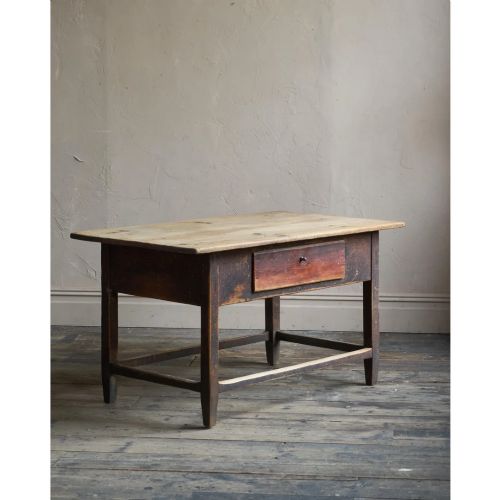
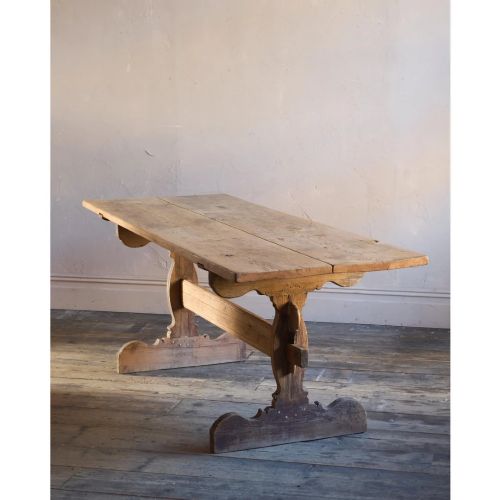
A scandinavian pine table encompasses robust dining boards, kitchen preparation surfaces, and compact occasional pieces originating from Sweden and Denmark. These items date primarily from the nineteenth century, alongside examples from the eighteenth and early twentieth centuries.
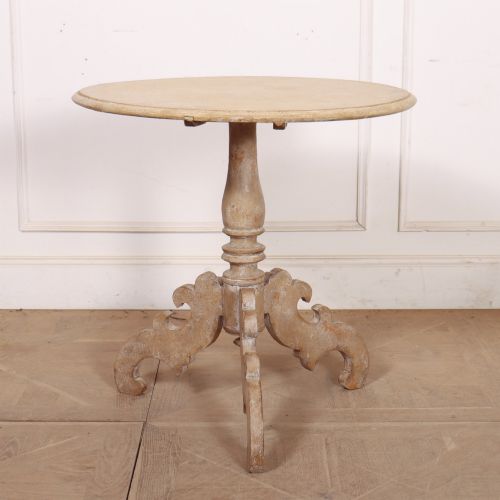
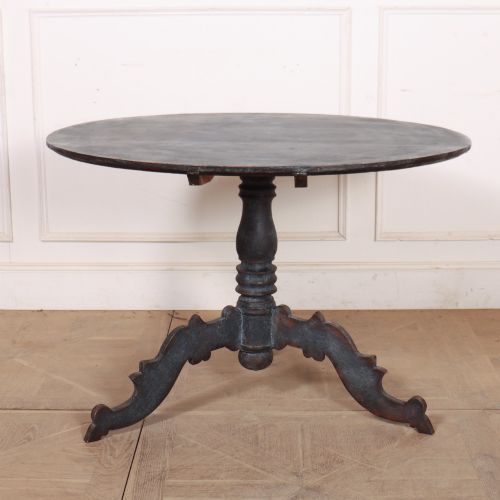
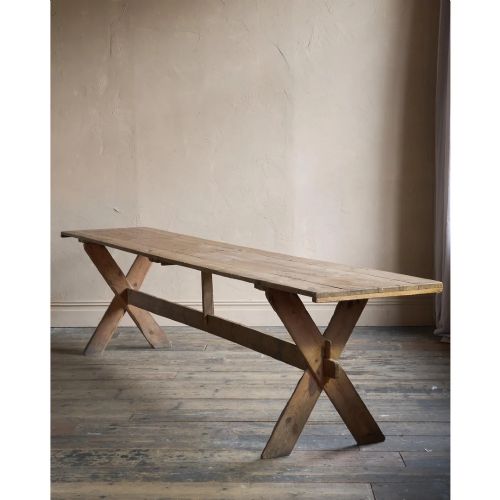
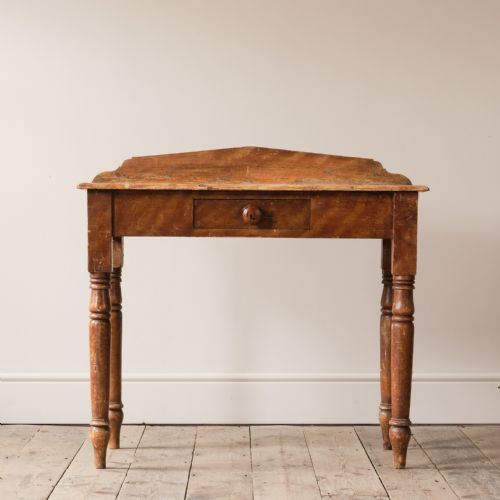
The version most commonly met on this page is the painted pine kitchen or dining table, often displaying original pigment or traditional Falu red finishes. Alongside these large dining formats, smaller side tables, drop-leaf gateleg designs, and trestle forms appear frequently.
Makers shaped these utilitarian objects for everyday domestic life in Scandinavian country houses and farmsteads. They reflect regional folk traditions and Gustavian refinement, serving both practical work functions and social dining needs.
Materials and construction
Makers constructed these pieces predominantly from soft pine and timber, occasionally combining oak elements for structural reinforcement. Brass hardware appears selectively on drawers and folding mechanisms.
Surfaces were frequently treated with traditional paint, including Falu paint derived from copper mine waste, providing both colour and preservation. Paint layers were often applied repeatedly over decades, resulting in rich patinas through natural wear.
The listings span the eighteenth, nineteenth, and early twentieth centuries, featuring pine, oak, brass, and traditional Falu paint.
What separates the best from the rest
Quality rests heavily on the integrity of the surface finish and whether the paint is original to the period of manufacture. Pieces retaining authentic scraped or hand-painted coats command greater interest than later repainted surfaces.
Structural honesty and proportion also dictate standing, with well-joined box stretchers, trestle supports, or drop-leaf mechanisms operating smoothly. Timber condition matters, balancing the desirable weathering of age against structural stability.
The Scandinavian Pine Table Glossary
- Pine
- A soft timber widely utilised across Scandinavia for furniture construction due to its abundance and workability. It accepts painted finishes readily and develops a distinct patination over centuries of use.
- Falu Paint
- A traditional Swedish red paint containing copper sludge, linseed oil, and flour. It protects timber from harsh northern weather and yields a matte finish characteristic of folk furniture.
- Slagbord
- A traditional Scandinavian drop-leaf dining table supported by swinging legs or gates. This space-saving design allowed larger tables to fold compactly against cottage walls when not in use.
- Trestle Table
- A form consisting of two or more support frames connected by a horizontal beam holding a loose or fixed top. This ancient construction offers maximum legroom and sturdy stability for heavy dining and kitchen work.
- Gustavian
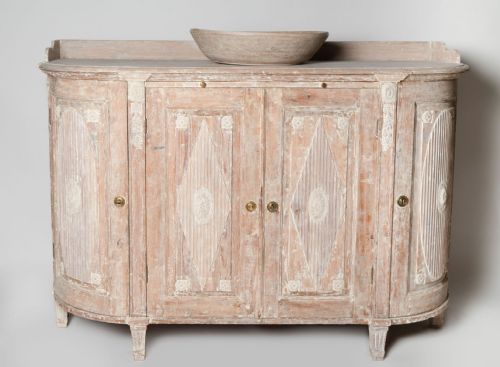
- The Swedish neoclassical style spanning the late eighteenth and early nineteenth centuries. It simplifies heavier European rococo forms into lighter, symmetrical designs painted in pale, muted tones.
Scandinavian Pine Table: Frequently Asked Questions
How do I clean a painted pine table?
Dust regularly with a dry cloth and clean gently using a slightly damp cloth without harsh chemicals.
Avoid excessive moisture to protect the historic paint layers and underlying softwood.
Are these tables suitable for daily dining?
Most surviving examples were built precisely for rigorous kitchen and dining work, making them robust for modern use.
Protective pads help preserve aged wooden surfaces and historic paint from heavy impacts.
How can I tell original paint from later coats?
Original paint surfaces show natural wear patterns, minor crackle, and subtle colour variations accumulated over generations of cleaning and use.
Later repainting often appears uniform, masking the texture and grain of the underlying pine timber.
What is the difference between Gustavian and country styles?
Gustavian pieces draw on neoclassical French and Italian courts, featuring restrained fluting, carved details, and pale monochrome paint.
Country pieces lean towards robust utilitarian forms, folk art influences, and more varied regional colour palettes.