
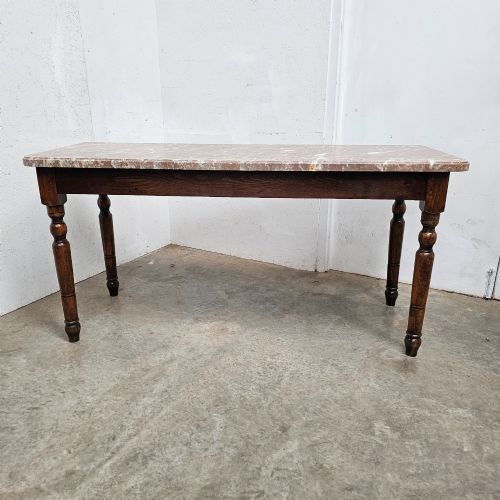


Vintage Bakers Table
These vintage bakers table examples bring hard-wearing utility and time-worn character directly into the modern kitchen or workspace.
Vintage Bakers Table
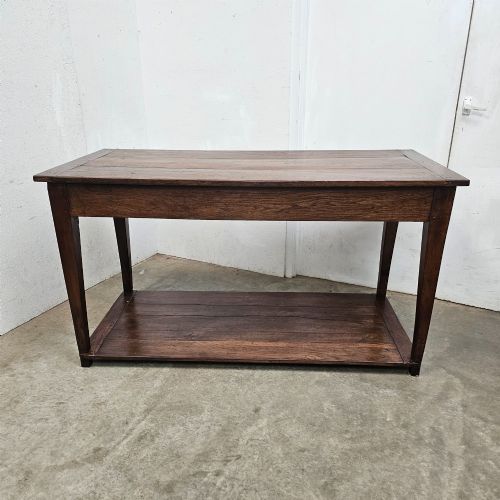
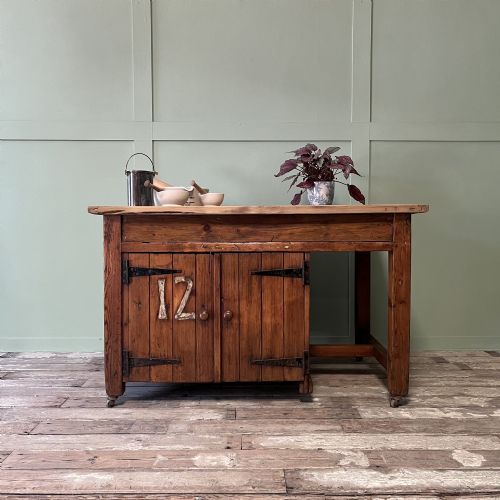
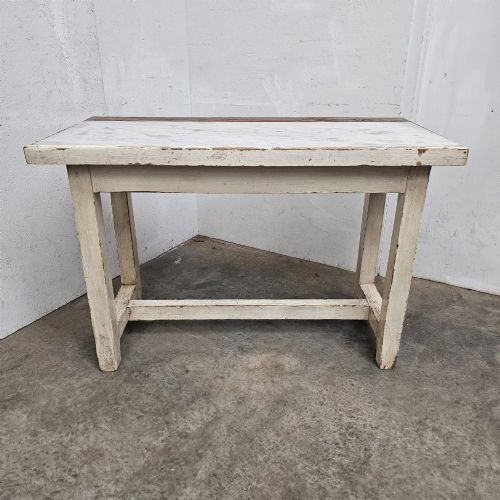
A vintage bakers table serves as a functional workspace designed originally for food preparation, pastry work, and baking. These pieces appear primarily as prep tables, work tables, and console tables originating from the nineteenth and early twentieth centuries.
The selection here encompasses regional variants including French provincial patisserie tables, Scandinavian painted pine pieces, and English oak examples. Buyers encounter robust timbers and practical surfaces suited for daily use.
Forms range from simple pine work benches to marble-topped display tables and two-tier designs. Each piece reflects the utilitarian requirements of historical kitchens and bakeries.
Materials and construction
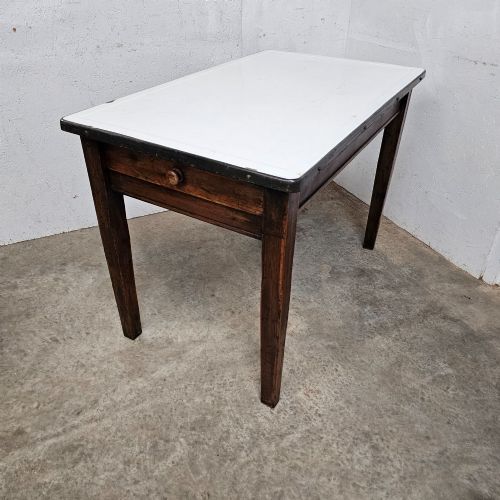
Construction relies heavily on solid pine, oak, and walnut, often paired with heavy marble or enamel slabs designed for rolling dough. Wrought iron and brass hardware provide structural support and functional detail.
Surfaces frequently show original paint finishes, such as traditional Falu red or muted tones, alongside scrubbed wood tops that bear the marks of historical use. Joinery techniques are straightforward and robust to withstand heavy labour.
Some tables still carry the flour dust of past centuries settled deep within their unsealed grain.
Assessing quality and authenticity
Quality rests in the integrity of the original materials, particularly the thickness and condition of marble tops or heavy timber planks. Tables retaining their original paint finishes or untouched patination command greater interest among collectors.
Proportion and structural soundness distinguish superior examples from standard utility benches. Pieces that maintain their original drawers, lower tiers, and authentic hardware demonstrate higher integrity.
Druce & Co Baker St London
The Vintage Bakers Table Glossary
- Patisserie table
- A specialised work table featuring a marble or stone top specifically designed for pastry making and cooling. These surfaces remained cool to the touch, preventing butter from melting during preparation.
- Falu paint
- A traditional deep red paint originating from Sweden, composed of copper mine residue, linseed oil, and flour. It offers strong preservation qualities for exterior and interior pine furniture.
- Prep table
- A utilitarian bench designed for food preparation in domestic or commercial kitchens. They typically feature unadorned wooden tops and sturdy legs capable of enduring vigorous kneading.
- Two-tier work table
- A form incorporating an additional lower shelf beneath the main surface for storing utensils and ingredients. This design maximises storage space in compact historical kitchens.
- Charcuterie prep table
- A heavy work table utilised for the preparation of cured meats and provisions. These often combine stone or heavy wood surfaces with robust frames.
Vintage Bakers Table: Frequently Asked Questions
What is a vintage bakers table used for?
Originally utilised for rolling pastry, kneading bread, and preparing provisions in commercial kitchens, these tables suit modern use as kitchen islands, sideboards, or desks.
Their sturdy surfaces and generous proportions provide practical workspace for cooking and everyday domestic tasks.
How do I clean a marble top bakers table?
Marble surfaces require gentle cleaning with warm water and mild, pH-balanced soap to avoid etching the stone. Acidic substances like lemon juice or vinegar should be kept away from historical marble.
Regular wiping maintains the stone while preserving the natural wear acquired over decades of use.
Are these tables suitable for modern kitchens?
These tables integrate smoothly into contemporary kitchens, offering generous workspace and distinct historical character. Their robust construction handles everyday culinary activities with ease.
Buyers often place them centrally as freestanding islands or against walls as preparation counters.
How can I tell the age of a bakers table?
Age is determined through timber characteristics, tool marks, joinery methods, and overall patination. Nineteenth-century examples often display hand-sawn boards and pegged joints.
Finish remnants, such as layers of original paint or heavy wax buildup, provide further clues to a piece's historical timeline.