

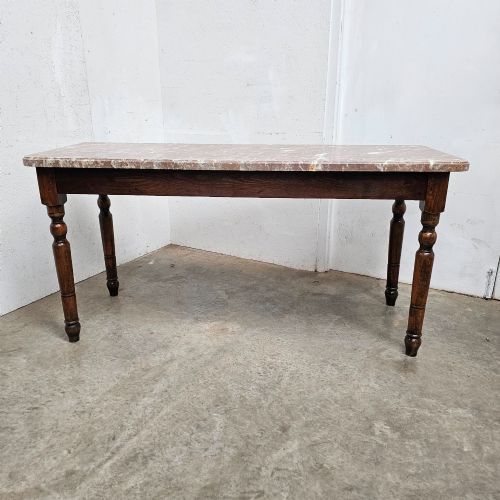


19th Century Bakers Table
A 19th century bakers table brings utilitarian utility and rustic presence to a kitchen, offering a wide prep surface rooted in authentic working history.
19th Century Bakers Table
When buyers search for a 19th century bakers table, they encounter heavy timber preparation surfaces designed for domestic or commercial food production. These forms span several regional identities, including Scandinavian country, French provincial, and English vernacular origins.
The versions most commonly met on this page are substantial pine or oak structures, often constructed with painted pine frames or sturdy trestle bases. They appear under various descriptions such as work tables, bread prep tables, and patisserie display tables.
Many examples hail from the 19th century, featuring original scrubbed tops, two-tier configurations, or integrated marble slabs intended for pastry work. These surfaces served rigorous daily use before finding a second life in modern domestic interiors.
How they were made
Construction relies heavily on dense native timbers such as pine, oak, and other hardwoods, assembled to withstand heavy downward pressure during kneading and chopping. Joinery is straightforward and robust, prioritising structural integrity over decorative flourish.
Many 19th century bakers table examples incorporate heavy white marble tops designed to keep pastry cool during preparation, whilst others feature scrubbed wooden boards shaped by decades of scraping and cleaning. Wrought iron bracing and brass fittings appear on specific regional variants to reinforce the frame.
19th Century Bakers Table Retail Price Guide 2026
Typical asking prices for 19th century bakers table among the pieces listed under this phrase on Sellingantiques today, from the lower quarter to the upper quarter. They describe what is for sale here now, not the wider market.
Every deep groove across these tabletops tells the silent story of flour, rolling pins, and hurried pastry chefs long gone.
What varies in quality
The distinction between ordinary and exceptional pieces lies in the integrity of the timber and the honesty of the surface patina. Tables retaining their original paint finishes or untouched scrubbed grain carry greater authenticity than those subjected to modern interventions.
Proportional balance and structural heft separate simple domestic work benches from substantial commercial patisserie display tables. The presence of original marble slabs or secondary lower tiers significantly influences the character and usefulness of the piece.
frodsham and baker london
The 19th Century Bakers Table Glossary
- Patina
- The surface sheen and colour acquired by wood, paint, and metal through years of use, cleaning, and exposure to the environment. This gradual transformation distinguishes old timber from newly finished surfaces.
- Scrubbed top
- A wooden tabletop cleaned repeatedly with water and a stiff brush, leaving the grain raised and pale. This process creates a distinctive tactile texture characteristic of hardworking kitchen furniture.
- Trestle base
- A support structure where the tabletop rests on two or more upright frames connected by a horizontal beam. This design provides generous legroom and exceptional stability under heavy loads.
- Two tier
- A furniture configuration featuring an additional lower shelf positioned beneath the main surface. Bakers utilised this secondary level for storing bowls, trays, and ingredients close to hand.
19th Century Bakers Table: Frequently Asked Questions
What is a 19th century bakers table?
A 19th century bakers table is a heavy wooden or marble-topped work table originally used in domestic kitchens, bakeries, or patisseries for preparing dough and bread.
These pieces reflect the utilitarian standards of the period, constructed from pine, oak, or hardwood to endure demanding daily tasks.
How do I clean a wooden bakers table?
Cleaning requires simple methods that respect the historic surface, typically using a damp cloth and mild soap rather than harsh chemical detergents.
Keeping the wood nourished with appropriate natural waxes protects the dry grain without masking the accumulated character of the timber.
Where were bakers tables used originally?
These tables stood in commercial bakehouses, farmhouse kitchens, and specialist patisserie shops where food preparation required a stable, expansive surface.
Regional variations reflect the specific needs of different European traditions, from Scandinavian painted pine to French marble-topped display pieces.
Can I use a bakers table for dining?
The generous proportions and sturdy construction make these tables suitable for everyday dining or as central kitchen islands.
Buyers often pair them with benches or chairs, utilising the lower tiers or spacious tops for modern entertaining and family meals.