

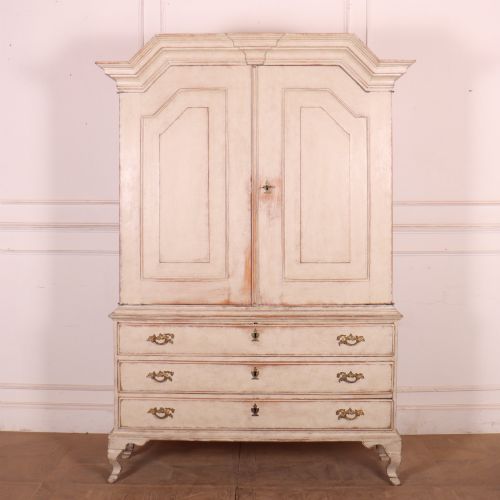


Scandinavian Painted Pine Cabinet
A Scandinavian painted pine cabinet brings functional storage and subtle colour to an interior, shaped by northern European craftsmanship.
Scandinavian Painted Pine Cabinet
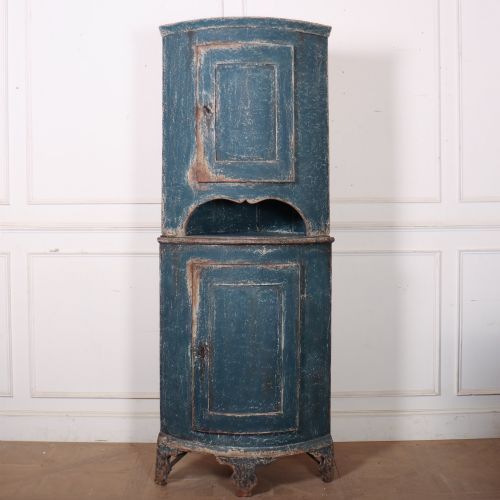
A Scandinavian painted pine cabinet spans tall linen cupboards, corner cupboards, wall cabinets, and commodes originating from Sweden, Denmark, Finland, and the wider Baltic region. These pieces date primarily from the eighteenth and nineteenth centuries, with occasional examples from the Georgian period and the early twentieth century.
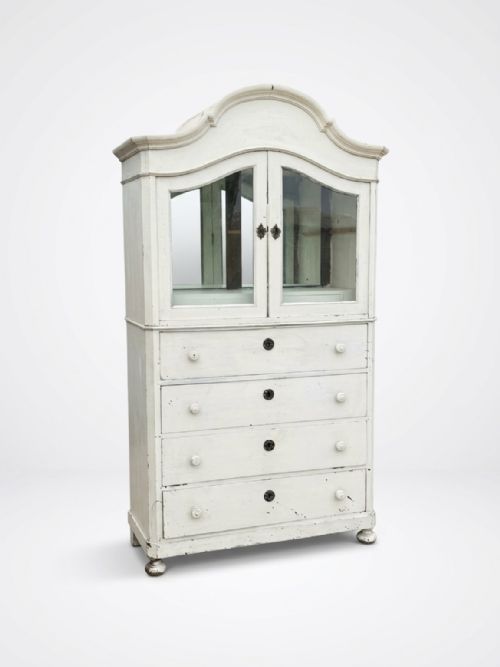
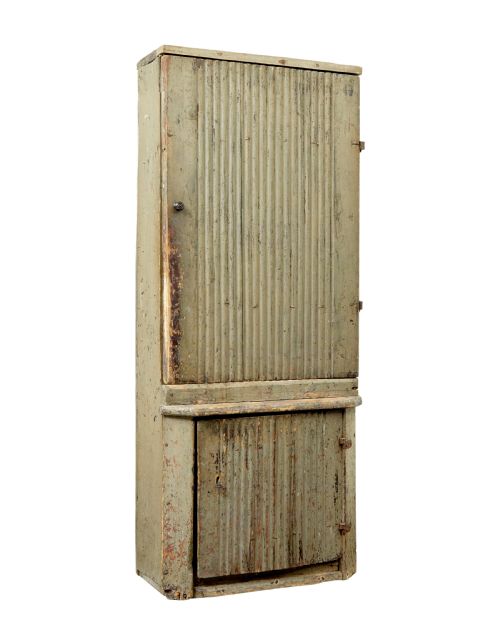
The version most commonly encountered on this page is the nineteenth-century Swedish painted pine cupboard, often built with double doors, raised on a stand, or configured as a kitchen cabinet. Wall cupboards and narrow cabinets also appear frequently, reflecting domestic storage needs in rural and urban northern homes.
Materials and Construction
These items rely on native pine and softwood, constructed by joiners using traditional methods and assembled with iron or brass hardware. Glass panels occasionally feature in upper doors for bookcase or display variants.
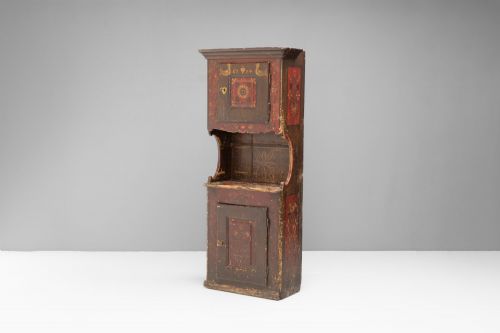
Surfaces are finished with layers of paint, including traditional hand-painted designs, folk art motifs, and textured ragwork techniques. Many pieces retain original or scraped paint surfaces that reveal the underlying wood and historic colour schemes.
Listings span the eighteenth and nineteenth centuries, featuring pine, painted softwood, iron, and brass across Swedish, Danish, and Finnish origins.
Assessing Quality
The standard of a piece rests upon the integrity of its timber construction and the preservation of its original decorative scheme. Pieces with untouched historic paint surfaces and skilful hand-painted detailing command greater interest than later repainted examples.
Proportion and architectural detail also separate examples, seen in the balance of bonnet tops, bowfronts, and refined corner cabinetry compared to simpler rustic utility pieces.
The Scandinavian Painted Pine Cabinet Glossary
- Gustavian
- A Swedish neoclassical style spanning the late eighteenth and early nineteenth centuries, characterised by lighter proportions and restrained classical ornamentation. It draws inspiration from French royal design adapted to Nordic tastes.
- Ragwork
- A decorative painting technique where rags or cloths are used to apply or manipulate glaze and pigment on a surface. This creates a mottled, textured pattern across the pine.
- Bonnet top
- An arched or domed upper section built onto the top of a cabinet or bookcase. This architectural feature adds height and visual presence to case furniture.
- Bowfront
- A convex, curved front section on a cupboard, chest, or commode. This profile softens the rectangular lines of the cabinet.
- Commode
- A low piece of furniture featuring drawers or doors, typically used for storage in bedrooms or living spaces. In northern European contexts, these often feature painted softwood construction.
Scandinavian Painted Pine Cabinet: Frequently Asked Questions
How do I date a painted pine cabinet?
Dating relies on construction methods, hardware types, and the composition of the paint layers. Earlier pieces from the eighteenth century often display hand-cut nails and pegged joints.
Later nineteenth-century examples incorporate machine-sawn timber and different fastening methods. Paint analysis further aids in distinguishing original historic finishes from later decoration.
Where were these cabinets used originally?
These cabinets served practical storage functions in domestic interiors across Sweden, Denmark, Finland, and the Baltic region. They were placed in kitchens, hallways, and living quarters to hold linen, tableware, and provisions.
Wall cupboards provided compact storage in smaller rooms, while large armoires and linen cupboards stood in primary living spaces.
How do I care for original painted surfaces?
Original painted pine requires gentle maintenance to preserve the historic finish and underlying softwood. Dusting with a dry, soft cloth prevents particulate buildup without moisture damage.
Keep pieces away from direct sunlight and excessive humidity fluctuations to prevent the paint from cracking or flaking.