
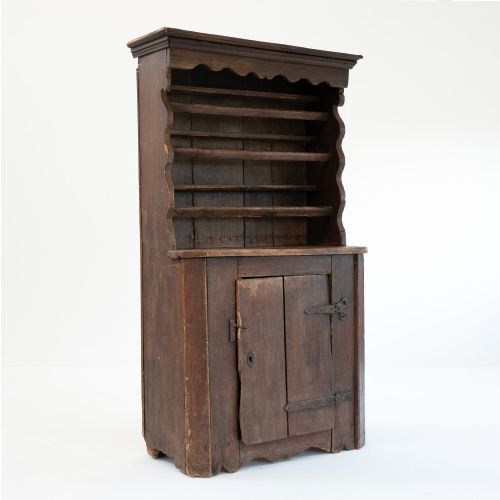
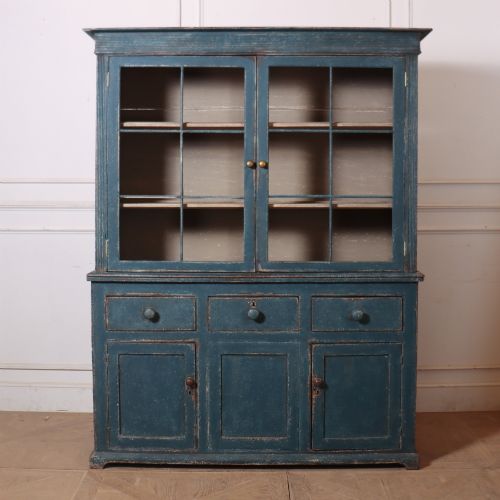
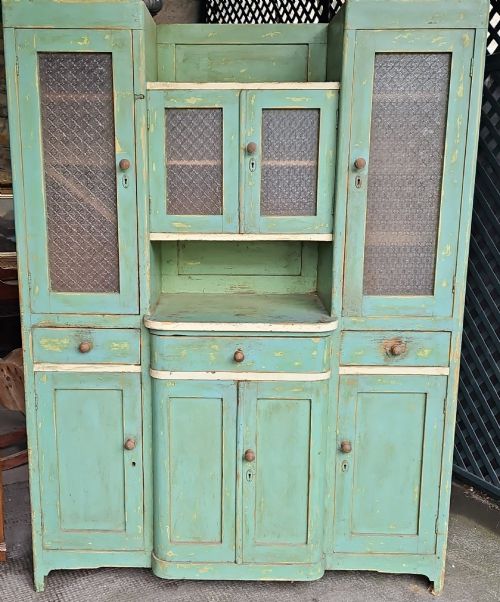


Rustic Painted Cupboard Hutch
A rustic painted cupboard hutch brings everyday utility and regional character into a home through honest pine construction and aged surface colour.
Rustic Painted Cupboard Hutch
A rustic painted cupboard hutch combines open plate racks with enclosed lower storage, serving as the traditional working heart of a country kitchen. When browsing these items, buyers encounter regional forms such as Welsh, Irish, and West Country dressers, alongside continental examples.
The pieces on this page span from the eighteenth century through the Victorian period and Edwardian era, showing how domestic storage evolved. Kitchen dressers and cabinets predominate, often retaining traces of their original or subsequent layers of decorative paint.
Makers working within English, Irish, Scandinavian, and Alpine folk art traditions built these cupboards to suit local domestic needs. Each region imparted subtle variations in proportion, cornice design, and door configuration while maintaining the core utilitarian form.
How they were made
Makers relied primarily on solid pine for the carcass and shelving, utilising timber that was locally available and straightforward to work with using hand tools. Wrought iron and brass hardware, including hinges and drawer pulls, secured the doors and added functional strength.
Surfaces received layers of lead-based or oil paints, sometimes showing folk art decoration in cream, teal, or other regional colourways. Glass panels appeared in upper cabinet doors on later pieces, whilst earlier examples favoured open shelving for display.
Regional styles represented include English provincial, Alpine folk art, and West Country vernacular traditions.
What varies in quality
The integrity of the original timber construction and the survival of early painted surfaces dictate the standing of a piece within its type. Proportion and regional vernacular detailing separate standard utilitarian cupboards from those with finer cornices and balanced cabinetry.
Integrity of form matters greatly, as pieces retaining their original two-piece configuration and period hardware command more interest than those altered over generations of domestic use.
The Rustic Painted Cupboard Hutch Glossary
- Dresser
- A combination of lower cupboards and drawers with upper open shelving or enclosed cabinets. This form developed for storing and displaying domestic pottery and kitchen provisions.
- Hutch
- An upright piece of furniture featuring enclosed storage, often combining a lower cabinet with upper shelving. The term frequently overlaps with dresser in vernacular British and European furniture.
- Folk Art
- Decorative or utilitarian objects made within a traditional cultural style by self-taught or local craftspeople. These pieces often feature idiosyncratic painted motifs and unpretentious construction methods.
- Cornice
- The decorative moulded projection that crowns the top of a cabinet or dresser. Regional makers often used distinct moulding profiles to identify their local school of work.
- Vernacular
- Architecture and furniture built by local makers using traditional methods and locally sourced materials to satisfy immediate practical needs. Such pieces reflect the specific regional customs of their origin.
Rustic Painted Cupboard Hutch: Frequently Asked Questions
How do I date a painted dresser?
Dating relies on examining construction methods, timber thickness, and nail types alongside stylistic clues in the cornice and door panels.
Earlier examples from the eighteenth century show hand-planed boards and simpler joinery, whereas Victorian and Edwardian pieces incorporate machine-sawn timber and different hardware.
Are these pieces made of solid wood?
Makers constructed these cupboards using solid timber, predominantly pine, rather than manufactured boards or veneers.
This solid construction allowed the furniture to withstand heavy daily use in busy farmhouse kitchens over centuries.
How do I care for an old painted finish?
Preserving an aged painted surface requires keeping the furniture away from direct sunlight and maintaining stable room humidity.
Dusting with a dry, soft cloth is sufficient, avoiding modern chemical polishes that can soften or lift historic paint layers.