
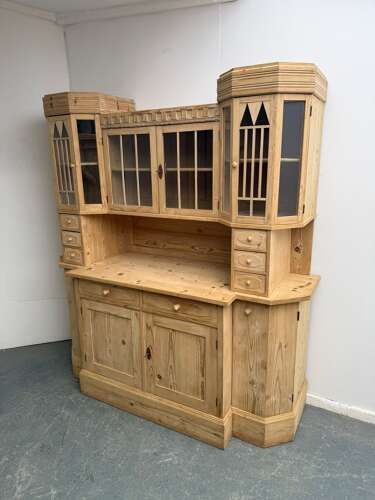
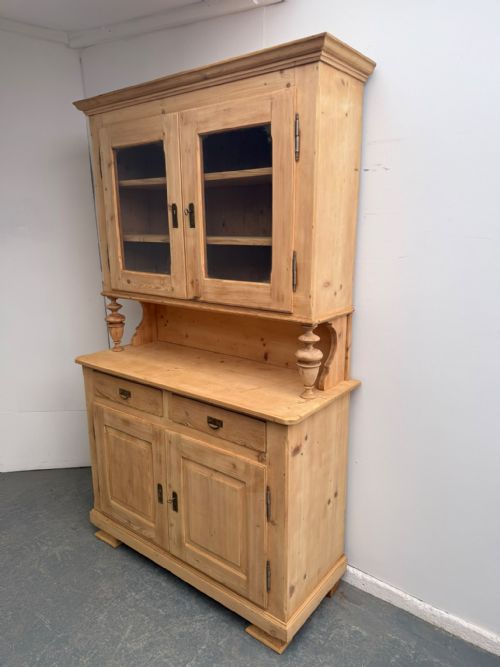


Painted Pine Sideboard Hutch
These painted pine sideboard hutch pieces bring honest utility and regional character to a room, offering generous storage alongside a surface for display.
Painted Pine Sideboard Hutch
When you search for a painted pine sideboard hutch, you encounter sturdy storage furniture primarily originating from country houses and farmhouses. The selection spans pieces from the 18th century, Victorian era, 1910, and 1930, capturing domestic life across different centuries.
Most items on this page manifest as kitchen dressers and dressers complete with upper racks for displaying crockery. These forms derive from English, Welsh, French, Scandinavian, and Swedish traditions, showing regional variations in proportion and painted finishes.
How they were made
Carpenters built these carcases primarily using solid pine, incorporating glass, brass, iron, and ceramic details for handles, glazed doors, and structural support. Surfaces received layers of paint, scrumbled finishes, or wax, protecting the soft wood while adding decorative colour.
Makers constructed the lower sideboard or cabinet base to bear heavy domestic weight, attaching upper shelving racks either as integral components or separate sections. Iron and brass hardware secured doors and drawers, while tiles occasionally appeared in Arts and Crafts examples.
Materials recorded across the inventory include pine, glass, brass, iron, ceramic, and painted wood, alongside specialised finishes like scrumbled paint.
What varies in quality
Quality rests in the integrity of the original construction and the preservation of early painted surfaces rather than mass-produced uniformity. Pieces displaying original scrumbled or regional paint schemes hold greater interest than later, heavy-handed overpainting.
Proportion and regional detailing distinguish finer examples from standard utility furniture. Well-balanced cornices, untouched hardware, and sound joinery in the pine carcase separate exceptional country pieces from lesser iterations.
The Painted Pine Sideboard Hutch Glossary
- Pine
- A softwood commonly used for country furniture because it was readily available and easy to work with. It takes paint and wax finishes well, forming the primary structure of these dressers.
- Dresser
- A dual-purpose piece of furniture featuring a lower sideboard or cabinet combined with an upper plate rack. It served for both food preparation storage and display in domestic kitchens.
- Scrumbled
- A decorative paint technique involving the manipulation of translucent glazes over a lighter base colour to simulate grain or texture. It creates a mottled, aged appearance on country furniture.
- Rack
- The open shelving superstructure attached to the top of a sideboard base. It provides display space for plates, bowls, and household ceramic wares.
Painted Pine Sideboard Hutch: Frequently Asked Questions
What is a painted pine sideboard hutch used for?
These pieces function as primary storage and display units in domestic spaces. They house dinnerware, glassware, and kitchen goods behind cabinet doors while showing decorative ceramics on the open upper racks.
Historically, they anchored the working kitchen or dining room of country houses and farmhouses. Today, collectors utilise them in modern interiors to bring warmth, historical texture, and practical storage to kitchens and living areas.
How do I date a painted pine dresser?
Dating relies on examining construction methods, timber thickness, hardware, and stylistic traits. Eighteenth-century examples often display hand-planed boards and simpler, heavier proportions, while Victorian and 1910 pieces introduce machine-sawn elements and different moulding profiles.
Paint history also aids dating. Original or early surfaces show specific craquelure, wear patterns, and pigment types that distinguish centuries of age from modern decorative applications.
Are these pieces French or English?
The inventory includes both British and continental origins, specifically English, Welsh, French, Swedish, and broader Scandinavian traditions. Regional styles differ in cornice shapes, foot styles, and the arrangement of drawers and cupboards.
Examining the construction and painted finish reveals these geographic roots. English and Welsh pieces often display robust country proportions, whereas Swedish and French variants show lighter painted palettes and distinctive mouldings.
How should I care for antique painted pine furniture?
Protect antique painted surfaces by keeping pieces away from direct sunlight and extreme temperature fluctuations. Avoid harsh chemical cleaners that might strip the historic paint or wax finishes.
Dust gently with a dry or slightly damp cloth to maintain the wood and paint. Periodically applying a microcrystalline wax can preserve exposed pine areas without harming the aged patina.