



Scandinavian Chest Drawers
These scandinavian antique chest drawers bring sculptural timber and painted surface to a room, offering practical storage grounded in northern European craftsmanship.
Scandinavian Chest Drawers
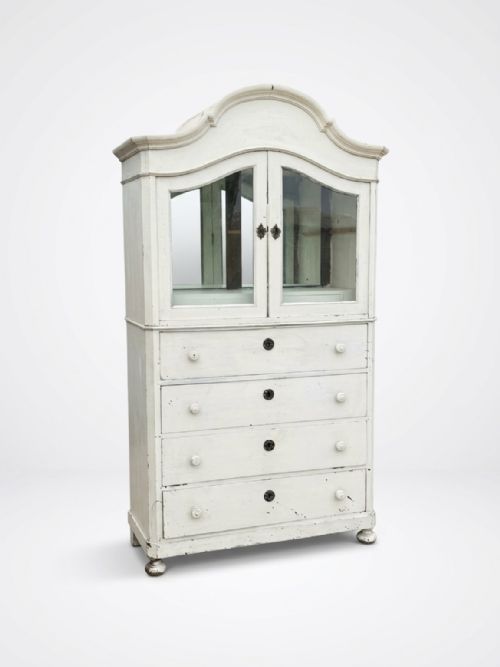
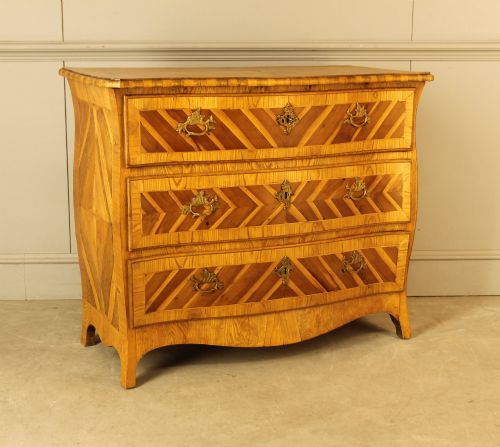
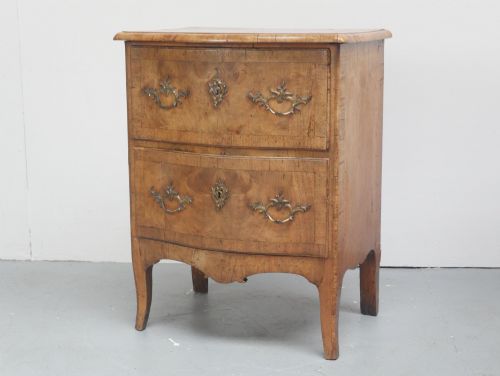
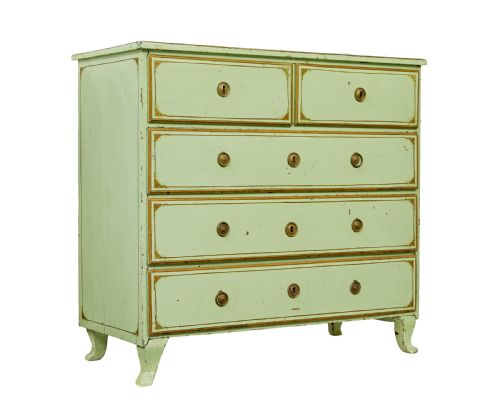
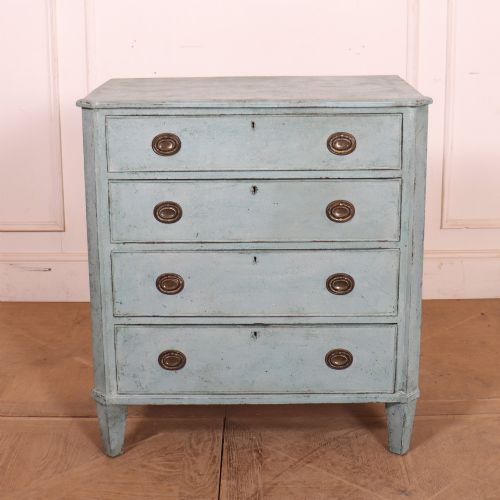
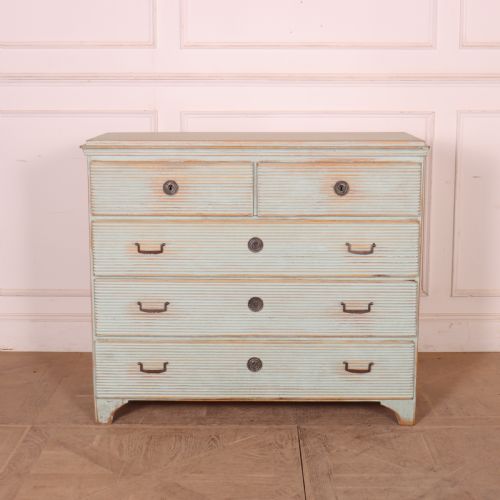
When searching for scandinavian antique chest drawers, collectors encounter pieces primarily originating from Sweden and Denmark, spanning the eighteenth and nineteenth centuries. The selection leans heavily towards chests of drawers and commodes built in birch, pine, and elm, often finished with distinctive painted treatments or polished wood veneers.
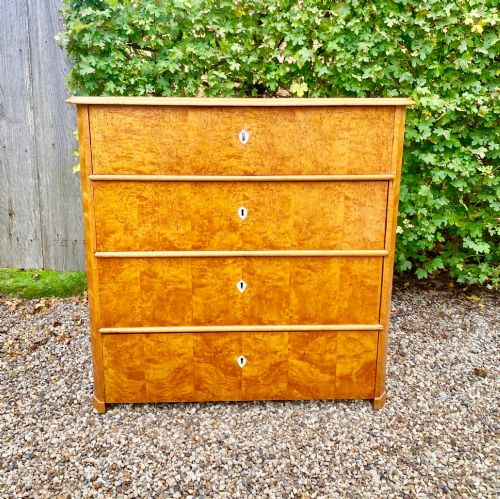
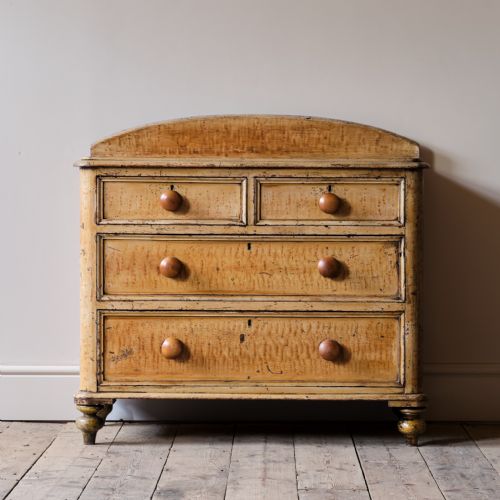
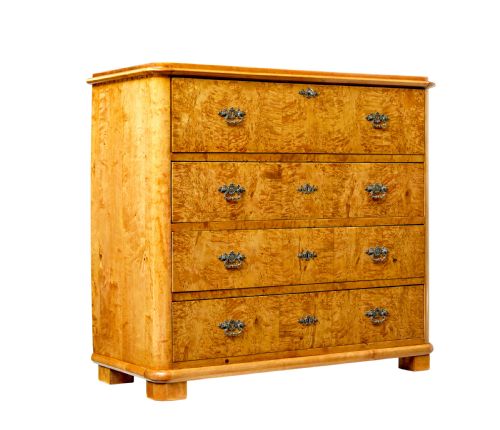
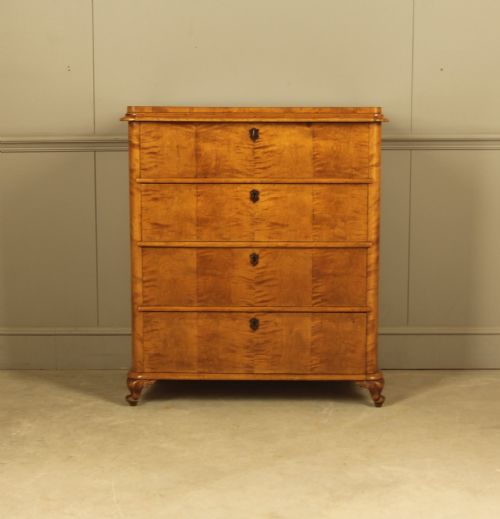
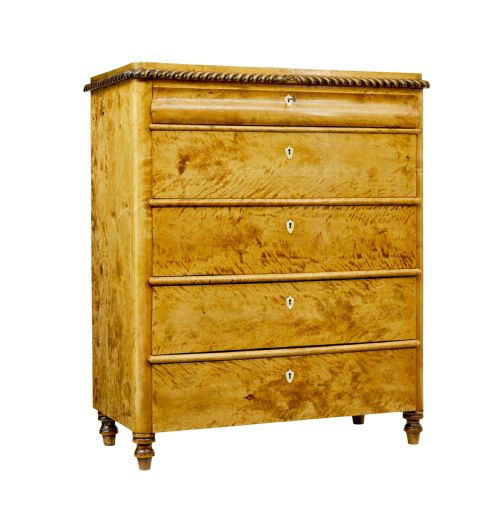
The most common examples on this page are nineteenth-century birch chests, ranging from straight-drawer formats to secretaire designs and commodes with serpentine fronts. Gustavian and Biedermeier stylistic influences appear frequently, alongside rustic Scandinavian country pieces in original paint.
How they were made
Cabinet makers built these carcasses using native timbers such as pine for internal framing and birch, flame birch, or burr birch for visible outer surfaces. Decorative effects relied on wood selection, such as tiger grain or masur figuring, alongside hand-applied paint in pale or dark palettes.
Hardware details incorporated brass and iron handles, while structural joining often utilised traditional dovetailing on drawer boxes. Surface preservation frequently preserves original paint layers or polished timber finishes applied during the eighteenth and nineteenth centuries.
Pine and birch appear across multiple centuries on this site, alongside decorative applications of brass, iron, and bone.
What varies in quality
The distinction between standard utility storage and exceptional cabinetwork rests in the choice of timber veneer and the precision of surface decoration. Flame and masur birch surfaces require careful matching across drawer fronts, whereas simpler pine pieces depend entirely on the character of their original paint.
Proportion and regional styling dictate design success, separating straightforward country work from sophisticated urban commodes bearing Gustavian or Biedermeier influences. The preservation of untouched surface coatings and original hardware further separates ordinary survivors from exemplary museum-grade pieces.
Gemla Fabrikers
The Scandinavian Chest Drawers Glossary
- Commode
- A low chest of drawers or cabinet, frequently featuring decorative serpentine or bombe shaping. These pieces often serve as focal points in reception rooms.
- Biedermeier
- A central European and Scandinavian design style spanning the nineteenth century, characterised by utilitarian comfort and clean architectural lines. This aesthetic highlights the natural grain of birch and other timbers without excessive ornamentation.
- Gustavian
- The Swedish neoclassical style developed under King Gustaf III, known for restrained symmetry and pale painted finishes. Motifs often draw inspiration from French Louis XVI design.
- Secretaire
- A cabinet or chest of drawers incorporating a fitted drop-down writing desk compartment. This dual-purpose form provides concealed pigeonholes and small drawers.
- Flame birch
- Timber cut to reveal a characteristic undulating grain pattern resembling flickering flames. Cabinet makers prized this figured wood for drawer fronts.
Scandinavian Chest Drawers: Frequently Asked Questions
What is the difference between Gustavian and Biedermeier chests?
Gustavian chests date primarily from the late eighteenth century and typically feature pale painted finishes with neoclassical carved details. They reflect a lighter, French-inspired elegance.
Biedermeier chests belong to the nineteenth century and showcase polished wood veneers such as birch without heavy ornamentation. Their appeal lies in warm timber tones and geometric simplicity.
Where should I place a serpentine commode?
Serpentine commodes feature curved fronts that suit entrance halls, drawing rooms, or bedrooms as statement storage pieces. Their shaped profiles require space to be fully appreciated rather than pushed into a tight corner.
Pairing a commode with a simple mirror or lamp allows the timber grain or painted finish to stand out. Ensure the room humidity remains stable to protect the older drawer joints.
How do I identify original paint on pine chests?
Original paint shows natural wear patterns, minor craquelure, and integrated layers that build up over decades of use. Modern repainting often lacks this depth and sits uniformly across the timber.
Examining the interior surfaces and underside can also reveal hidden traces of early finishing techniques. Untouched painted pine carries a matte texture distinct from contemporary gloss applications.