



19th Century Scandinavian Dresser
A 19th century scandinavian dresser brings utilitarian Nordic history into modern rooms through painted surfaces and rich timber grains.
19th Century Scandinavian Dresser
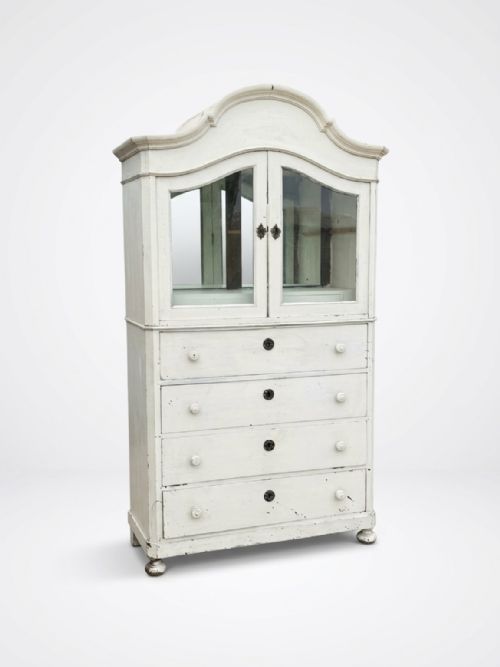
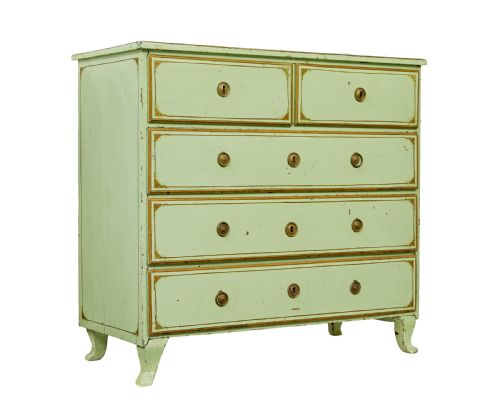
When searching for a 19th century scandinavian dresser, buyers encounter a selection dominated by chests of drawers, painted cupboards, and kitchen cabinets originating from Sweden and Denmark.
The objects span periods from the early 1800s through the Victorian era and into the early twentieth century, reflecting regional utilitarian needs.
Most examples take the form of multi-drawer chests or standing cupboards rather than traditional open plate racks, reflecting local storage traditions.
Materials and construction methods
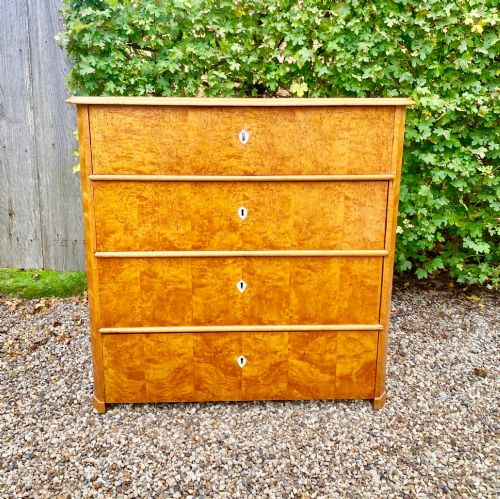
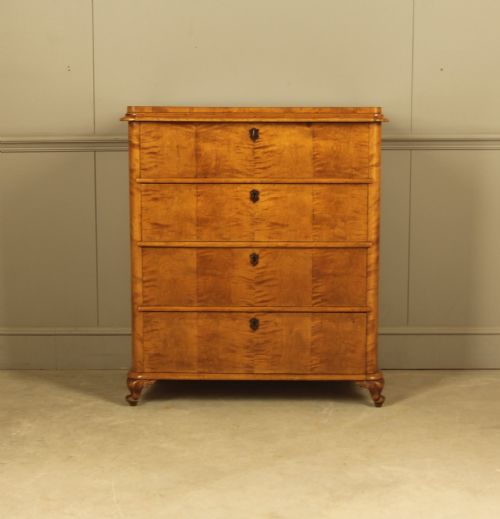
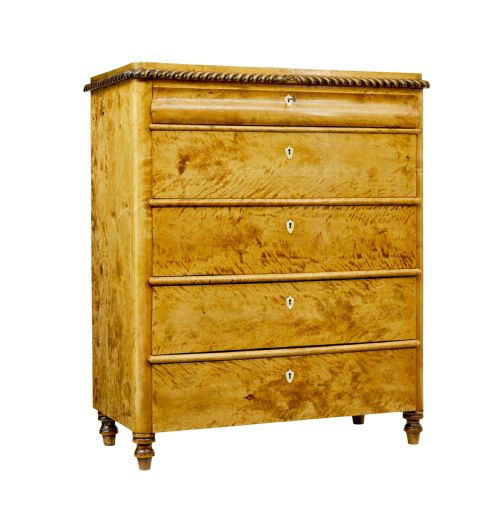
Local timbers dictate the construction, with softwoods like pine used for painted items and hardwoods such as birch, flame birch, tiger birch, and masur birch selected for polished furniture.
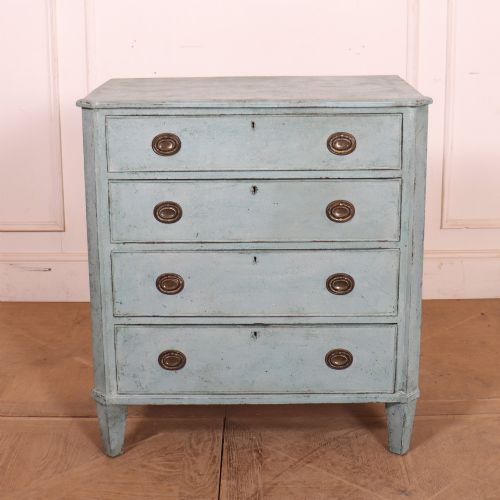
Surfaces receive either layered hand-painted finishes, scraped original paint, or polished grain treatments, sometimes accented with brass or iron hardware and occasional bone details.
Secret drawers occasionally hide behind the top mouldings of nineteenth-century bonnet top cabinets.
Distinguishing quality across the range
The standard of execution rests on the choice of timber veneer and the survival of original surface treatments.
Pieces utilising highly figured flame birch or untouched scraped paint demonstrate superior workshop competence compared to plain secondary timbers with modern re-paint layers.
The 19th Century Scandinavian Dresser Glossary
- Gustavian
- A Swedish neoclassical style originating in the late eighteenth century that continued to influence nineteenth-century furniture design through restrained proportions and pale painted finishes.
- Flame birch
- A decorative hardwood veneer displaying a distinctive flickering wave pattern in the grain. Cabinetmakers prized this timber for drawer fronts on formal chests.
- Commode
- A decorative low chest of drawers or cabinet raised on legs. These pieces served functional storage roles in formal domestic interiors.
- Scraped paint
- A conservation term describing original painted layers exposed by carefully removing later overcoats. This technique preserves the historical surface texture.
- Caddy top
- A raised or moulded tabletop style featuring stepped edges. It adds architectural definition to the upper surface of a chest of drawers.
19th Century Scandinavian Dresser: Frequently Asked Questions
What is a 19th century scandinavian dresser used for?
These pieces provide substantial storage capacity for domestic settings, combining drawers and cabinet space.
Historically used in Nordic homes for linens and kitchen stores, they function today as living room storage or hallway consoles.
How do I identify a Gustavian piece?
Gustavian pieces display neoclassical restraint, often featuring pale painted surfaces and subtle carved details.
Proportions remain balanced and geometric, drawing on eighteenth-century royal aesthetics that persisted into the nineteenth century.
Are painted finishes usually original?
Surfaces vary between untouched original paint, scraped historical layers, and later decorative coats applied during subsequent decades.
Examining the paint edges and underlying timber helps determine whether the finish dates to the manufacturing period.
Which woods are most common?
Pine serves as the primary material for painted folk art cupboards and country kitchen cabinets.
Birch, including flame, tiger, and masur variations, appears predominantly on polished chests of drawers and cabinets.