


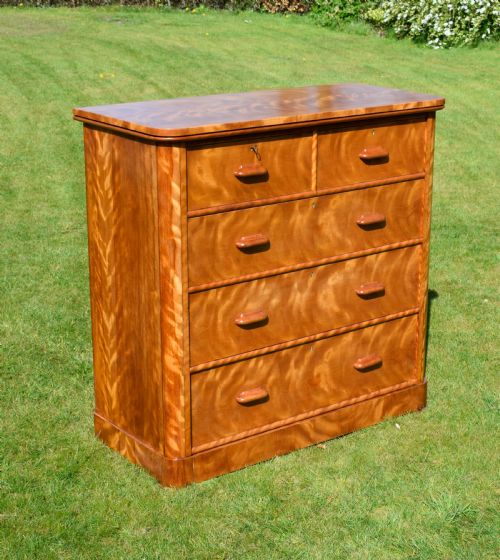


Antique Flame Birch Furniture
Antique flame birch furniture brings striking, rippled wood grain into interiors through pieces spanning the nineteenth century to the art deco era.
Antique Flame Birch Furniture
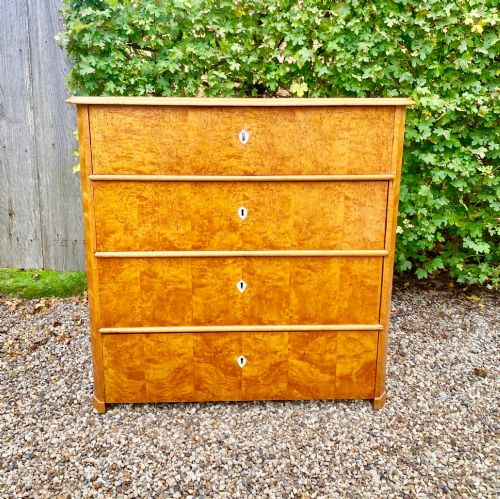
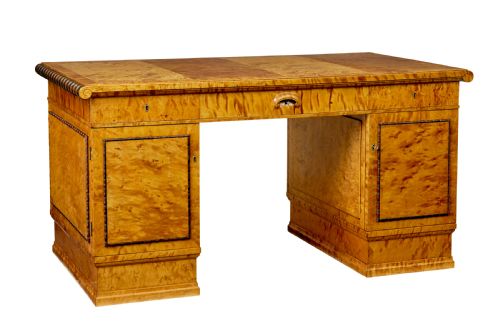
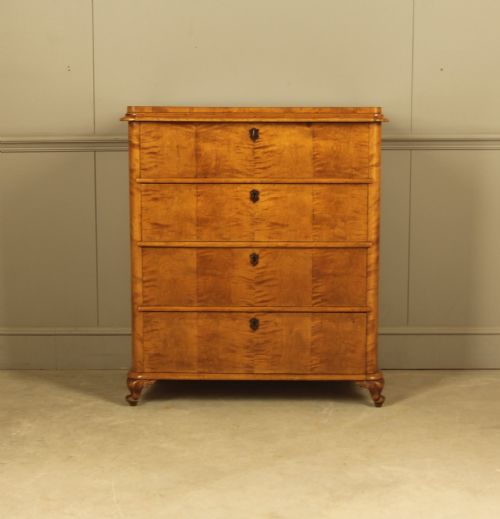
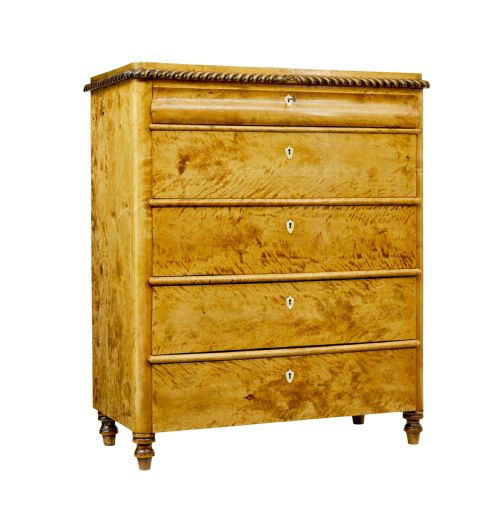
When searching for antique flame birch furniture, buyers encounter rich, highly figured timber surfaces shaped into practical domestic forms. Chests of drawers dominate the selection, alongside secretaires, desks, and tables originating largely from Sweden.
The aesthetic leans heavily towards Scandinavian Biedermeier and Victorian designs, where clean structural lines allow the natural timber figure to dominate. Pieces range from mid-nineteenth-century commodes to later art deco pedestals and coffee tables.
Storage items like cupboards and chests feature prominently, often utilising the distinctive grain patterns of birch, tiger birch, and satin birch. These items combine utility with decorative warmth, fitting comfortably into traditional and modern rooms alike.
What varies in quality
The visual strength of the flame figure sets exceptional examples apart from simpler pieces, depending on how artfully the grain was matched across drawer fronts and tabletops. Cohesion in timber selection across a single piece indicates careful planning by the cabinet maker.
The integrity of the veneer work and the crispness of any applied carvings or inlay determine the overall refinement of the item. Proportion and balance in forms like secretaires and chests dictate whether a piece maintains a commanding presence.
One late nineteenth-century sewing table comes complete with its original contents, preserving small domestic secrets inside.
The Antique Flame Birch Furniture Glossary
- Flame birch
- A highly figured timber variety showing a flickering, flame-like pattern in the grain. This decorative effect results from wavy growth patterns in the tree.
- Biedermeier
- A central European style spanning the nineteenth century focusing on utilitarian comfort and clean lines. It relies on polished wood grain rather than heavy ornamentation for its visual appeal.
- Masur birch
- A distinct natural variation of birch featuring small dark swirls and disturbances in the grain. It creates a speckled, highly textured surface often utilised in finer cabinet work.
- Secretaire
- A cabinet or chest incorporating a fitted writing drawer with a fold-down front. These hybrid pieces provide concealed desk space alongside standard storage drawers.
- Commode
- A low chest of drawers or cabinet originating from French influence. The term frequently describes formal nineteenth-century drawer units.
Antique Flame Birch Furniture: Frequently Asked Questions
How do I clean flame birch?
Dust surfaces regularly with a soft, dry cloth to prevent accumulation. Avoid modern spray polishes containing silicone, which can damage aged finishes.
Apply a traditional beeswax sparingly when the wood appears dry, buffing gently to maintain the natural sheen. Keep pieces away from direct sunlight and radiators to prevent timber shrinkage.
What is tiger birch?
Tiger birch is an alternative descriptive term for highly figured wood displaying contrasting striped patterns resembling tiger stripes. It shares the same botanical origins as standard birch but exhibits unusual grain distortion.
Cabinet makers prized this variant for creating bold visual movement on large surfaces like drawer fronts and table tops. It appears frequently in nineteenth-century Scandinavian furniture.
How do I date a birch chest?
Examine the construction methods, drawer linings, and overall style cues such as neoclassical proportions or art deco geometry. Nineteenth-century pieces often feature hand-cut dovetails and solid secondary timbers like pine.
Compare the hardware, such as brass pulls or locks, against known period standards. Regional styles, particularly Swedish Biedermeier, offer strong chronological markers.
Are these pieces suitable for daily use?
Most items were built for domestic utility and remain sturdy enough for regular contemporary living. Chests, desks, and tables function just as well today as they did in the nineteenth century.
Careful placement away from extreme temperature swings ensures the veneer remains stable. Normal use with coasters and placemats protects delicate polished surfaces from wear.