
Scalloped Top Table
A scalloped top table brings shaped, characterful moulding to everyday surfaces, offering a distinct silhouette that elevates standard occasional furniture.
Scalloped Top Table
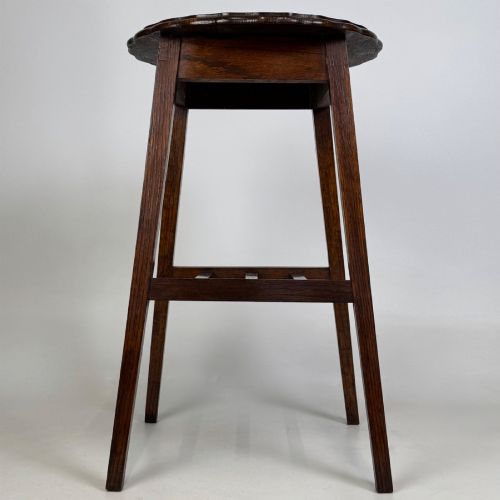
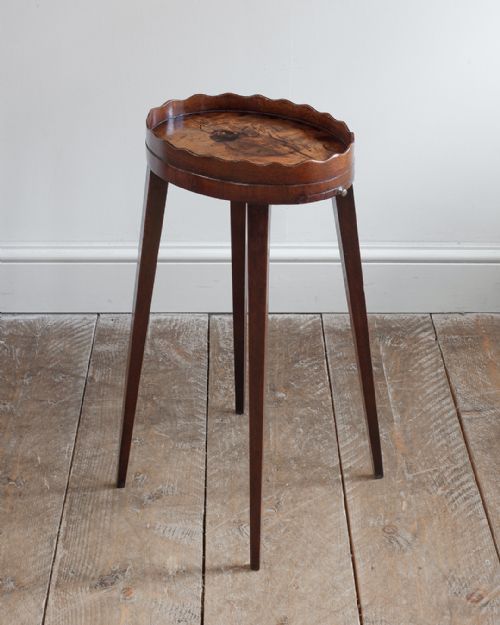
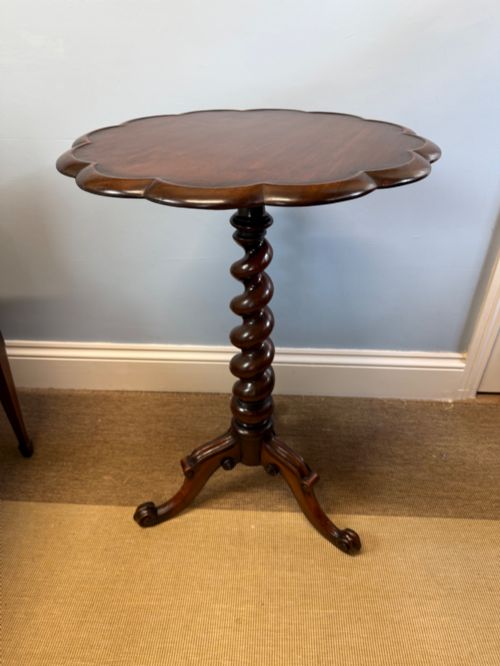
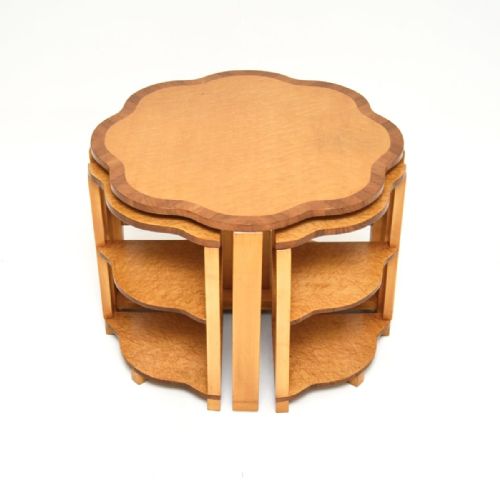
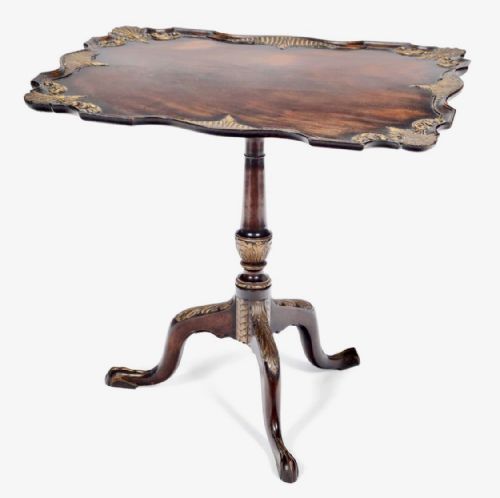
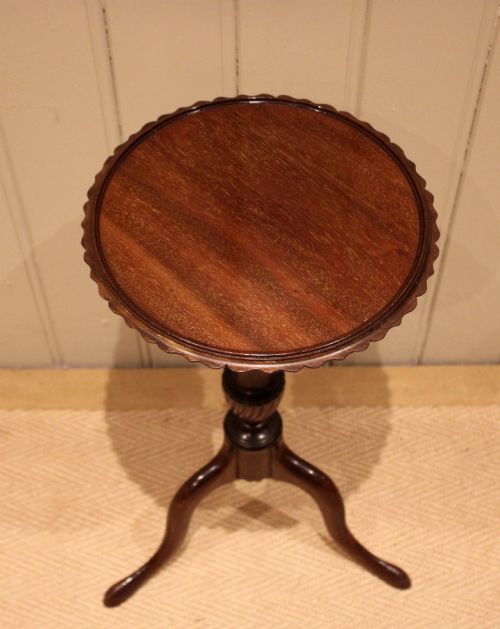
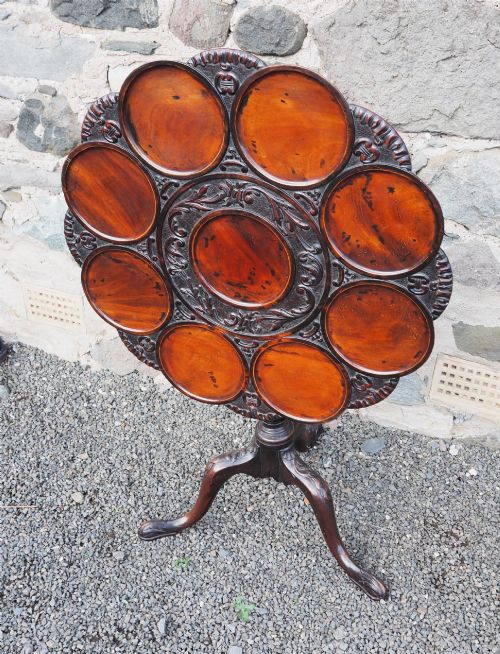
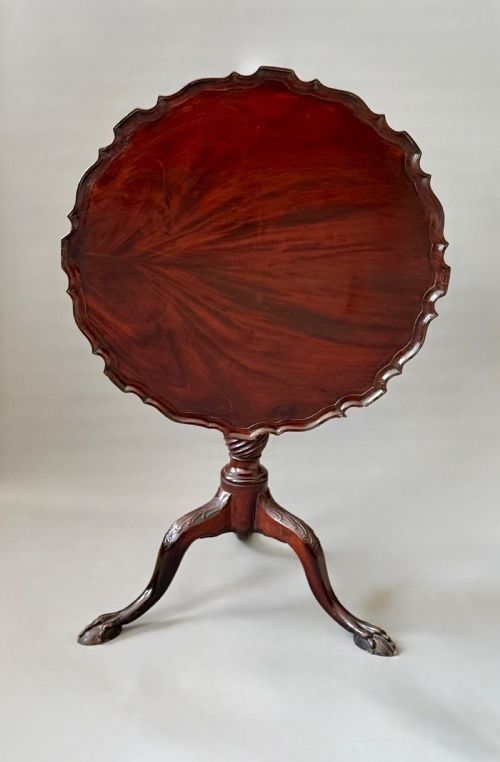
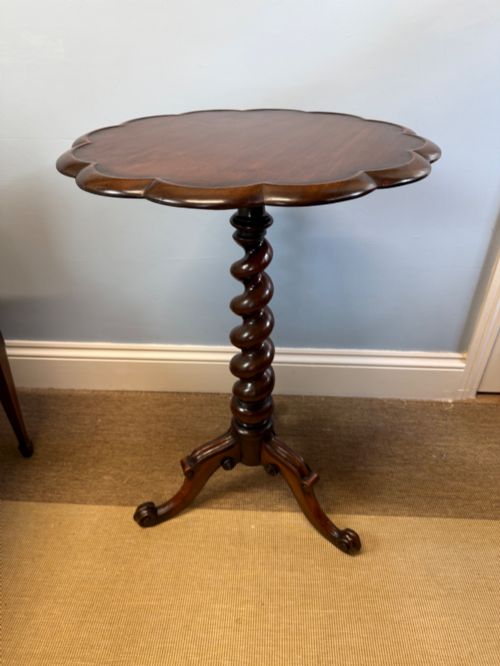
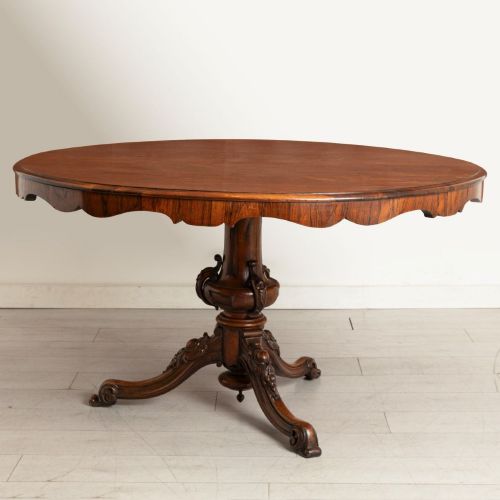
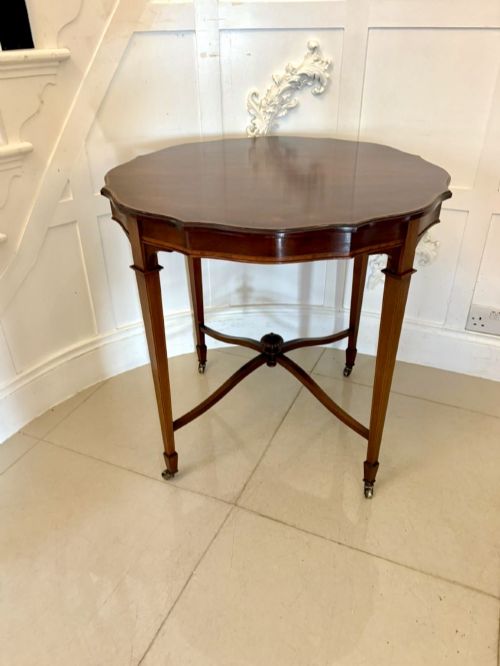
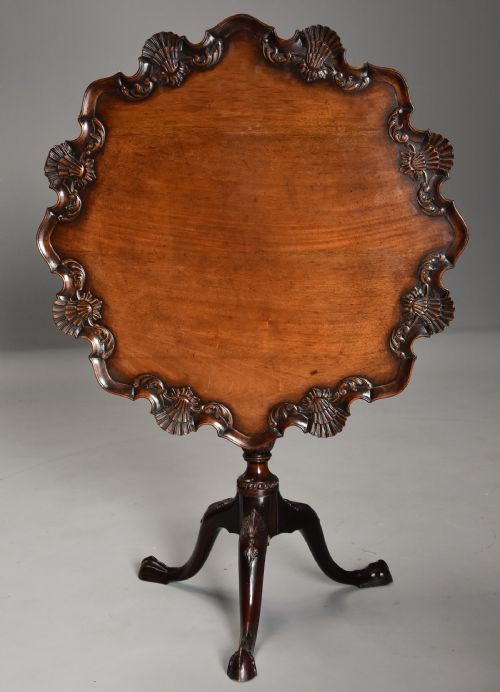
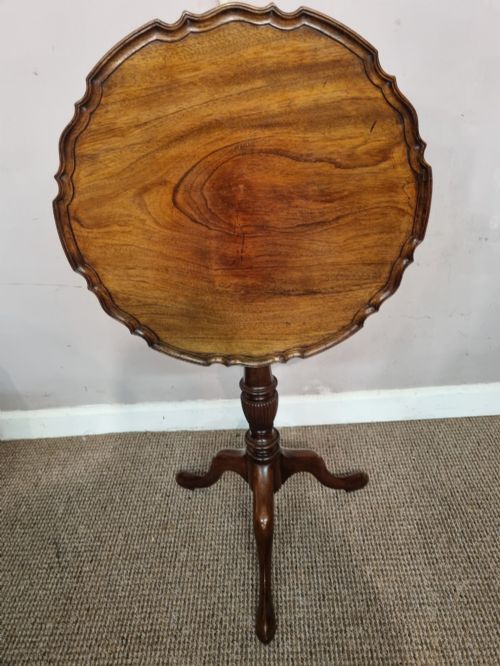
A scalloped top table is primarily found in forms such as occasional tables, side tables, wine tables, and tilting tripods. These pieces span periods from the eighteenth century through the Georgian, Victorian, and Edwardian eras up to the nineteen-thirties.
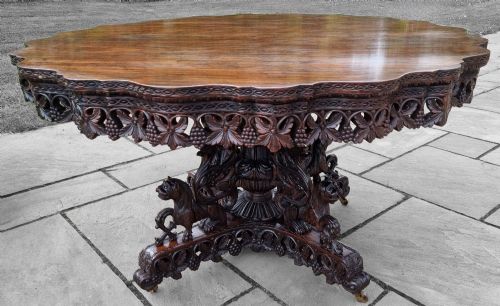
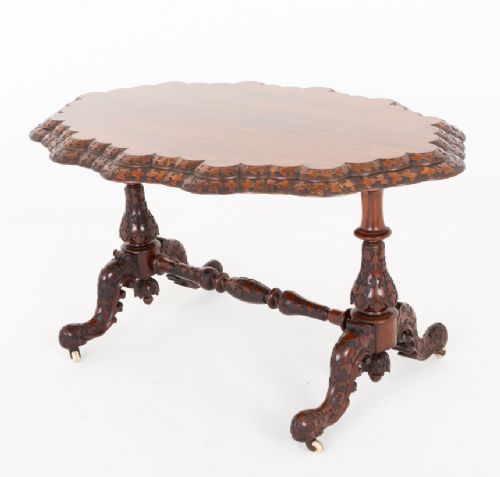
The profile often takes the form of a piecrust edge or shaped moulding running around the perimeter of the timber top. Buyers meet versions ranging from compact wine stands to larger centre tables and nests of coffee tables.
Materials and construction
Cabinet makers utilised dense hardwoods including mahogany, walnut, rosewood, and oak for these surfaces. Timber edges were carved directly to create the characteristic undulations or raised rims seen on piecrust designs.
Many examples incorporate secondary woods, brass fittings, and detailed inlays such as satinwood or marquetry. Tilt-top mechanisms rely on stable tripod bases connected by wooden catches and pivots.
Secret chess boards hide within some tripod tables, proving that Georgian aristocrats took their tabletop gaming rather seriously.
The standard of craftsmanship
The crispness of the carved edge defines the distinction between standard production and superior work. A well-executed scalloped profile follows the grain smoothly without losing definition in the curves.
Figured timber veneers, such as burr walnut or birds-eye maple, indicate deliberate selection by the maker. The stability of the central column and the tightness of the tripod joints dictate the functional success of tilting variants.
The Scalloped Top Table Glossary
- Piecrust edge
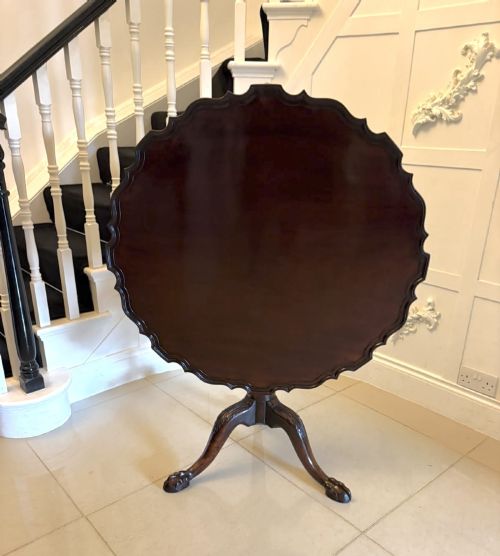
- A raised, shaped wooden rim carved with decorative curves around the perimeter of a tabletop. This moulding resembles pastry work on a pie.
- Tilt-top table
- A table featuring a mechanism that allows the surface to pivot to a vertical position when not in use. This function saved space in historic domestic interiors.
- Tripod base
- A support structure comprising three legs radiating from a central pillar. It provides stability on uneven historic floorboards.
- Occasional table
- A small, movable piece designed for versatile placement around a room rather than a fixed location. These tables serve multiple domestic functions.
- Marquetry
- The art of applying pieces of veneer to a structure to form decorative patterns. Craftsmen utilised various coloured woods to create pictorial designs.
Scalloped Top Table: Frequently Asked Questions
What is a scalloped top table used for?
These tables function as convenient surfaces for lamps, drinks, or decorative objects in living spaces. Smaller versions serve as wine tables or bedside stands.
Larger centre tables occupy entrance halls or drawing rooms, providing a central display area. Tilting variants allowed historic households to store furniture flat against walls when space was required.
How do I identify a Georgian scalloped top table?
Georgian examples typically feature solid mahogany construction with hand-carved piecrust edges and tripod bases. The timber shows deep patina and natural ageing acquired over centuries.
Later revivals from the Edwardian period or the twentieth century often display machine-tooled precision and different secondary woods underneath. Examining the joinery beneath the tabletop reveals the period of manufacture.
Are all scalloped top tables tilt-top?
Not all examples pivot on a central mechanism, though many tripod tables include this feature. Side tables, coffee tables, and occasional variants frequently have fixed tops.
Fixed versions rely on standard frame construction with four legs or a pedestal base. The presence of a catch beneath the surface confirms a tilting function.
How do I style a scalloped top table?
The shaped edge provides a natural focal point that benefits from minimal placement of objects. Placing a small lamp or a single ceramic piece allows the timber moulding to remain visible.
These pieces integrate easily beside seating or in vacant corners where a straight-edged table might appear too rigid. Their varied timber tones complement both traditional and modern interiors.