
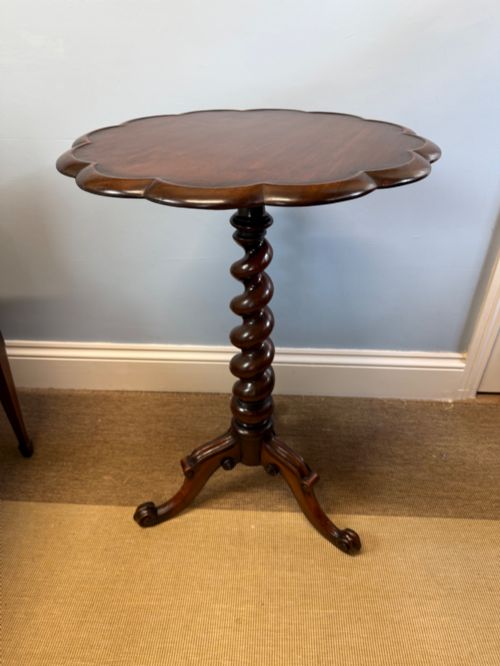
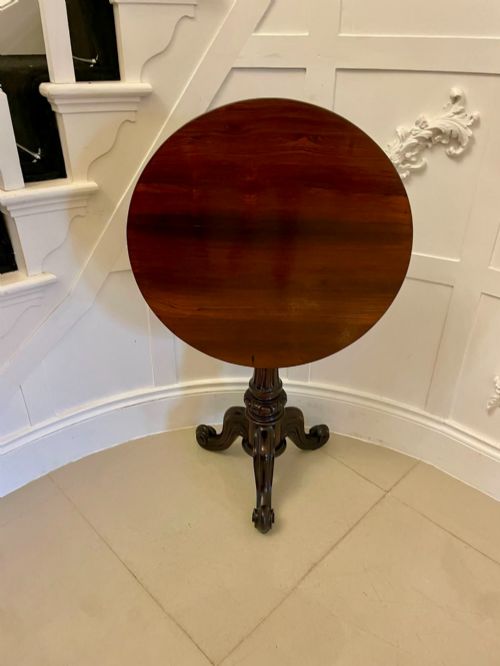
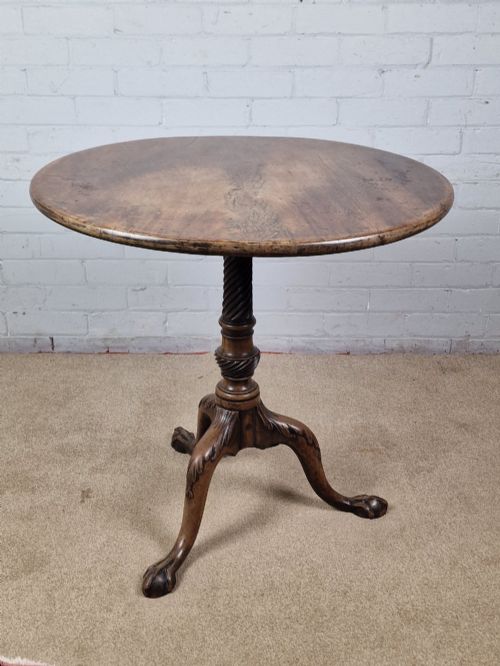
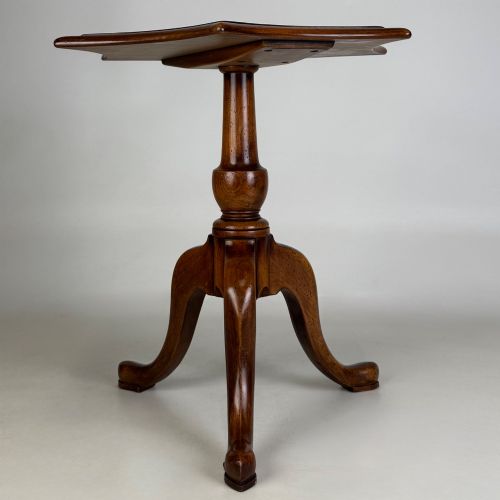
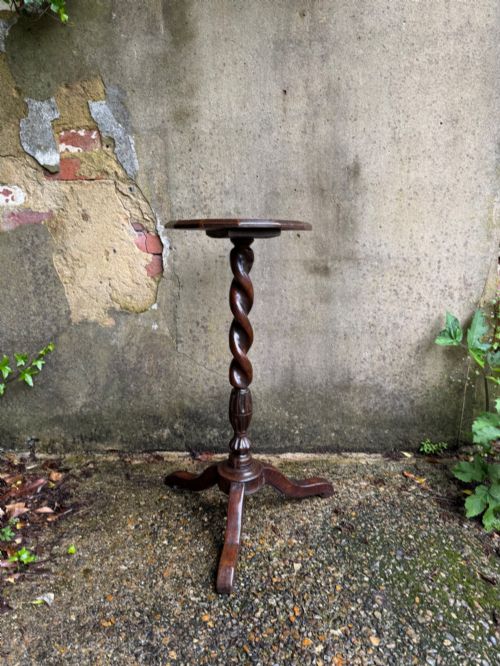


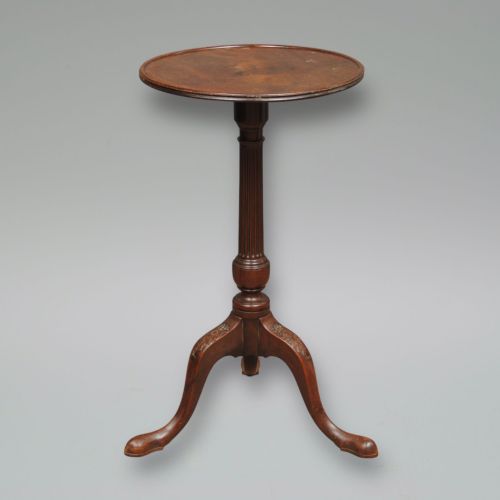


Carved Stem Accent Table
These carved stem accent table pieces offer compact surfaces supported by turned and sculpted pedestals, bringing tactile warmth and period character to any room.
Carved Stem Accent Table
A carved stem accent table combines a small tabletop with a central pedestal, serving as a versatile piece for drinks, lamps, or display. They appear across the eighteenth and nineteenth centuries, including Georgian, Regency, and Victorian periods.
The selection here includes side tables, occasional tables, tilt top tables, and wine tables. Formats range from circular lamp tables and pedestal tables to supper tables and coffee tables.
Mahogany and walnut predominate, alongside oak, rosewood, palm wood, satinwood, and brass details. Styles span George II and Queen Anne designs through to revival periods like Jacobean and Georgian Revival.
How they were made
Cabinetmakers constructed these tables using dense timbers such as mahogany, walnut, and oak, often incorporating rosewood or satinwood for decorative contrast. Turning lathes shaped the central columns, while hand carving defined the stems and tripod bases.
Many examples feature tilt mechanisms, allowing the tabletop to fold flat against the pedestal when not in use. Joinery techniques included tenons and dovetails, paired with brass fittings on specific models.
Object forms include wine tables, tilt tops, and occasional tables spanning Georgian to Edwardian eras.
What varies in quality
The definition and depth of the carved stem separate standard examples from superior work. Crisp detailing on the tripod legs and central column reflects the skill of the original maker.
Timber selection and grain figure dictate the visual presence of the tabletop. Mahogany and walnut with rich, unblemished surfaces sit at the higher end of the range.
The Carved Stem Accent Table Glossary
- Tilt top table
- A table with a mechanism allowing the top to pivot vertically for storage. This form became popular during the eighteenth century.
- Tripod table
- A small table supported by a pillar on three legs. The base design provides stability on uneven floors.
- Wine table
- A compact occasional table designed to hold glasses and bottles. They frequently feature small circular tops and slender stems.
- Pedestal table
- Any table supported by a single central column rather than four legs. They save floor space in smaller rooms.
- Occasional table
- A generic term for a small, movable table used briefly for various domestic tasks. They appear in multiple revival styles across the nineteenth and twentieth centuries.
Carved Stem Accent Table: Frequently Asked Questions
What is a tilt top table used for?
These tables functioned as movable surfaces for dining, reading, or serving drinks when needed in a room.
When not in use, the top tilted vertically to save floor space against a wall.
How do I date a mahogany side table?
Dating relies on observing timber density, construction methods, and stylistic cues such as leg profiles and carving.
Parks of the eighteenth century often display hand-cut joinery and native timber choices distinct from later revivals.
Where should I place an accent table?
These pieces fit beside armchairs, in small hallways, or as freestanding lamp surfaces in a sitting room.
Their compact footprint allows them to occupy awkward corners where larger furniture cannot go.
What distinguishes a wine table from a side table?
Wine tables typically feature smaller, circular tops paired with slender stems designed specifically for holding drinks.
Side tables offer larger rectangular or square surfaces suited for books and lamps.