


Traditional Mahogany Pedestal Table
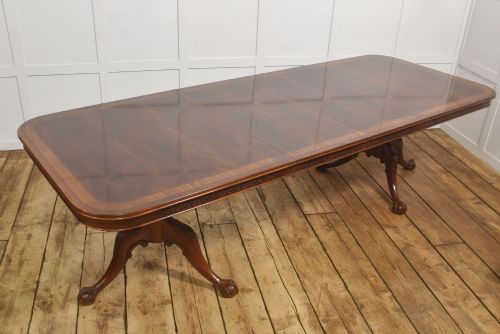
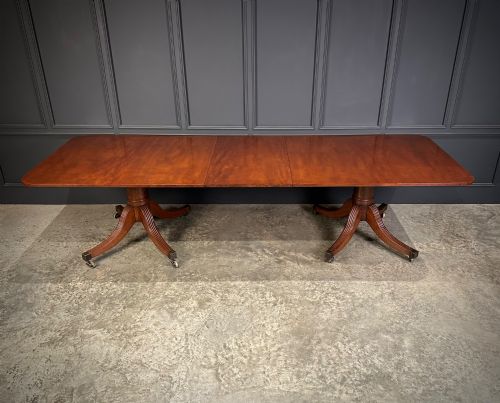
A traditional mahogany pedestal table stands on a central column base, offering enduring utility and rich timber grain for daily rooms.
Traditional Mahogany Pedestal Table
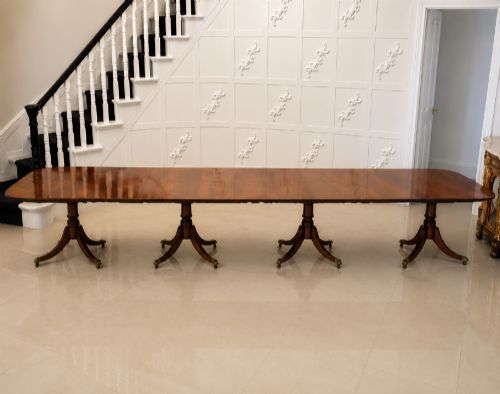
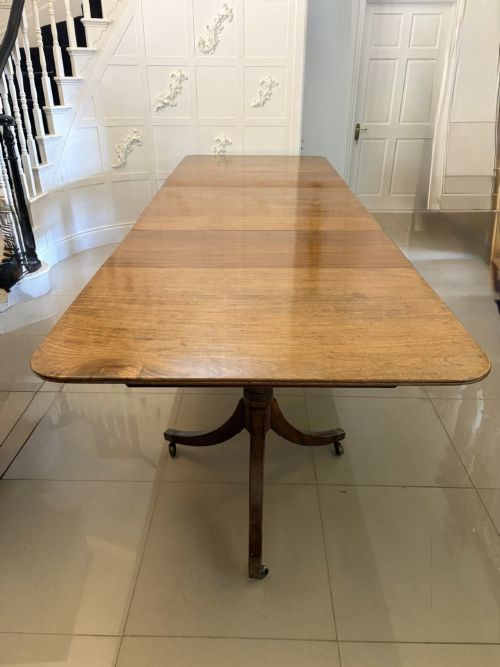
A traditional mahogany pedestal table appears primarily as a dining table, wine table, or desk resting on central pillar supports. These forms emerge across the eighteenth, nineteenth, and early twentieth centuries in various British revival styles.
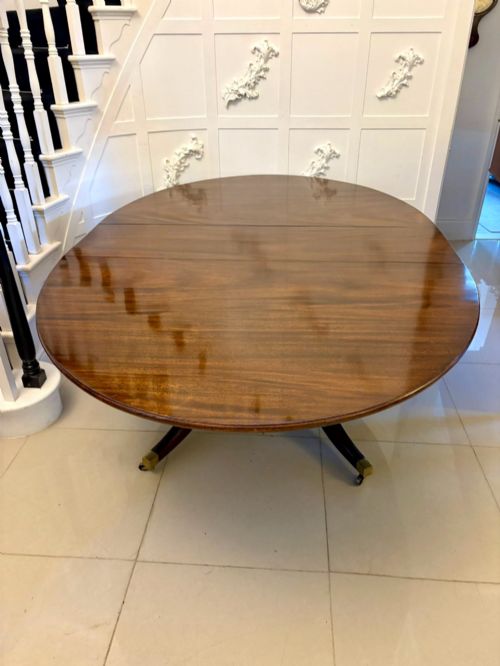
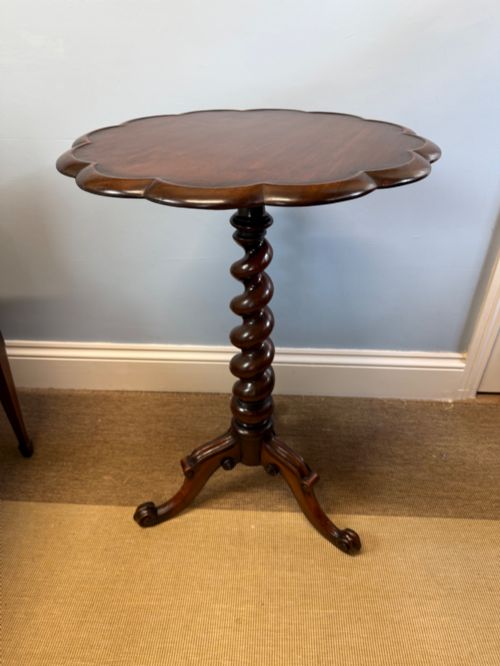
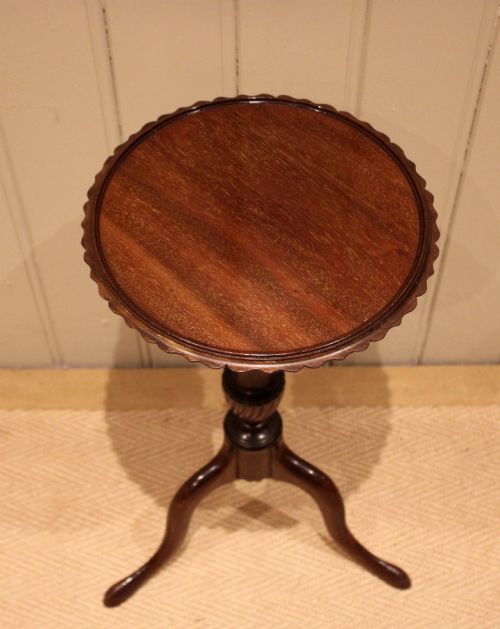
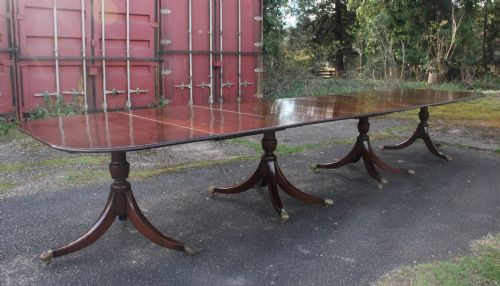
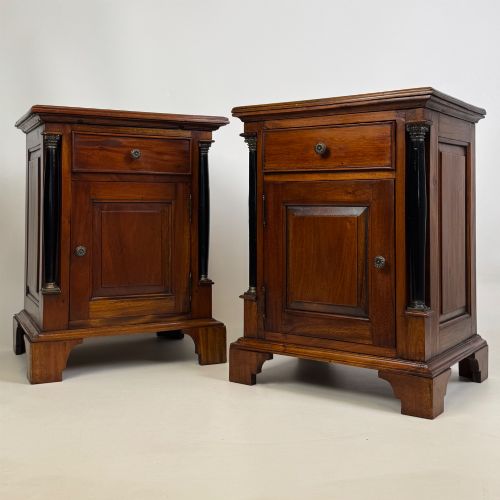
Dining versions span twin, triple, and four pillar formats designed to extend for large gatherings. Smaller variants include tripod wine tables and bedside cabinets utilising the same columnar architecture.
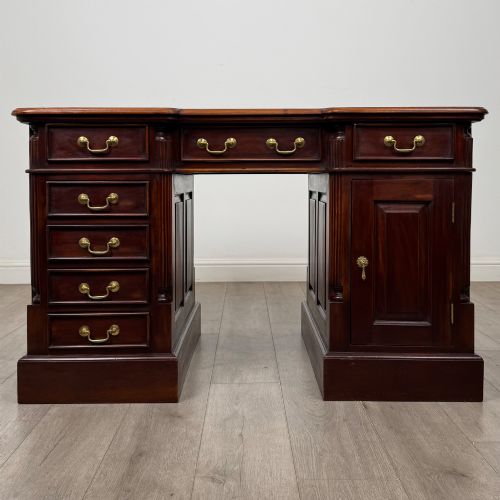
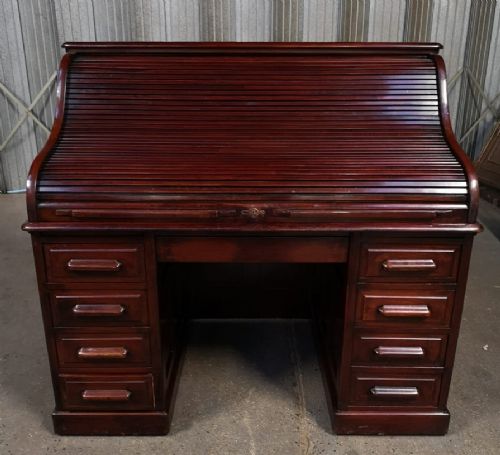
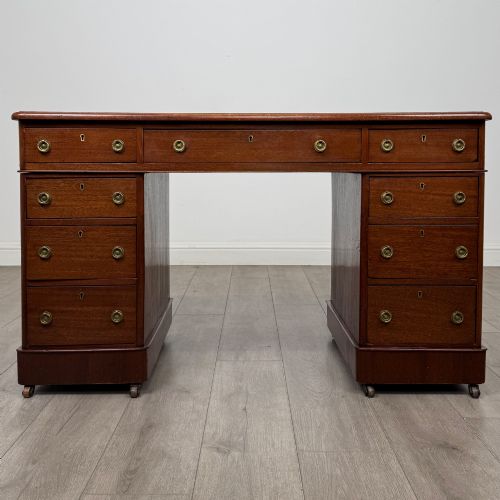
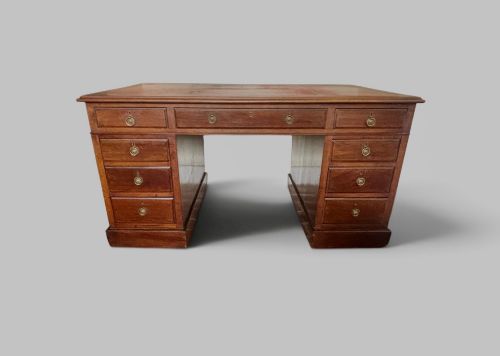
Desks and partners desks incorporate pedestals of drawers beneath writing surfaces, reflecting formal study and office use. The selection draws from Georgian, Regency, Victorian, and Edwardian periods.
Judging Quality
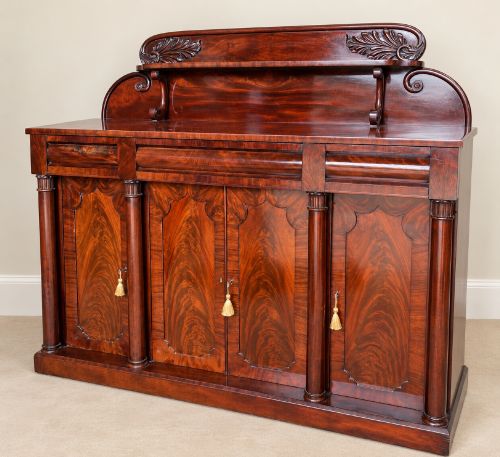
Quality rests in the selection of timber figures, particularly the depth and movement within flame mahogany veneers. Heavier pedestal bases demonstrate better stability, especially when supporting long dining leaves.
Joinery execution around the pillar junctions and drawer housings dictates longevity. Crispness in carved tripod legs or moulded table rims separates standard production from superior cabinet work.
Listings feature mahogany pedestal tables spanning the eighteenth, nineteenth, and early twentieth centuries, encompassing Georgian, Victorian, and Edwardian aesthetic periods.
Trollope & Sons
The Traditional Mahogany Pedestal Table Glossary
- Pedestal
- A single central support column carrying a tabletop, desk, or sideboard. This design frees legroom around the perimeter of the furniture.
- Flame mahogany
- A veneer cut from the fork of the mahogany tree where branches join the trunk. It creates a distinctive, fiery pattern across tabletops and drawer fronts.
- Tripod table
- A small occasional table supported by three spreading legs attached to a central pillar. Many examples feature a tilting mechanism for storage.
- Partners desk
- A large double-sided pedestal desk built with drawers and cupboards facing both directions. It allows two people to work opposite one another.
- Extending dining table
- A sectional table fitted with removable leaves and internal runners. Pillars shift outward to maintain balance as the surface lengthens.
Traditional Mahogany Pedestal Table: Frequently Asked Questions
How do I care for a mahogany table?
Keep the wood away from direct heat sources and strong sunlight to prevent the timber from drying out or fading. Apply a natural wax polish occasionally to nourish the surface and maintain the sheen.
Use coasters and felt pads beneath objects to protect the polish from moisture and scratches. Wipe spills immediately with a soft, dry cloth.
Can I extend a pedestal dining table?
Many pedestal dining tables utilise removable centre leaves supported by extending internal runners. Pulling the pedestals apart allows you to insert the leaves for larger gatherings.
Check the mechanism beneath the top to ensure the runners slide smoothly. Supporting pillars often multiply on longer formats to bear the extra weight.
Where does a wine table fit?
A wine table suits small awkward corners, beside armchairs, or acting as a lamp stand in a sitting room. Their compact tripod bases take up minimal floor space.
Historically used for holding glasses during evening socialising, they remain practical for resting small items today.
What is the difference between George III and Victorian desks?
George III desks from the eighteenth century typically exhibit restrained classical proportions and fine cabinetmaker joinery. They often feature cockbeaded drawer edges and bracket or ogee feet alongside pedestal formats.
Victorian pedestal desks tend to be heavier and more robust in construction. They frequently incorporate larger proportions, panelled modesty backs, and bolder mouldings suited to nineteenth-century studies.