


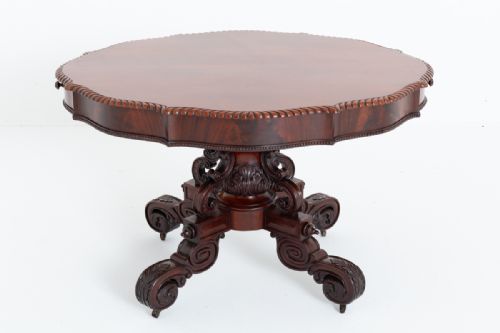


Scalloped Top Centre Table
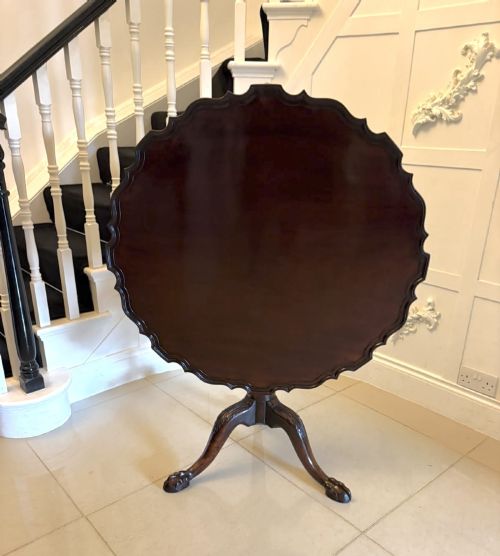
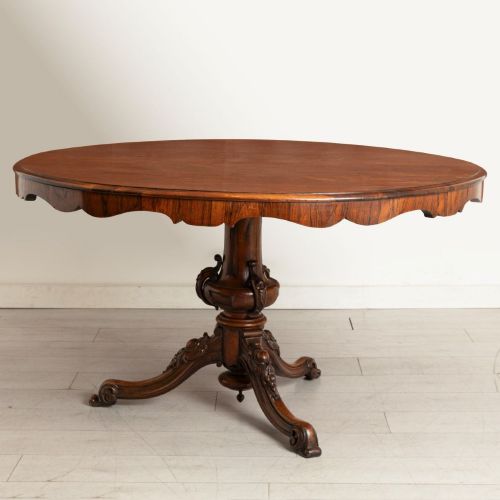
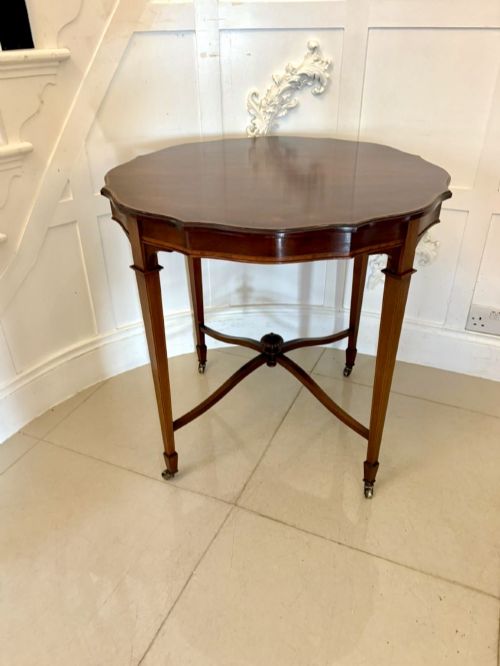
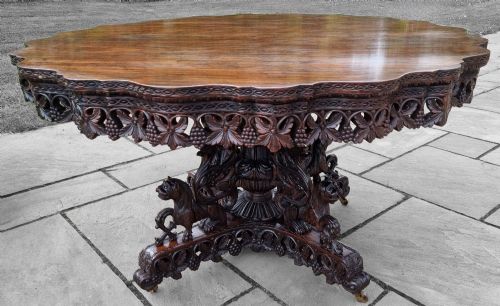
A scalloped top centre table stands free in a room, offering a decorative surface fashioned from mahogany, walnut, or rosewood.
Scalloped Top Centre Table
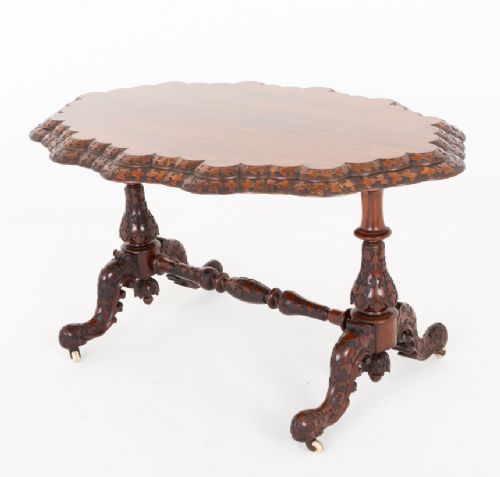
A scalloped top centre table is a freestanding piece designed to sit in the middle of a room rather than against a wall. The listings here include examples from the Victorian, Edwardian, and George III periods, alongside 18th and 19th-century variants. Forms range from tilt-top dining tables and tripod tables to pedestal designs and occasional tables.
Makers and workshops utilised diverse regional styles, spanning Anglo-Indian production, Italian Baroque, French Rococo Revival, and Victorian Irish Killarney Ware. Woods such as mahogany, burr walnut, rosewood, satinwood, and padauk define the primary structures, occasionally paired with marble tops.
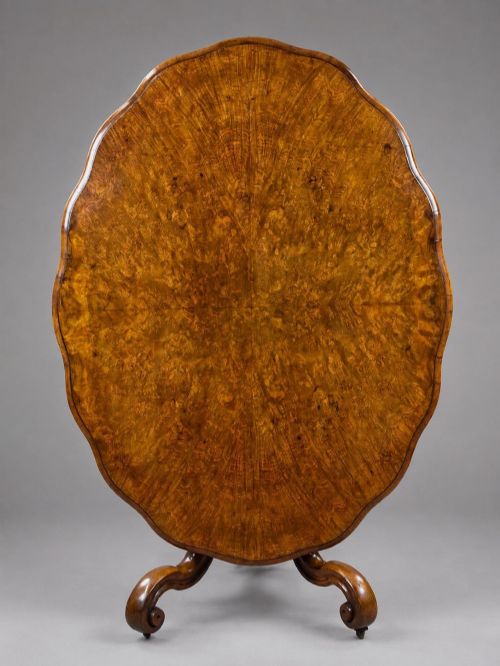
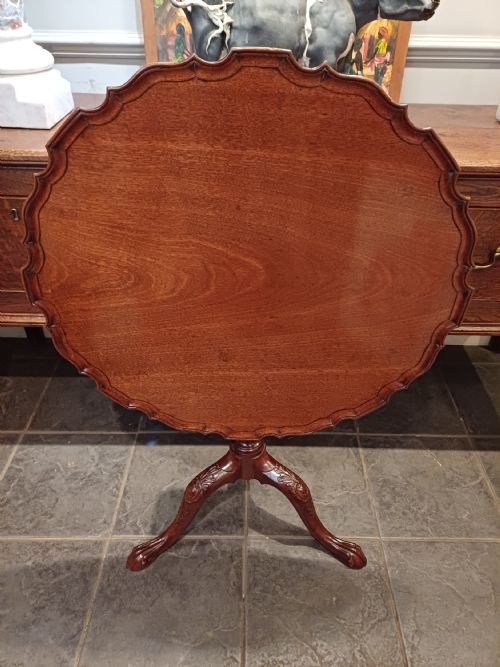
Buyers most frequently encounter Victorian burr walnut or mahogany pieces, often featuring shaped or piecrust edges supported by turned pedestals or carved tripod bases. These tables served various functions historically, operating as breakfast tables, lamp tables, or grand entry hall centerpieces.
Materials and Construction
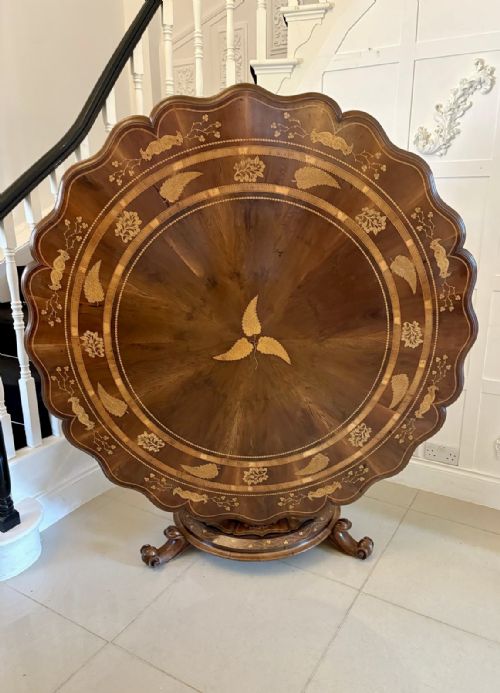
Cabinetmakers constructed these tables using dense timbers like mahogany, walnut, and rosewood, frequently applying burr walnut or satinwood veneers to create patterned surfaces. Marquetry inlays and marquetry work further ornamented the tops, particularly in Killarney ware and specific Victorian commissions.
Turned and carved solid wood bases, pedestals, and tripod legs provided structural support for heavy tops, while tilt-top and snap-top mechanisms allowed tables to be stowed aside when not in use. Marble inserts, such as pink Salome marble, appeared on Italian Baroque examples alongside giltwood frames.
Some tables tilt up so smartly they spend more time pretending to be wall art than actually holding tea cups.
Distinctions in Quality
Quality rests upon the selection of timber, visible in the rich grain patterns of burr walnut, rosewood, and figured mahogany. Superior execution shows in the crispness of hand-carved tripod bases, pedestal mouldings, and intricate satinwood or Killarney marquetry inlay.
Construction methods also separate standard production from exhibition pieces, evident in the smooth operation of tilt-top mechanisms, birdcage supports, and the tight joinery of shaped and piecrust edges.
John Kendal·Egan Workshop
The Scalloped Top Centre Table Glossary
- Piecrust edge
- A raised, decorative carved moulding along the perimeter of a table top resembling pastry work. This technique appeared frequently on 18th-century George III mahogany tables.
- Tilt-top
- A hinged table top that pivots to a vertical position, allowing the piece to be stored against a wall. It is commonly found on tripod and pedestal dining tables.
- Birdcage
- A wooden framework beneath a table top that allows the surface to both tilt and rotate. This mechanism is typical of 18th-century tripod tables.
- Killarney Ware
- Decorated wooden furniture produced in Ireland, characterised by intricate marquetry using native woods like yew and arbutus. Pieces often incorporated local motifs.
- Marquetry
- The art of applying decorative veneer pieces to a structure to form geometric or pictorial designs. Cabinetmakers used various tinted woods to achieve contrast.
Scalloped Top Centre Table: Frequently Asked Questions
Where should I place a centre table?
A centre table is designed to stand free in the middle of a room or a large entrance hall, allowing access from all sides. It functions effectively as a focal point beneath a central ceiling light or chandelier.
Ensure there is sufficient clearance around the table for movement, treating it as an independent island of furniture rather than pushing it against room boundaries.
How do tilt-top tables work?
Tilt-top tables utilise a hinged mechanism beneath the surface, often mounted on a birdcage or a pedestal, which allows the top to lock flat for use or pivot upright.
Historically, this allowed large dining or breakfast tables to be tipped against the wall when not in use to save floor space in domestic interiors.
What is the difference between a loo table and a breakfast table?
A loo table is a round or oval Victorian table traditionally used for the card game loo, featuring a tilt-top mechanism and a stout pedestal base.
While structurally similar to breakfast tables of the same era, loo tables often display larger proportions and highly figured burr walnut veneers suited to evening parlour gatherings.
How do I care for polished wood surfaces?
Maintain polished mahogany, walnut, and rosewood surfaces by dusting regularly with a soft, dry cloth and avoiding excessive moisture or direct sunlight.
Periodic application of appropriate furniture wax helps preserve the sheen of the timber without building up heavy residues on carved details or inlaid marquetry.