


Antique Indian Round Table
These antique indian round table pieces bring intricate colonial craftsmanship and rich timber into a room.
Antique Indian Round Table
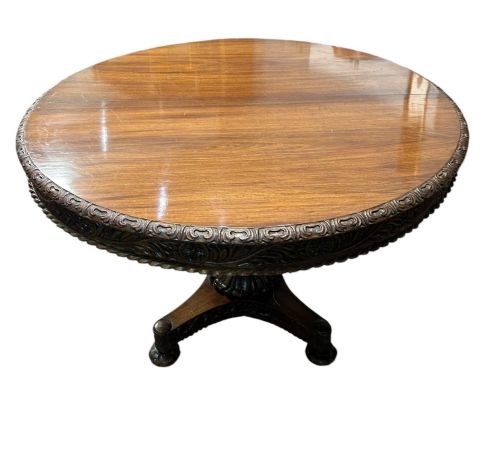
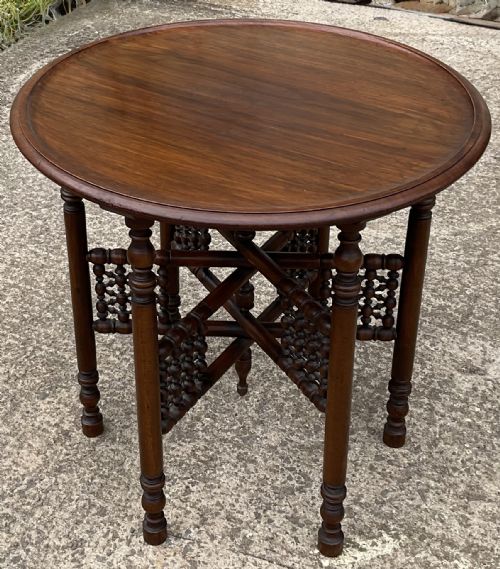
An antique indian round table brings together distinct colonial forms and traditional local carving, appearing mostly as side tables, centre tables, occasional tables, and dining tables. When searching this phrase, a buyer encounters pieces originating from the nineteenth century, including specific dates such as 1820, 1840, 1860, 1870, 1890, 1900, and 1920, alongside Victorian era examples.
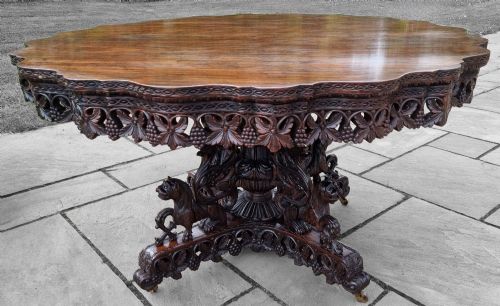
The aesthetic falls broadly under Anglo-Indian, Anglo-Indian Colonial, Anglo-Indian Regency, Colonial, and Anglo-Burmese Colonial styles. Surfaces often display dense figurative carving, notably depicting elephants, or intricate geometric layouts suited to formal drawing rooms and studies alike.
How they were made
Cabinetmakers utilised dense exotic timbers including teak, padauk, rosewood, hardwood, and coromandel to construct these sturdy circular frames. These heavy woods provided a stable canvas capable of sustaining deep relief carving without splitting along the grain.
Artisans embellished the timber surfaces through sophisticated inlay work utilising mother of pearl, bone, and brass to create striking tonal contrasts. Hand-carved elements, such as pedestal bases and figural supports, required specialised chisel techniques handed down through generations of regional workshops.
Current listings feature pieces spanning the nineteenth and early twentieth centuries, constructed from teak, padauk, rosewood, and coromandel.
What varies in quality
The distinction between standard and superior pieces rests upon the crispness of the hand-carved detail and the precision of the inlay work. Tables featuring tightly fitted mother of pearl, bone, or brass elements demonstrate a higher level of artisan competence than those with wider mortar gaps.
Selection of the primary timber also dictates the tier of the piece, with richly figured coromandel and padauk commanding greater visual depth than standard hardwoods. The structural integrity of the pedestal base and the balance of the circular top determine daily usability.
The Antique Indian Round Table Glossary
- Padauk
- A heavy, dense tropical timber with a reddish hue favoured in colonial cabinetmaking. It offers exceptional durability and takes a fine polished finish.
- Anglo-Indian
- A descriptive term for furniture made in India during the British colonial period, combining European furniture forms with traditional Indian craftsmanship.
- Inlay
- A decorative technique where contrasting materials such as bone, brass, or mother of pearl are embedded flush into the timber surface.
Antique Indian Round Table: Frequently Asked Questions
Where were these round tables used?
These pieces served multiple functions within colonial households, operating as centre tables in grand reception rooms or smaller occasional tables for tea and correspondence. Larger variants also functioned as dining surfaces for intimate gatherings.
Their sturdy construction suited both domestic residences and administrative offices throughout the British Raj, allowing them to withstand daily movement and use.
How do I care for exotic timber?
Maintaining these surfaces requires keeping them away from direct heat sources and strong sunlight, which can dry out dense woods like padauk and coromandel. Occasional light waxing helps preserve the natural grain and protects inlaid sections.
Harsh chemical cleaning agents should be avoided to prevent loosening delicate mother of pearl or bone inlays embedded within the table top.
How do I identify a Victorian piece?
Victorian examples often display heavier proportions and deeply carved motifs influenced by British tastes of the nineteenth century combined with local artisan techniques. Examining the turning of the pedestal and the fastening methods beneath the top provides clues to the manufacturing era.
Documentation or stylistic markers such as specific regional carving styles from Bombay or Burma help narrow down the production period.
Are these tables suitable for dining?
Certain larger examples, including four-seat dining variants and substantial centre tables, function effectively for everyday meals or gatherings. Their solid hardwood frames provide the necessary stability for dining use.
Smaller occasional and side tables are better suited for display, holding lamps, or serving drinks rather than heavy seating arrangements.