
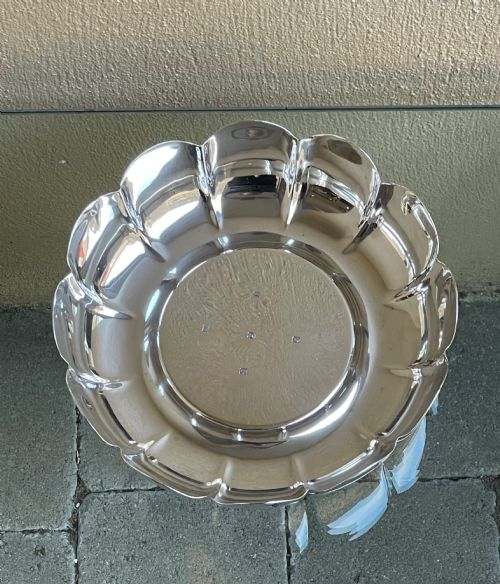
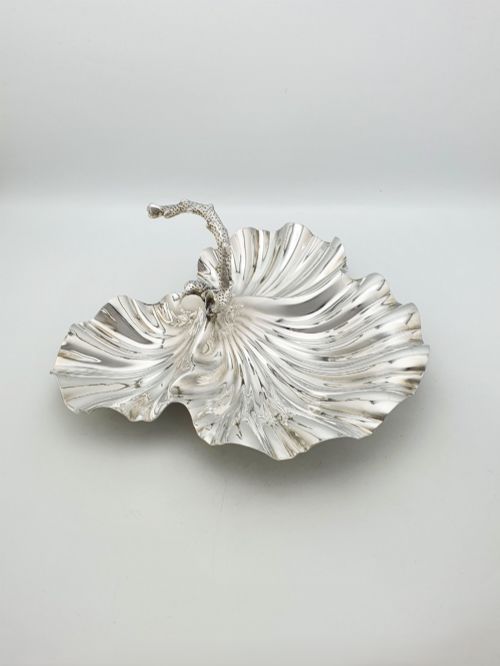
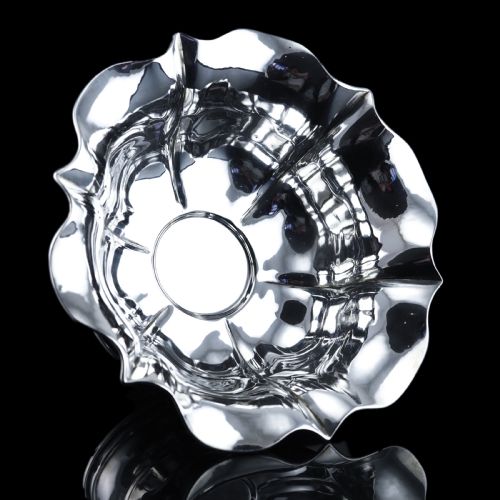


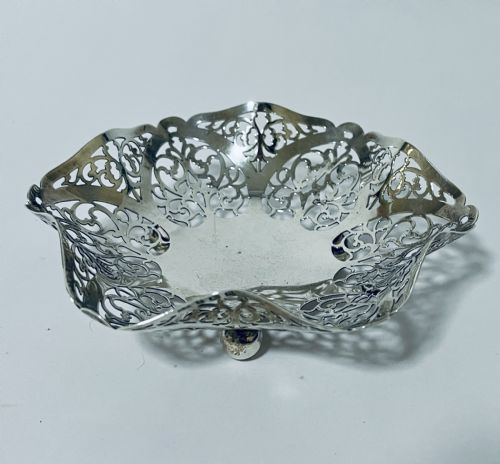


Scalloped Silver Bowl
These scalloped silver bowl examples span Victorian, Edwardian and later periods, offering decorative forms shaped for the table and sideboard.
Scalloped Silver Bowl
A scalloped silver bowl draws the eye through curved, fluted borders and shell-inspired profiles that echo natural organic forms. The selection here brings together pieces intended for fruit, bonbons, butter, strawberries or grand centrepiece displays.
Victorian and Edwardian versions dominate the current stock, alongside pieces from the 1920s and 1930s. You will encounter everything from small decorative dishes to large presentation bowls and footed vessels.
Makers adapted the scalloped outline for various dining needs, creating items ranging from plain silverplate for daily service to solid sterling silver presentation pieces. The undulating rim remains the defining characteristic across all eras on this page.
Materials and Construction
Silversmiths utilised solid sterling silver, silver plate and electroplated nickel silver to form these vessels, shaping the metal by hand or utilising industrial presses as manufacturing evolved. Repoussé decoration, chasing and pierced work created the floral motifs and bird designs seen on the surfaces.
Makers occasionally combined silver with materials such as copper, leather, velvet and silk, particularly in fitted cases or inlaid pieces. Heavy chasing required skilled hammering from the reverse side to push the metal into high-relief floral and shell patterns.
Scalloped Silver Bowl Retail Price Guide 2026
Typical asking prices for scalloped silver bowl among the pieces listed under this phrase on Sellingantiques today, from the lower quarter to the upper quarter. They describe what is for sale here now, not the wider market.
Periods represented across these bowls stretch from the 18th century through the Victorian, Edwardian, Art Nouveau and mid-century eras.
Evaluating Quality and Craftsmanship
Weight and gauge of the metal separate robust pieces from lighter items, with solid sterling silver retaining superior heft compared to plated alternatives. Crispness in the repoussé work indicates the skill of the silversmith, as softer or worn patterns suggest excessive polishing or hurried production.
The precision of the scalloped edge and the symmetry of pierced or fluted panels determine the overall refinement of the piece. Maker marks and clear hallmarks also contribute to the desirability of older items, confirming origin and silver standard.
The Goldsmiths & Silversmiths·Thomas Smily·Alexander Clarke & Co·Garrard London·James Deakin·Whiting Co.
The Scalloped Silver Bowl Glossary
- Repoussé
- A metalworking technique where the silversmith hammers the design from the reverse side to form raised patterns on the front. This method creates the characteristic floral and bird reliefs found on many bowls.
- Sterling silver
- An alloy of silver containing 92.5 percent pure silver and 7.5 percent other metals, usually copper. This standard ensures durability while maintaining a bright metallic lustre.
- Silver plate
- A base metal, such as copper or nickel silver, coated with a thin layer of pure silver. This technique provided a bright appearance at a lower cost than solid silver.
- Monteith
- A large bowl with a scalloped or notched removable rim, historically used for cooling wine glasses. The rim held the stems of the glasses while the bowls chilled in ice.
- Centrepiece
- A large decorative vessel placed in the middle of a dining table for display or service. These items often feature heavy ornamentation or pedestals.
Scalloped Silver Bowl: Frequently Asked Questions
How were these bowls used?
These vessels served various functions on the dining table and sideboard, from holding fruit and strawberries to presenting bonbons and butter. Larger examples functioned as grand presentation pieces or monteiths for cooling glass stems.
Smaller dishes often accompanied tea services or sat on side tables for small sweets. Their decorative borders made them suitable for both functional dining and purely ornamental display.
How do I care for silver?
Cleaning requires a soft cloth and proprietary silver polish designed to remove tarnish without scratching the metal surface. Avoid harsh abrasives that can wear away silver plating on older pieces.
Store items away from damp environments and wrap them in acid-free tissue or anti-tarnish cloth when not on display. Regular gentle dusting prevents the buildup of airborne residues.
How can I tell the period?
Hallmarks stamped into the metal provide the most reliable guide to age, indicating the assay office, date letter and maker's mark. Researching these stamps allows you to date the piece to a specific year or reign.
Stylistic cues also help distinguish eras, such as the naturalistic floral motifs of the Victorian period or the cleaner lines of the 1920s and 1930s. Construction methods, including machine stamping versus hand hammering, offer further clues to manufacture date.
What is the difference between solid silver and silver plate?
Solid silver consists of the same metal alloy throughout its thickness, maintaining its composition even with wear. Sterling silver is the most common standard for these solid pieces.
Silver plate involves a thin layer of silver bonded to a base metal like nickel silver or copper. Over decades of heavy cleaning, the underlying base metal may become visible through the silver layer.