





Scalloped Japanese Porcelain Charger
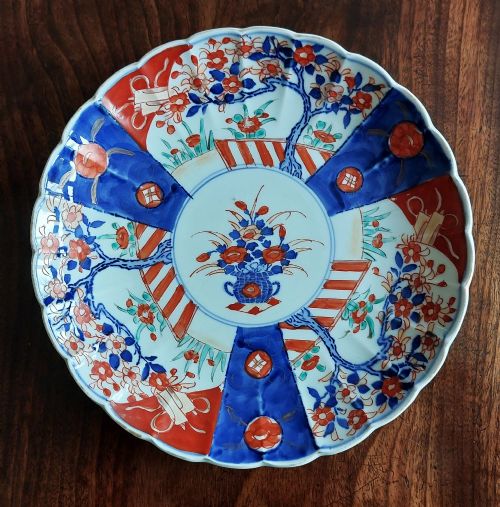
A scalloped Japanese porcelain charger brings vibrant Meiji period colour and intricate hand-painted design to any room.
Scalloped Japanese Porcelain Charger
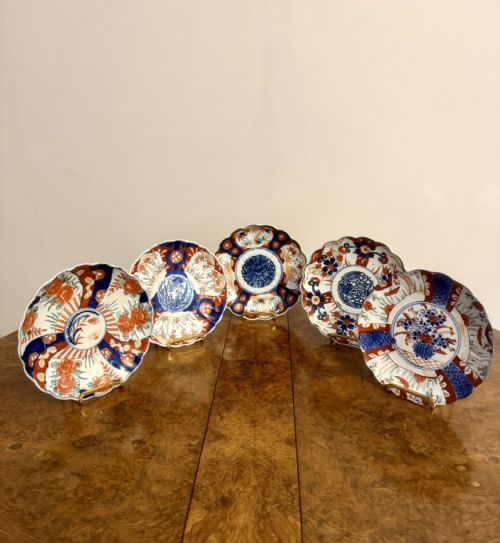
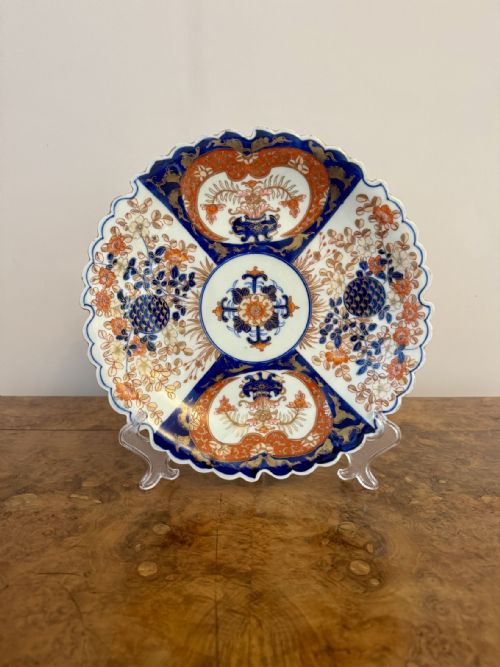
A scalloped Japanese porcelain charger is a large decorative ceramic plate or dish featuring shaped, undulating edges and traditional ornamentation. When searching this phrase, a buyer meets pieces originating predominantly from the late nineteenth century and the Meiji period.
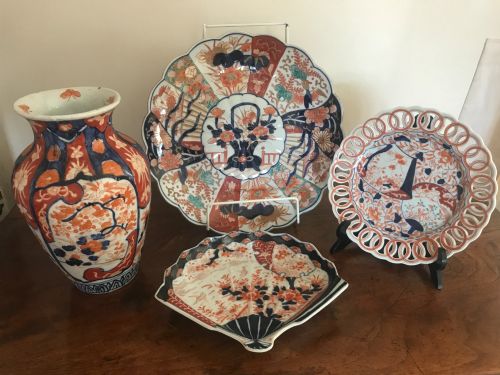
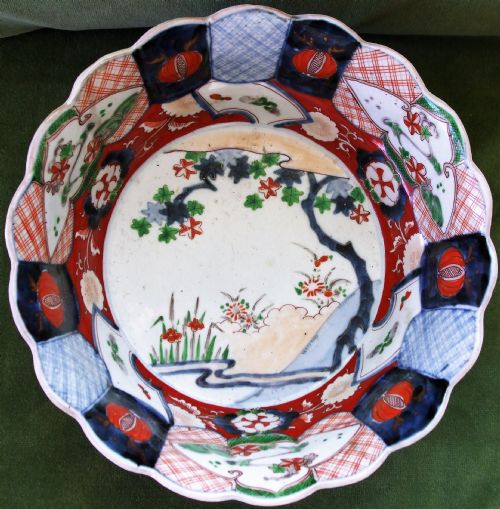
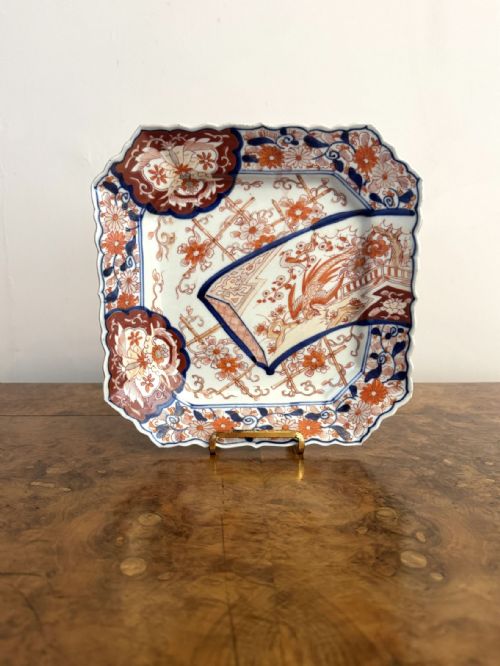
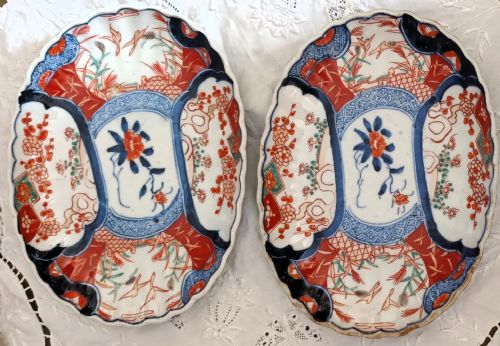
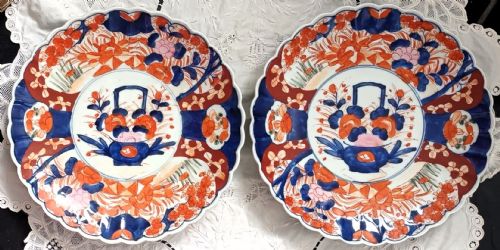
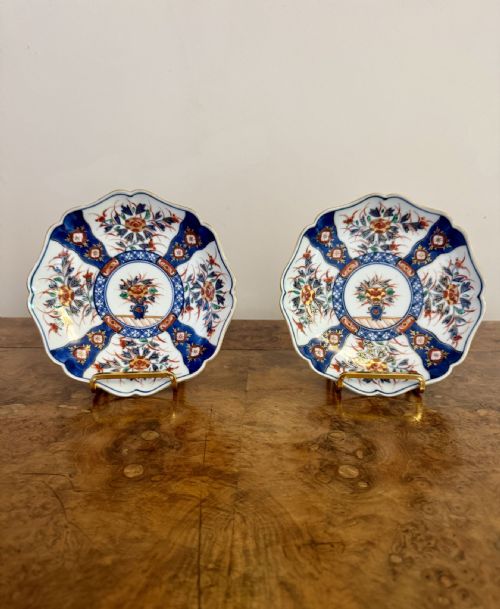
The inventory on this page consists largely of Japanese Imari porcelain chargers, plates, and bowls. These items take various forms, including circular chargers, oval dishes, square plates, and deep bowls.
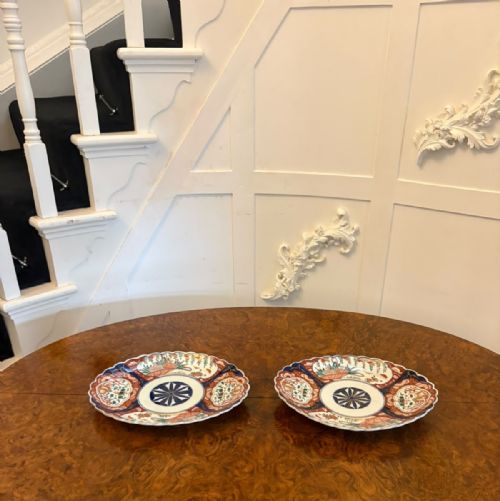
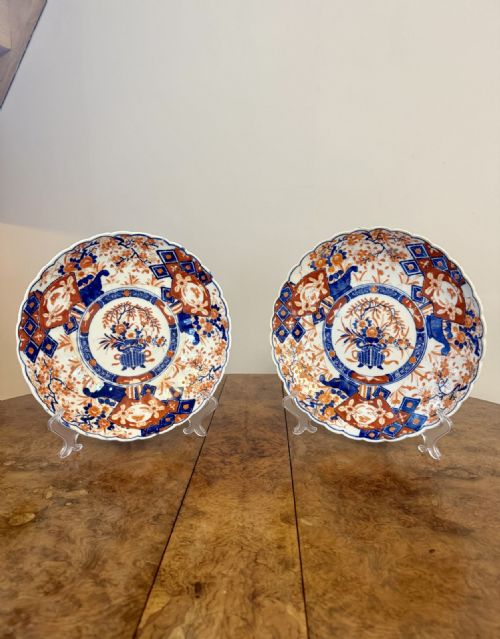
Most examples hail from the nineteenth century or around nineteen hundred, with Victorian and Edwardian period datings also appearing. Buyers encounter both single decorative chargers and matched pairs or larger sets.
How they were made
Potters shaped ceramic clay into porcelain bodies before applying cobalt underglaze pigments and surface enamels. Artisans frequently added gold leaf, gilt, or gilding to highlight specific areas of the painted design.
The decoration commonly involves hand-painted floral motifs, exotic birds, and figurative scenes such as the Seven Lucky Gods. Craftsmen shaped the perimeters into distinct scallop edges to give the ceramic forms a decorative silhouette.
Several pieces faithfully depict the Seven Lucky Gods, ensuring your dining room wall comes heavily supervised by Japanese deities.
What varies in quality
Quality rests in the precision of the hand-painted brushwork and the complexity of the depicted subjects, such as detailed birds or mythological figures. Pieces displaying exceptional clarity in the cobalt underglaze and rich application of gold leaf stand apart.
The crispness of the scalloped edge modelling and the overall balance of the enamel palette distinguish finer decorative chargers from standard production items.
The Scalloped Japanese Porcelain Charger Glossary
- Charger
- A large decorative plate or dish intended primarily for display rather than table service. These substantial ceramic pieces form the centrepiece of many collections.
- Imari
- A traditional style of Japanese porcelain featuring a distinct palette of cobalt blue, iron red, and gilt highlights. The style originated in Arita and was exported extensively through the port of Imari.
- Meiji Period
- The era in Japanese history spanning from eighteen sixty-eight to nineteen twelve, marked by extensive international trade and notable ceramic production. Pieces from this time often exhibit elaborate hand-painted designs.
- Cobalt Underglaze
- A blue pigment applied to the raw ceramic body before firing and glazing, creating a durable design beneath a clear glossy surface. This technique produces deep blue tones that resist fading over time.
- Scallop Edge
- A decorative border shaped into a series of continuous curves resembling the outline of a scallop shell. This treatment softens the profile of ceramic plates and bowls.
Scalloped Japanese Porcelain Charger: Frequently Asked Questions
How were antique Japanese chargers used?
These large ceramic pieces were designed primarily for decorative display on walls, cabinets, or tables rather than everyday dining use. Wealthy households showcased them to highlight fine craftsmanship and artistic colour.
Over time, collectors continued to prize them as ornamental objects, mounting them on walls or placing them on specialised stands to display the painted motifs.
How do I date a Meiji period charger?
Dating relies on stylistic markers, historical documentation, and the specific characteristics of the porcelain body and enamel palette used during the late nineteenth century. Pieces from the Meiji period often combine traditional Imari colours with detailed pictorial subjects like birds or deities.
Comparing the painting style and glazing techniques with documented pieces helps narrow the production era between eighteen sixty-eight and nineteen twelve.
Can I hang these chargers on the wall?
Many large decorative plates and chargers feature sufficient structural stability for wall display when paired with a secure, properly fitted plate hanger. Care must be taken to support the full weight of the porcelain safely.
Collectors often utilise specialised display hardware designed to distribute the load evenly across the scalloped rim and base.
What is the difference between Imari and Arita ware?
Arita is the geographic region in Japan where the porcelain was actually manufactured, while Imari was the port from which the finished ceramics were shipped to domestic and international markets. Imari became the commonly used term for the distinct blue, red, and gold decorated style produced in that region.
Pieces originating from Arita during the nineteenth century frequently carry the Imari aesthetic designation.