

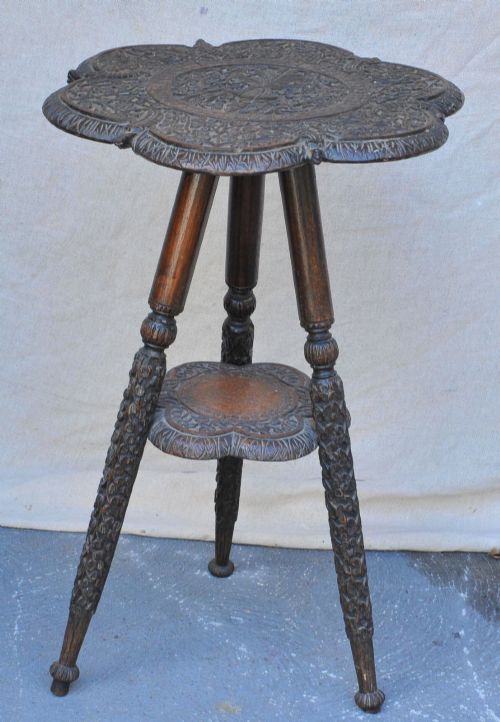
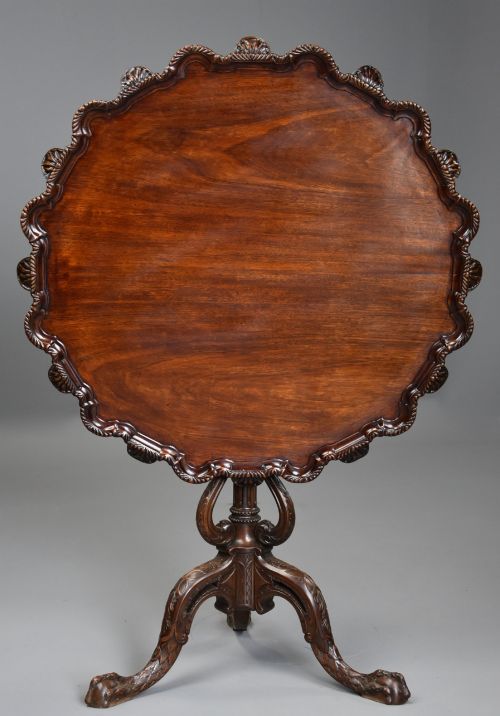
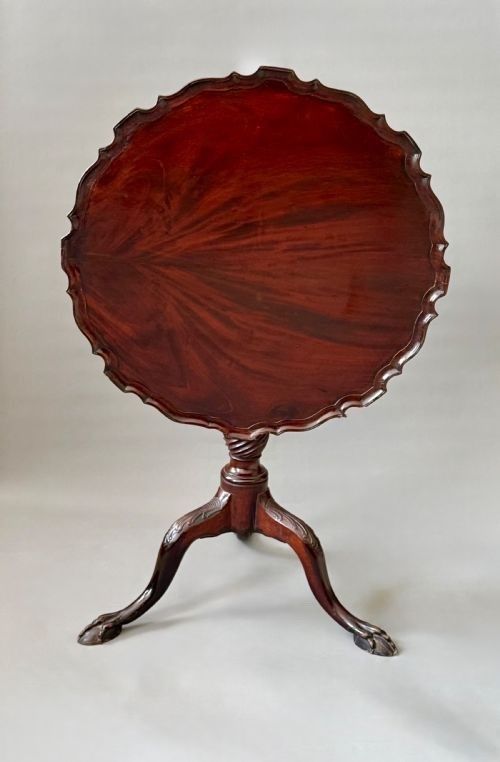
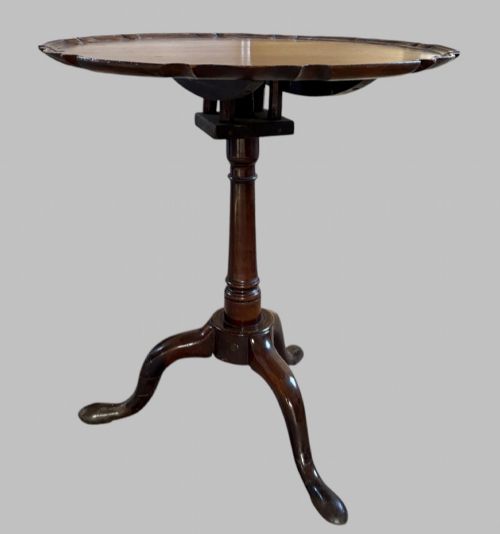
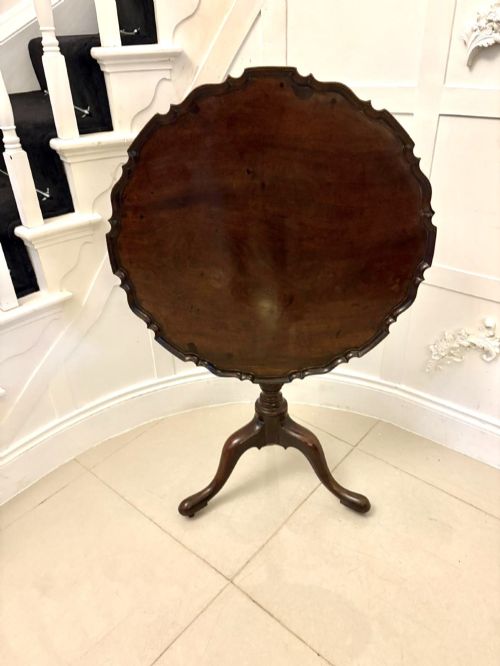
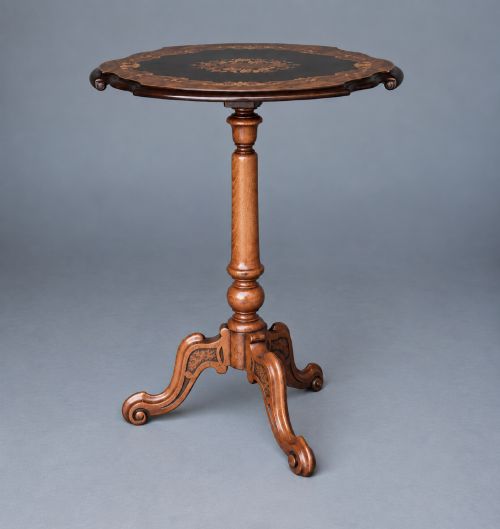
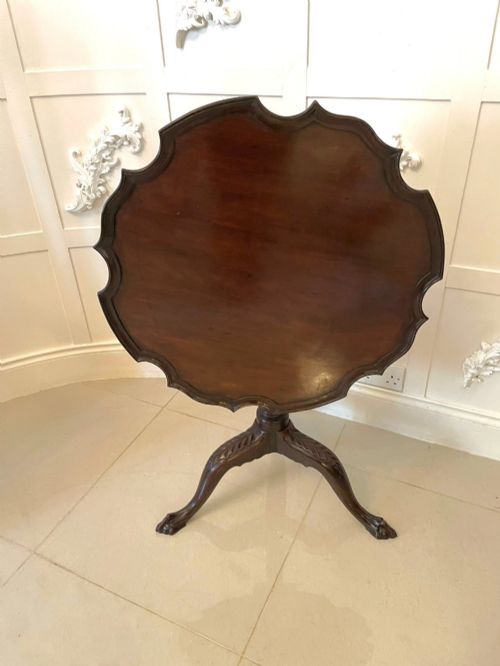
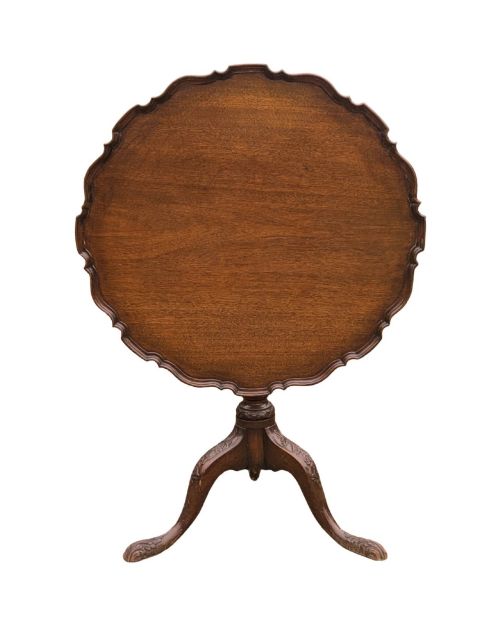
Scalloped Edge Tripod Table
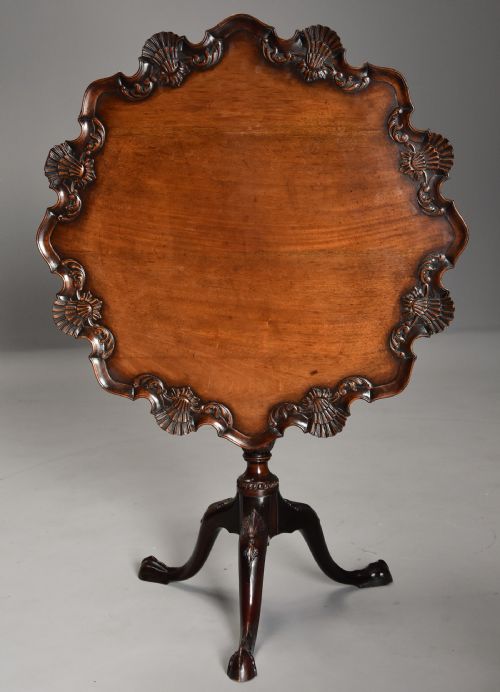
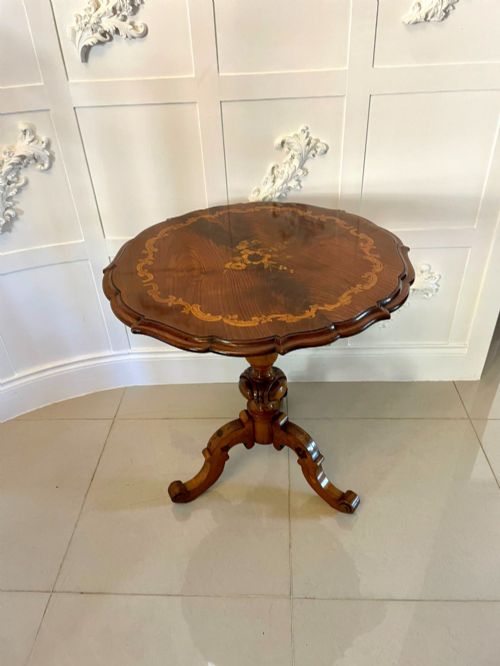
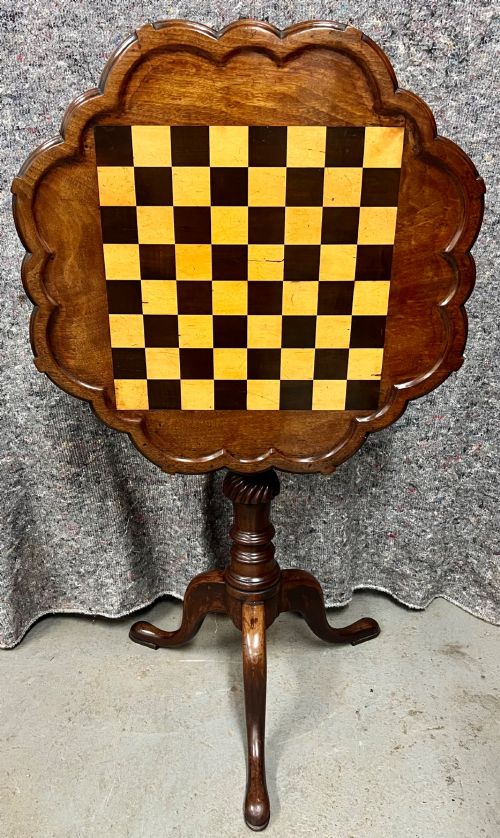
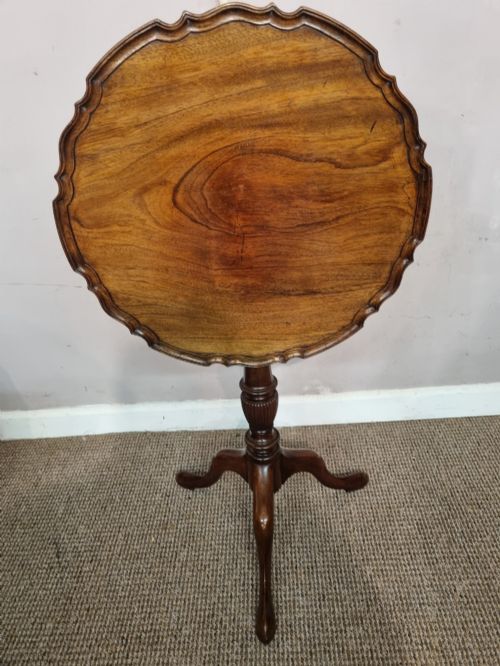
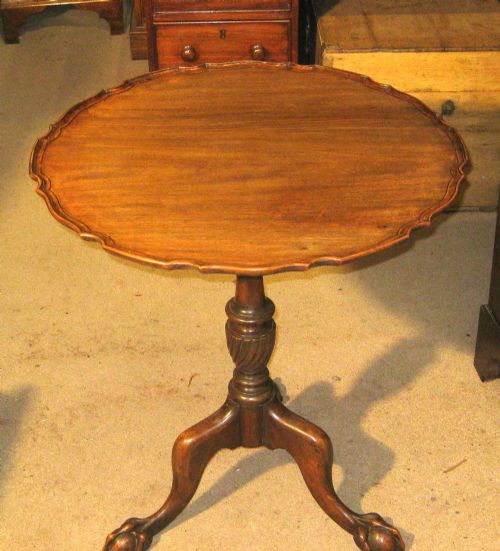
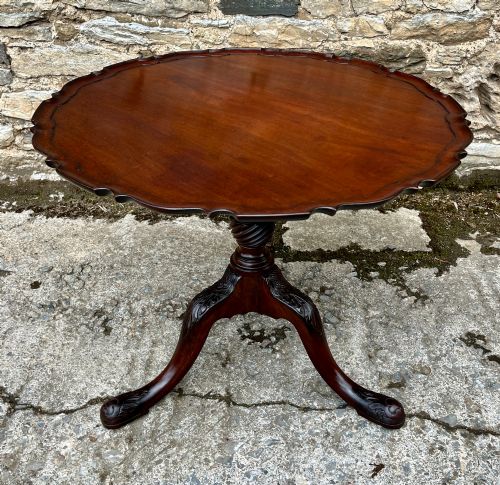
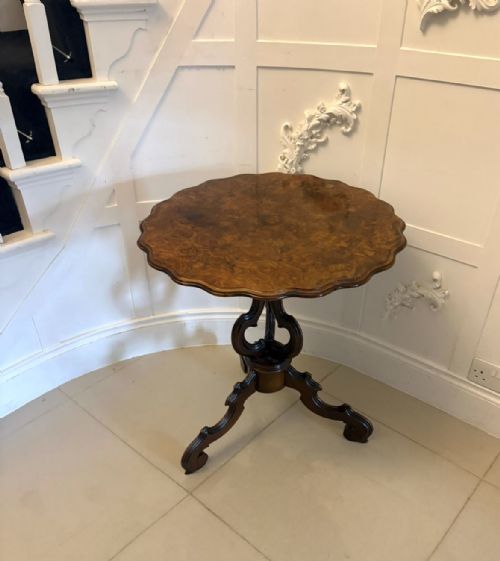
A scalloped edge tripod table brings distinct timber grain and carved profile into a room as an occasional or wine piece.
Scalloped Edge Tripod Table
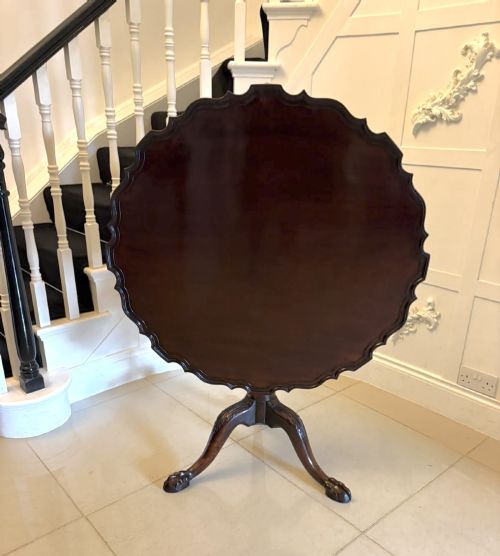
A scalloped edge tripod table stands on three legs beneath a central pillar supporting a circular top with a carved or moulded perimeter. These pieces function as wine tables, occasional tables, and tilt-top tea tables designed to move easily around a room.
The versions met on this page span the eighteenth century, the Georgian period, and the Victorian era, alongside later revivals. Mahogany and walnut dominate the selection, appearing in both plain timber and figured veneers.
Forms range from simple birdcage mechanisms that allow the top to rotate to elaborate piecrust edges in the Chippendale style. Many examples include tilting tops intended to save space when placed against a wall.
How they were made
Cabinetmakers constructed the tops from solid mahogany, walnut, or rosewood, frequently carving the raised scalloped or piecrust profiles directly from thick timber boards. Burr walnut and kingwood veneers appear on later or more decorative surfaces.
The three-legged bases utilise turned central pedestals joined to cabriole or tapered legs, often terminating in pad feet or carved claw and ball motifs. Birdcage assemblies and brass pivot catches enable the tops to tip and turn on their vertical shafts.
Scalloped Edge Tripod Table Retail Price Guide 2026
Typical asking prices for scalloped edge tripod table among the pieces listed under this phrase on Sellingantiques today, from the lower quarter to the upper quarter. They describe what is for sale here now, not the wider market.
A painted Victorian table listed here originates directly from Osborne House, carrying the domestic history of Queen Victoria.
What varies in quality
The crispness of the carved edge defines the upper tier of these pieces, where each curve of the scalloped border maintains sharp definition and careful proportion relative to the top. Lesser examples show softer, shallower moulding produced with mechanical assistance rather than hand chisels.
The stability of the tripod base and the snugness of the tilt mechanism indicate the standard of original construction. Tables with tight joints in the pillar and unwarped timber tops demonstrate superior workshop practice.
The Scalloped Edge Tripod Table Glossary
- Piecrust edge
- A raised, decoratively carved rim around the perimeter of a circular table top resembling pastry work. This detail requires skilled hand carving from a solid board.
- Tilt-top table
- A table equipped with a mechanism allowing the surface to pivot to a vertical position. This design enables convenient storage against a wall when not in use.
- Birdcage
- A wooden framework beneath the table top that permits the surface to both tilt and rotate. It consists of small vertical spindles held between two parallel plates.
- Tripod base
- A support structure comprising three legs radiating from a central turned pillar. This configuration ensures steady contact on uneven historic floors.
Scalloped Edge Tripod Table: Frequently Asked Questions
What is a scalloped edge tripod table used for?
These tables serve as small occasional surfaces for holding drinks, lamps, or decorative objects in sitting rooms. Their compact footprint allows them to fit easily beside chairs or in corners.
Historically, many functioned as tea tables or wine tables that could be tilted upright and moved out of the way when the room required more floor space.
How do I tell an 18th-century table from a later revival?
Eighteenth-century and Georgian pieces typically exhibit hand-cut joinery, older timber patination, and subtle irregularities in the carved scalloped borders. The grain shows deep maturity and natural wear consistent with age.
Later Victorian and Edwardian revival pieces often display machine-finished uniformity, different secondary woods inside the pillar joints, and crisper surface polishes typical of nineteenth-century workshops.
How does the tilt-top mechanism work?
The table top connects to a wooden block or a birdcage frame that pivots on a horizontal brass pin or wooden peg through the central pillar. A sliding brass catch or wooden wedge locks the surface flat when in use.
Releasing the catch allows the entire top to swing upright parallel to the stem, which originally saved space in period parlours.
Where should I place this table in a room?
A tripod table suits small wall spaces, corners, or gaps between armchairs where a larger rectangular surface would crowd the floor. Because the three legs distribute weight evenly, they sit well on carpets or wooden boards.
Keeping the table away from direct heat sources protects the solid timber top from splitting along the grain.