
Colonial Indian Occasional Table
A colonial indian occasional table brings intricate regional craftsmanship and dense tropical hardwoods straight into a room.
Colonial Indian Occasional Table
A colonial indian occasional table represents the intersection of traditional eastern woodworking and western domestic forms produced during the nineteenth and early twentieth centuries. These pieces serve flexible roles as side tables, coffee tables, or plant stands within modern interiors.
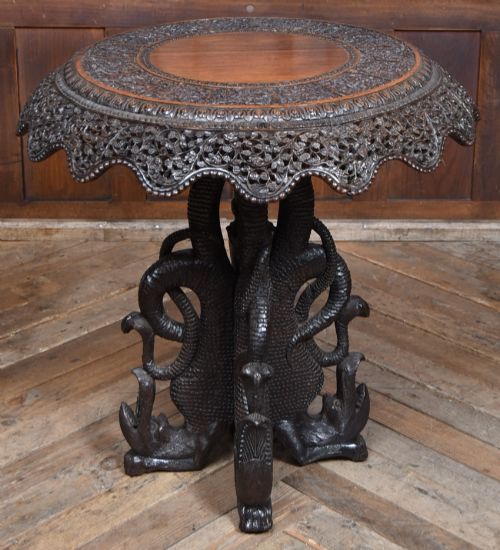
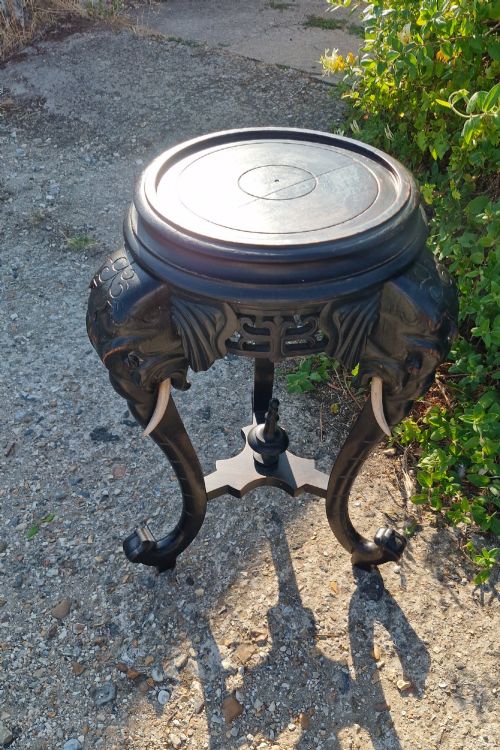
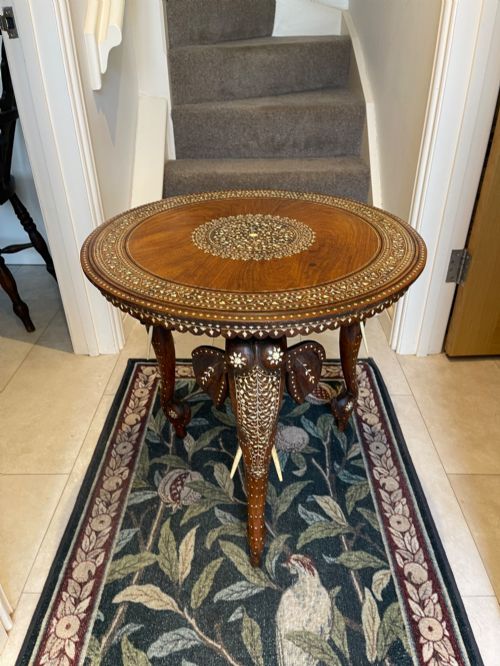
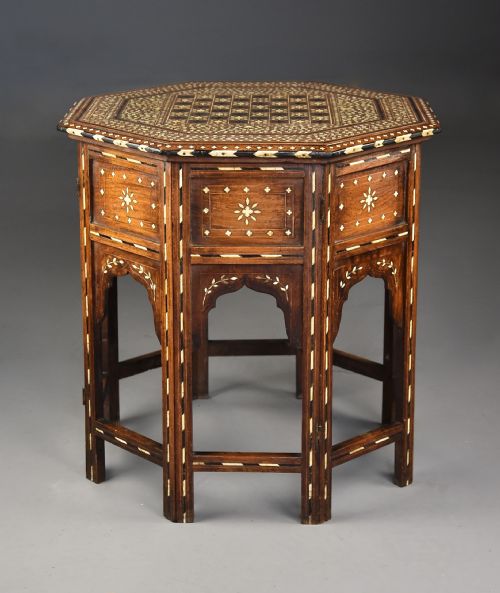
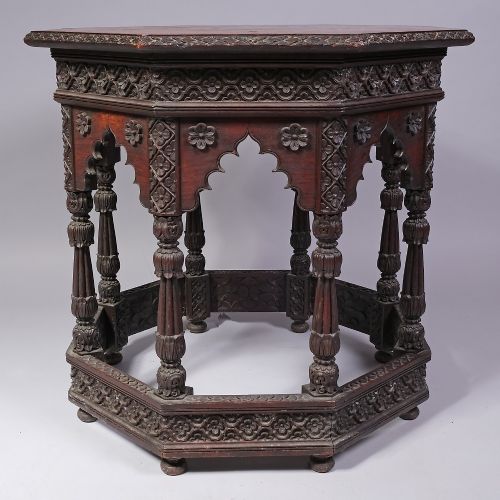
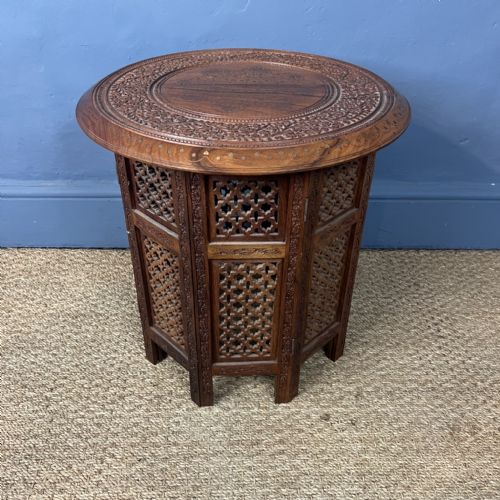
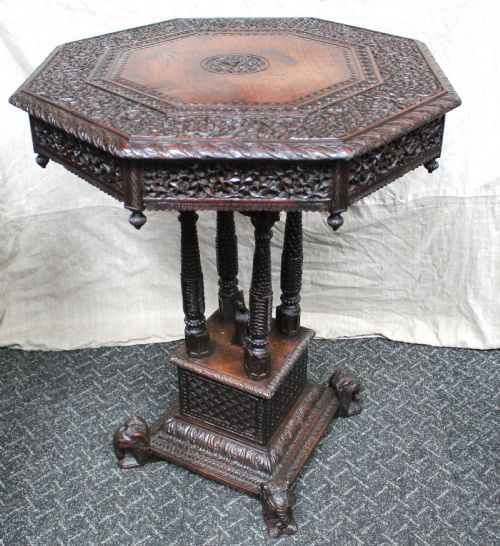
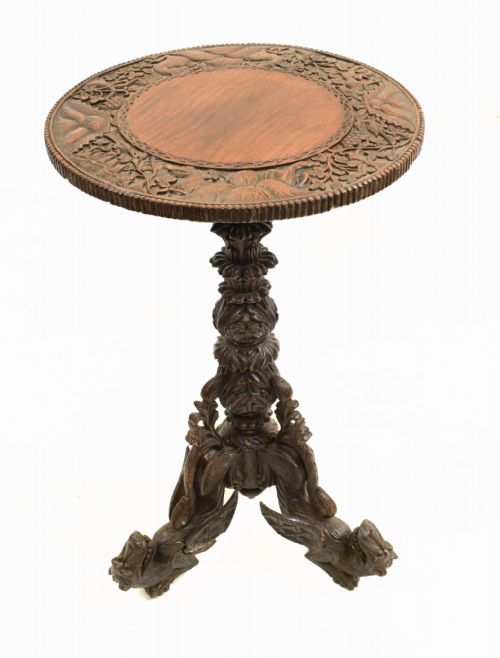
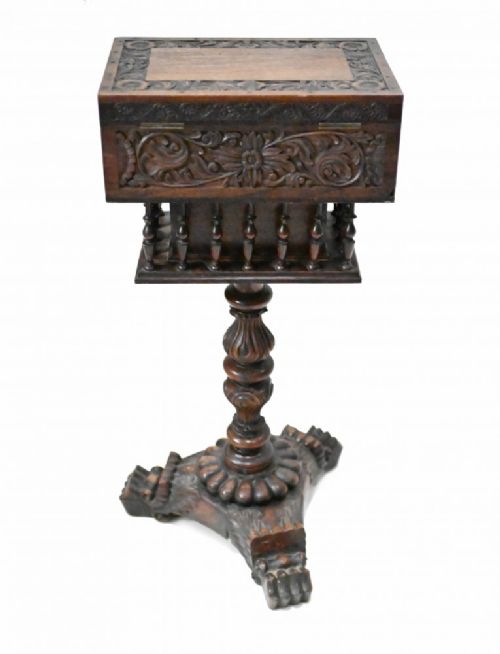
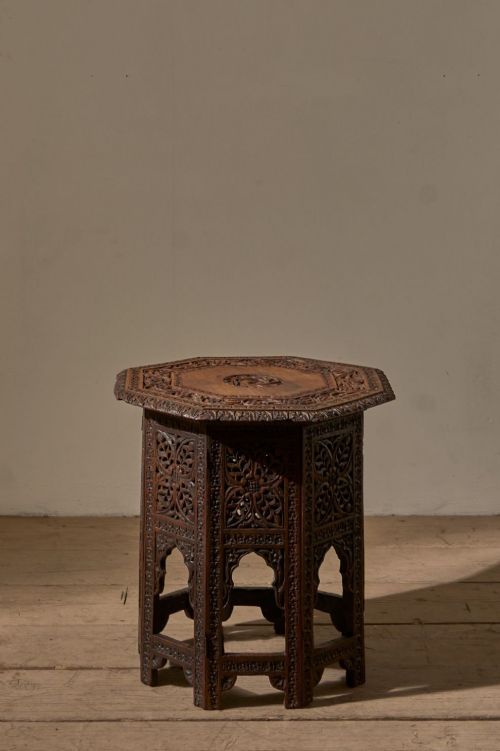
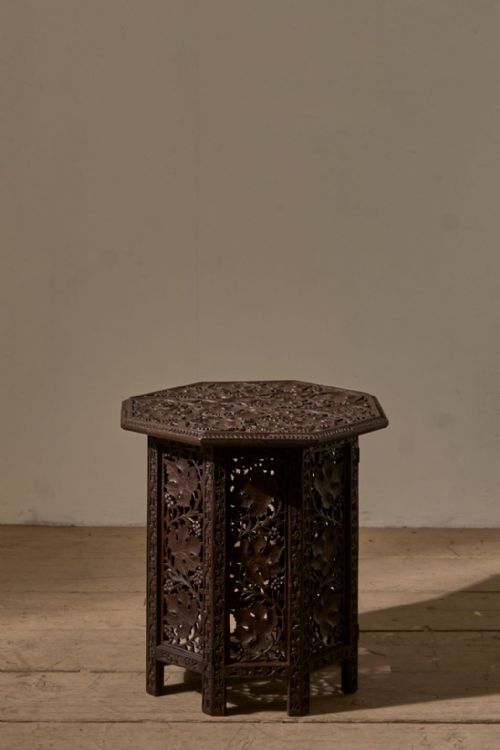
The most common examples on this page are carved hexagonal or octagonal tables originating from centres such as Hoshiarpur, alongside figural elephant tables and pedestal designs from the Bombay Presidency. They draw upon Anglo-Indian, Anglo-Burmese, and Ceylonese aesthetic traditions.
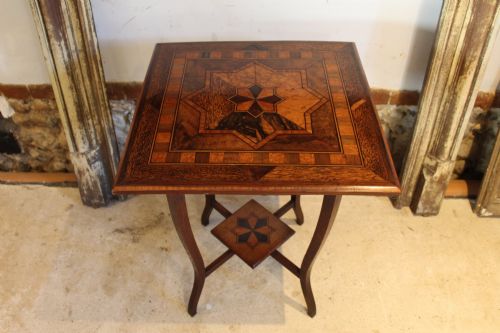
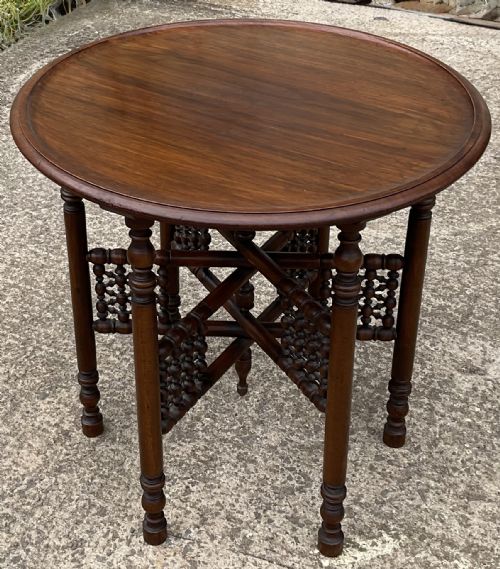
The range encompasses folding camp tables, tilt-top breakfast tables, and low chess-top tables finished with detailed surface decoration. Each piece reflects the specific colonial trade routes and domestic requirements of its period of origin.
Materials and construction
Workshops relied heavily on dense native timbers including teak, padouk, rosewood, ebony, and miscellaneous hardwoods. These heavy woods provided a stable foundation for deep relief carving and intricate joinery.
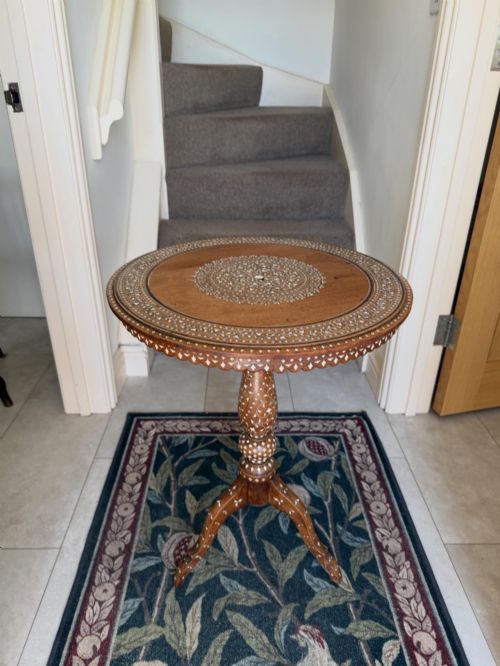
Surface embellishment frequently involved bone, mother-of-pearl, or brass wire inlaid directly into the timber ground. Artisans also utilised microscopic wood marquetry and geometric micro-mosaic panels to cover entire table surfaces.
Recorded forms on this page include chess tables, plant stands, two-tier side tables, and folding camp furniture.
Factors of quality
Quality rests primarily on the depth and crispness of the hand carving, where sharper undercut details demonstrate superior skill over shallow, mechanical stamping. The complexity of the geometric patterns and the density of the inlay work further separate standard workshop output from exceptional examples.
The choice of timber underpins the structural integrity and visual weight of the piece, with solid ebony or finely figured padouk marking out superior manufacture. Construction methods, such as the use of traditional folding mechanisms or pegged joints rather than modern adhesives, dictate long-term durability.
The Colonial Indian Occasional Table Glossary
- Hoshiarpur
- A city in Punjab known for intricate woodwork involving dense geometric bone or brass wire inlay. Pieces from this region often feature folding octagonal structures.
- Padouk
- A heavy, durable tropical hardwood with a reddish hue used extensively in Anglo-Indian furniture production. It resists warping and takes a sharp carved edge.
- Teak
- A durable, oil-rich tropical timber valued for its stability and resistance to humidity. It forms the structural core of many campaign and folding tables.
- Teapoy
- A small occasional table or tea caddy stand designed for domestic entertaining. They frequently feature carved pedestals and hinged tops.
- Marquetry
- The art of applying small pieces of veneer to a structure to form decorative patterns. Specimen wood versions combine multiple contrasting timbers.
Colonial Indian Occasional Table: Frequently Asked Questions
Where were these tables made?
These pieces were manufactured across the Indian subcontinent, Burma, and Ceylon during the colonial era to cater to both local European residents and export markets. Specific regional hubs developed distinct styles, such as the bone inlay work of Hoshiarpur and the figural elephant bases associated with the Bombay Presidency.
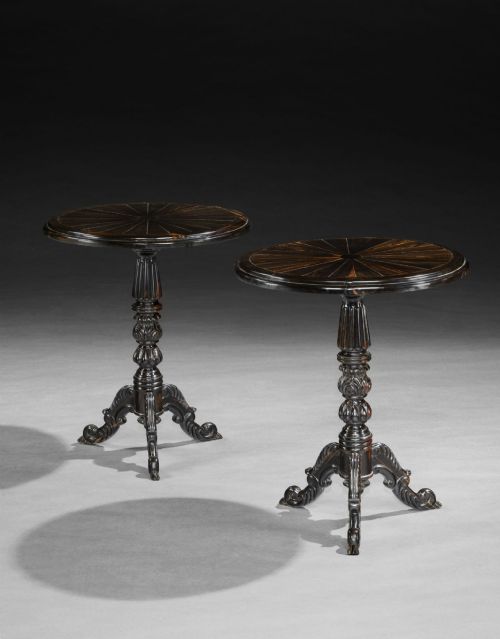
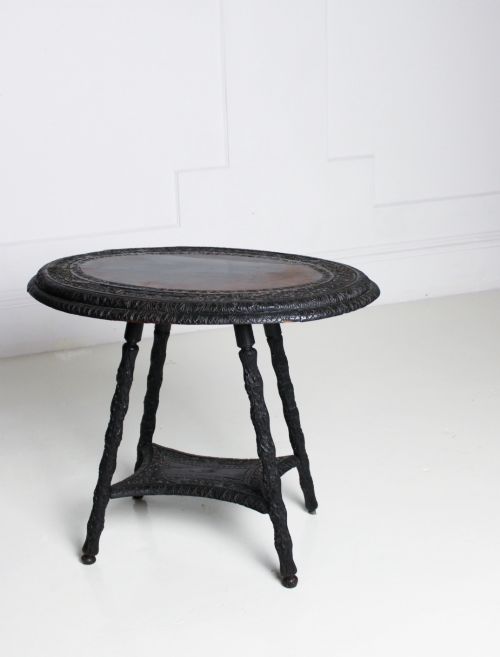
Workshops in Burma specialised in deep, figural relief carving on padouk timber. Ceylonese craftsmen frequently utilised solid ebony and exotic specimen woods for tripod and occasional forms.
Can I use an occasional table daily?
These tables adapt well to daily domestic use as side, lamp, or coffee tables provided they are treated with reasonable care. Many examples feature sturdy folding or tripod frames designed originally for portability and practical convenience.
Heavily carved or inlaid tops require more caution to avoid catching items on projecting wooden elements or moisture penetrating unsealed joints. Placing a glass top over delicate inlay can offer extra protection without obscuring the historic surface detail.
How do I date a colonial table?
Dating relies on examining the timber species, construction techniques, and the stylistic evolution of the carving and inlay patterns. Pieces produced during the mid nineteenth century often favour solid padouk and circular tilt-top mechanisms, while late Victorian examples frequently showcase complex Hoshiarpur geometric bone inlay.
Turned components, fixing methods, and the presence of original brass hardware or campaign folding hinges help narrow the period of manufacture down to specific decades.