

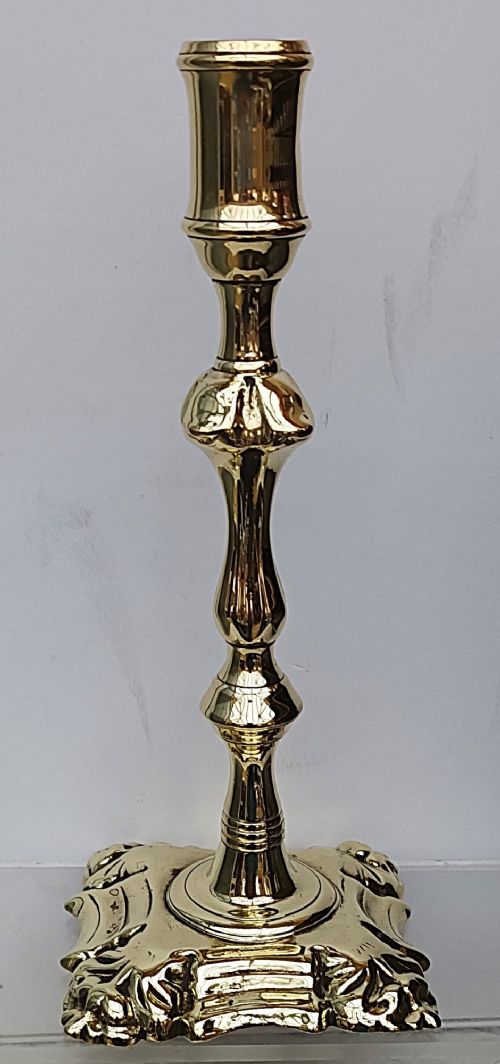
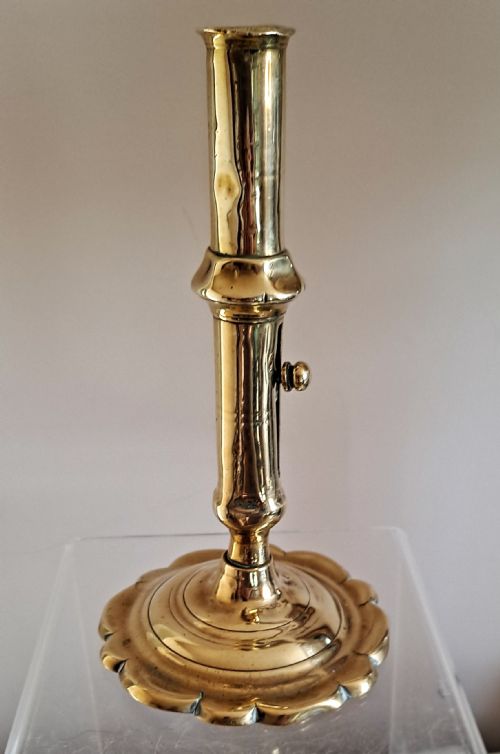


Scalloped Brass Candlesticks
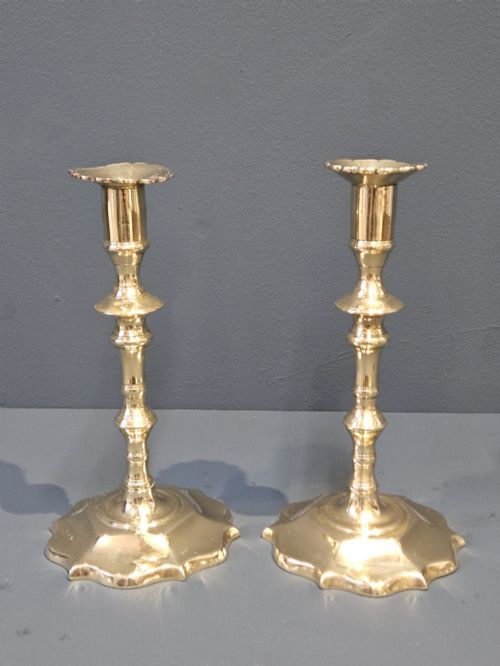
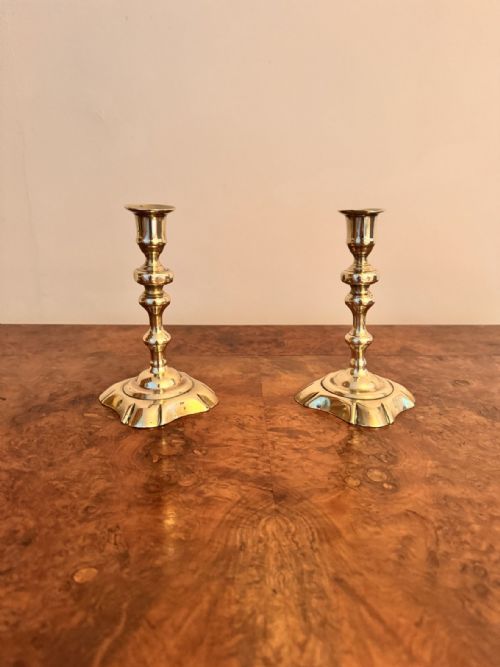
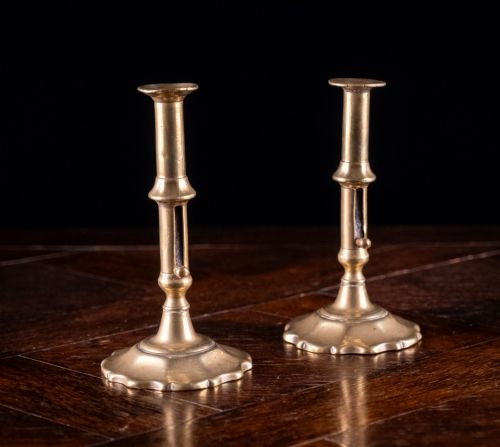
These scalloped brass candlesticks bring genuine period warmth and heavy metalwork into a room.
Scalloped Brass Candlesticks
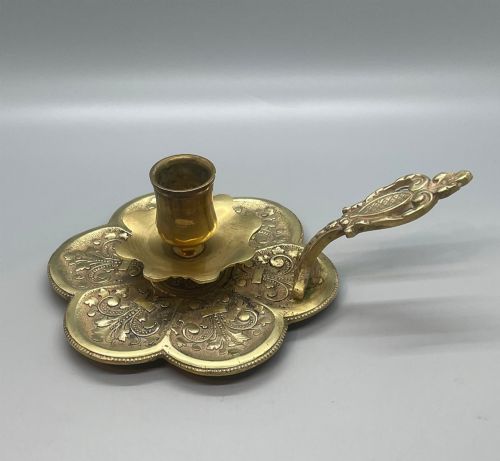
When you search for scalloped brass candlesticks, you are looking at domestic lighting fixtures defined by shaped, petal-like bases that catch the light. The pieces on this page span from the eighteenth century into the twentieth century, taking forms such as standard candlesticks, chamber candlesticks, and table lamps.
You are most likely to meet Georgian examples featuring petal bases alongside Dutch Baroque forms and Edwardian adaptations. English makers dominate the selection, alongside continental European pieces in brass and paktong.
The objects serve both decorative and functional purposes, often appearing in pairs that anchor a mantelpiece or sideboard. Their survival across centuries demonstrates the enduring appeal of cast metal domestic items.
How they were made
The construction relies heavily on cast brass, often utilising multi-part casting methods where bases, stems, and drip pans are formed separately and joined. Paktong appears as a distinctive copper-nickel-zinc alloy, offering a brighter, silvery alternative to standard yellow brass.
Surface finishing involves careful turning on a lathe to refine the profiles of stems and sockets, followed by hand-polishing. The characteristic scalloped or petal bases require precise moulding to achieve symmetry across multiple lobes.
Scalloped Brass Candlesticks Retail Price Guide 2026
Typical asking prices for scalloped brass candlesticks among the pieces listed under this phrase on Sellingantiques today, from the lower quarter to the upper quarter. They describe what is for sale here now, not the wider market.
Some eighteenth-century servants carried chamber candlesticks up dark staircases, leaving soot traces that tell stories of midnight journeys.
What varies in quality
The distinction between ordinary and exceptional pieces lies in the crispness of the casting and the weight of the metal. Finer examples retain sharp definition in the lobes of the petal bases and clean lines along the turned stems, whereas lesser pieces show softer contours from worn moulds.
Proportion and balance also separate the ranges, with superior candlesticks exhibiting a harmonious relationship between the wide base and the tapering shaft. The integrity of the joins and the retention of original components dictate the standing of an individual piece.
Benhan and Froud
The Scalloped Brass Candlesticks Glossary
- Petal base
- A foot moulded into curved, scalloped lobes resembling flower petals. This form gained popularity during the Georgian period.
- Paktong
- A copper, nickel, and zinc alloy imported from China, prized for its silvery appearance and used in eighteenth-century lighting.
- Chamber candlestick
- A low candlestick fitted with a pan to catch dripping wax and a handle for carrying from room to room.
- Dutch Baroque
- A robust, ornate style originating in the Netherlands, characterised by heavy turning and generous proportions.
- Georgian
- Pertaining to the reigns of the first four Georges, spanning the eighteenth and early nineteenth centuries, noted for refined domestic design.
Scalloped Brass Candlesticks: Frequently Asked Questions
What are petal base candlesticks?
Petal base candlesticks feature moulded feet shaped into lobes resembling flower petals, a design popular in eighteenth-century brassware.
This form provides a stable foundation while adding decorative movement to the silhouette.
How do I date an antique brass candlestick?
Dating relies on examining the casting methods, wear patterns, base construction, and stylistic clues such as stem profiles.
Earlier pieces often show pontil marks or multi-part construction methods that changed by the twentieth century.
What is paktong metal?
Paktong is a historic copper-nickel-zinc alloy imported from Asia that mimics the appearance of silver.
It was used for high-end eighteenth-century lighting before European metallurgists developed similar compositions.
Were these candlesticks originally sold in pairs?
Many domestic candlesticks were manufactured and sold as pairs to balance symmetrical arrangements on dining tables and mantelpieces.
Single survivors are also common due to the dispersal of household items over centuries.
How should I clean antique brass?
Antique brass benefits from gentle dusting and minimal intervention to preserve the natural warm patina developed over centuries.
Aggressive chemical polishing strips the aged surface character that collectors value.