



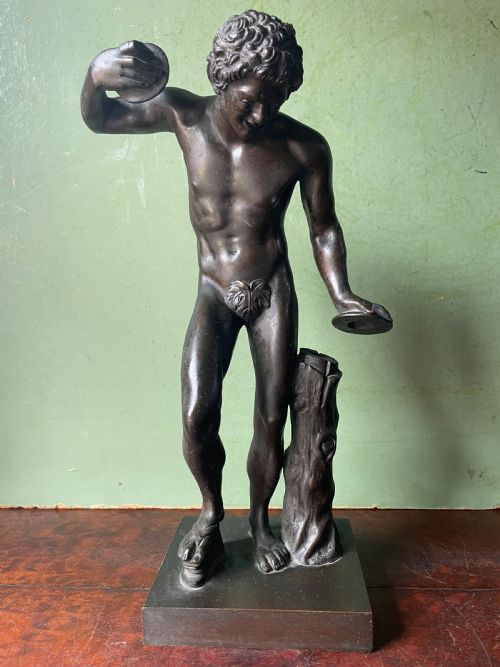

Satyr and Faun Sculpture
A satyr and faun sculpture brings mythological figures into the room, rendered in bronze, marble, and lead across the nineteenth century.
Satyr and Faun Sculpture
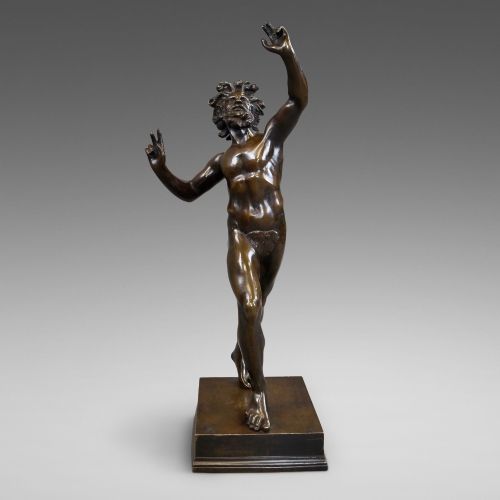
Satyr and faun sculpture depicts mythological woodland figures, most frequently taking the form of the dancing faun of Pompeii or figures after antique models. These pieces draw heavily on Grand Tour traditions and nineteenth-century classical revival tastes, capturing theatrical poses with cymbals, pipes, or goats.
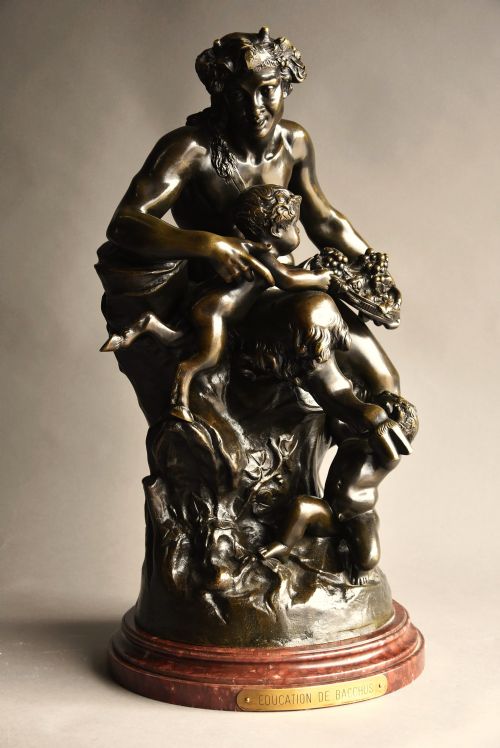
The version most commonly met on this page is the nineteenth-century bronze souvenir or reduction, often Italian or French in origin. These range from small cabinet pieces to larger decorative groups involving satyrs with fauns or the infant Bacchus.
Materials and methods
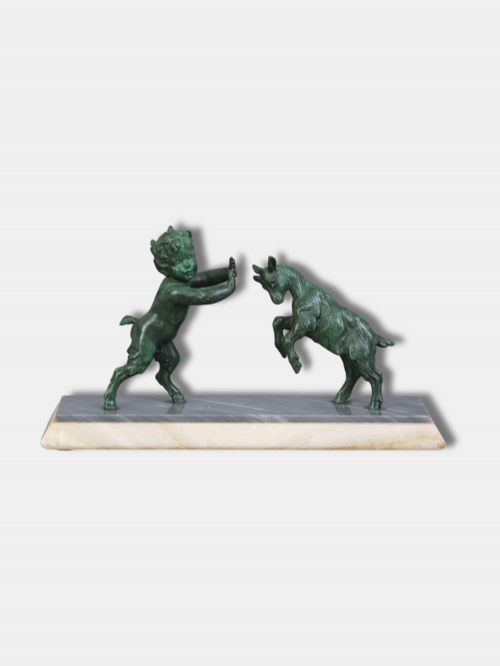
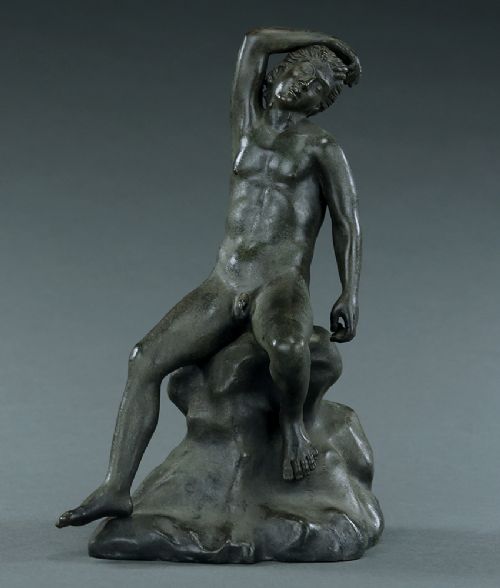
Foundry work relies on bronze, patinated bronze, and occasionally lead or plaster, capturing fine details in hair, musculature, and drapery. Patination techniques vary from dark brown surfaces to verdigris finishes that mimic ancient excavation finds.
Marble and giltwood occasionally appear as bases or framing elements, supporting metal figures cast after classical prototypes or notable sculptors.
Listings feature nineteenth-century materials including bronze, patinated bronze, lead, plaster, and marble.
Assessing quality
The distinction between ordinary and superior pieces rests on the crispness of the chase-work and the depth of the casting. Finer examples retain sharp definition in the facial expressions, fingers, and instruments rather than softening into blurred metal.
The quality of the patination and the fidelity to the antique source material distinguish workshop productions from finer named reductions. Weight, proportion, and the handling of the base also separate standard souvenir pieces from masterworks.
Claude Michel Clodian·Emile Carlier·Augusto Rivalta
The Satyr and Faun Sculpture Glossary
- Grand tour
- A cultural journey undertaken by wealthy young Europeans in the eighteenth and nineteenth centuries, bringing home small bronzes and souvenirs of classical antiquities.
- Reduction
- A smaller copy of a famous larger sculpture, produced in bronze or other materials using a reducing machine or skilled hand measurement.
- Patination
- The chemical or natural coloration applied to the surface of bronze to create varied tones, ranging from deep brown to aged green.
- Neoclassical
- A style inspired by the classical art and architecture of ancient Greece and Rome, dominant in European sculpture during the eighteenth and nineteenth centuries.
Satyr and Faun Sculpture: Frequently Asked Questions
What is a Grand Tour bronze?
A Grand Tour bronze is a nineteenth-century souvenir cast in Italy or France, reproducing famous classical sculptures discovered during excavations in Pompeii and Rome.
Travellers collected these reductions to display their classical learning and appreciation for ancient art upon returning home.
How do I care for bronze sculpture?
Bronze requires minimal maintenance, needing only an occasional dusting with a soft, dry cloth to prevent grime accumulation.
A light application of microcrystalline wax can help preserve the patination and protect the metal from moisture.
Are these pieces original antiques?
The majority of pieces listed date from the nineteenth century, reflecting the Victorian and Edwardian revival of classical mythological subjects.
They are period interpretations and souvenir reductions rather than ancient Roman artefacts.
Why do some bronzes have green patination?
Verdigris and green patination are often applied intentionally to replicate the appearance of ancient bronzes that have spent centuries buried underground.
This finish enhances the antique character and highlights the textural details of the casting.