

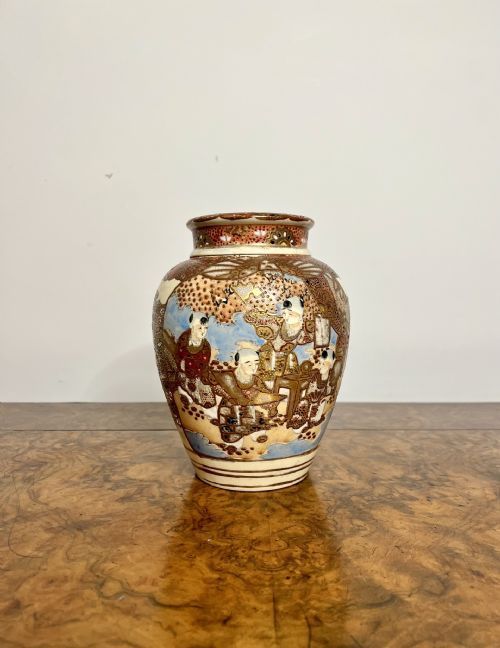
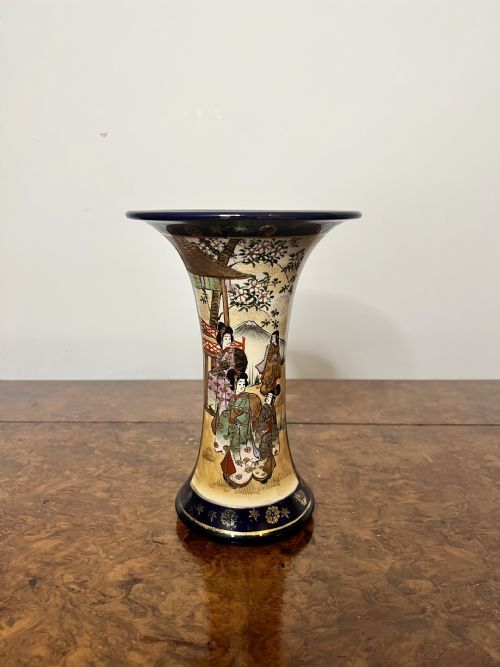


Satsuma Pottery Vessel
Satsuma pottery vessels combine intricate hand-painted figures with rich gilding, offering collectors a striking glimpse into late nineteenth and early twentieth century Japanese craftsmanship.
Satsuma Pottery Vessel
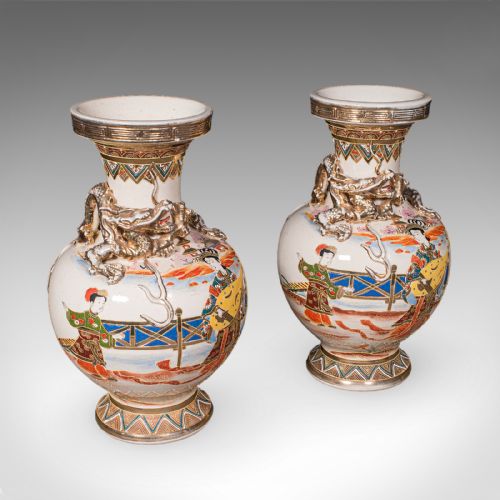
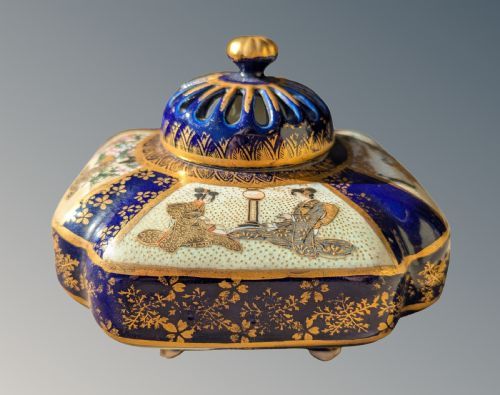
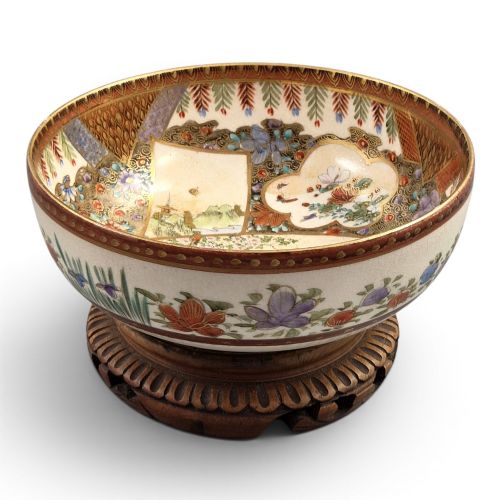
A satsuma pottery vessel is a distinctive form of Japanese ceramic, most frequently encountered here as vases, incense burners, and lidded jars from the Meiji period. These items range from small miniature vases to monumental bowls and baluster vases, often decorated with elaborate scenes of figures, rakan, and dragons. Most examples originate from the late nineteenth century, though production extends into the Taisho and early Showa periods.
The objects serve primarily decorative functions, encompassing ginger jars, tea caddies, sugar bowls, and footed burners. Buyers encounter pieces bearing traditional signatures and crests, particularly associated with Kyoto studios and makers such as Kinkozan. The forms often incorporate handles styled as elephants or shishi lions, reflecting both traditional motifs and export preferences of the era.
How they were made
Makers formed these pieces using earthenware and porcelain bodies, which were then finished with a characteristic finely crackled cream-coloured glaze. Artisans applied detailed enamel painting over this glaze, depicting complex narrative scenes and natural subjects with great precision.
Gold leaf and heavy gilding form a defining element of the decoration, highlighting borders, garments, and architectural details. Techniques such as moriage build up raised enamel and gilt surfaces, creating a tactile texture that distinguishes high-relief panels on vases and urns.
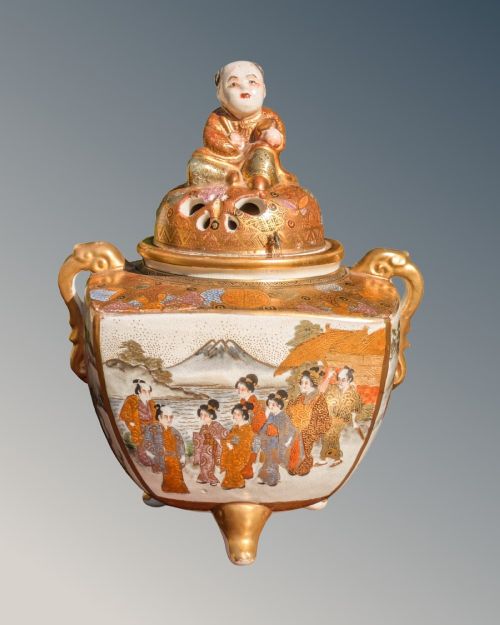
Elephants and fierce shishi lions frequently double as functional handles, standing guard over elaborate samurai battles and peaceful tea ceremonies.
What varies in quality
The standard of painting determines much of the distinction between ordinary and exceptional pieces, particularly in the rendering of facial expressions and dense figural processions. Finely executed works display meticulous brushwork in the depiction of hundreds of arhats, samurai battles, and complex landscapes without crowding the composition.
The application of gold and enamel work further separates the grades of production, with superior vessels utilising heavy, raised gilding and crisp enamel colours that remain vibrant and sharply defined. The prestige of the workshop, indicated by legible signatures from renowned Kyoto makers, also governs the standing of an individual vessel.
Kizan·Kinkozan·Kozan·Hotoda·Chosei·Kotobuki do·Tokyo Taizan·Shozan·Ippo
The Satsuma Pottery Vessel Glossary
- Koro
- An incense burner, typically featuring a pierced lid and often supported on legs. These vessels frequently incorporate shishi lion finials.
- Moriage
- A decorative technique using piped clay to create raised relief patterns beneath the glaze and enamel layers. This method adds a distinct three-dimensional texture to floral and ornamental borders.
- Shimazu Mon
- The family crest of the Shimazu clan, displayed as a cross within a circle. This mark frequently appears on satsuma wares produced in the Satsuma domain and associated Kyoto workshops.
- Rakan
- Depictions of enlightened followers of Buddha, commonly grouped in large numbers across decorative panels. Artists rendered these figures with individualized robes and expressions.
- Natsume
- A small tea caddy traditionally used in Japanese tea ceremonies. These vessels are named after their resemblance to the shape of a jujube fruit.
Satsuma Pottery Vessel: Frequently Asked Questions
How do I identify a Meiji period piece?
Meiji period satsuma vessels generally display dense, highly detailed hand-painted enamel work combined with extensive gilding. They often feature specific signatures, studio marks, or the Shimazu crest on the base.
Examination of the glaze reveals a characteristic fine network of tiny crackles beneath the painted decoration, which distinguishes these nineteenth-century items from later reproductions.
How should I clean my satsuma vase?
Maintenance requires gentle dusting with a soft, dry cloth to protect the delicate enamel and raised gold leaf decoration. Moisture and chemical cleaners should be avoided entirely to prevent staining the absorbent crackled glaze.
Displaying the vessel away from direct sunlight preserves the vibrancy of the hand-painted pigments and prevents the earthenware body from experiencing temperature stress.
What is the difference between a koro and a natsume?
A koro is an incense burner built with a removable pierced lid for venting smoke, frequently adorned with animal handles or tripod feet. These pieces focus on sculptural presence and complex surface panels.
By contrast, a natsume is a compact tea caddy with a flush-fitting lid designed to hold powdered green tea. Its form is more restrained, emphasising smooth contours and refined surface painting.