





Satinwood Tea Tray
These satinwood tea tray pieces are decorative serving items that bring refined warmth and figured grain to a room.
Satinwood Tea Tray
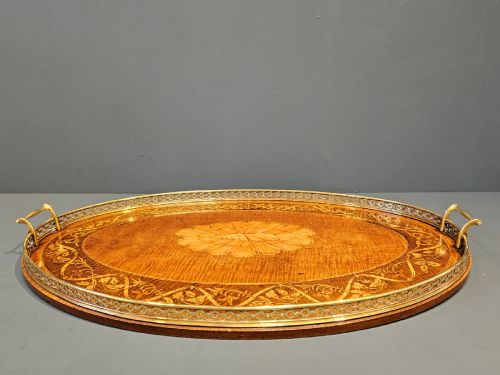
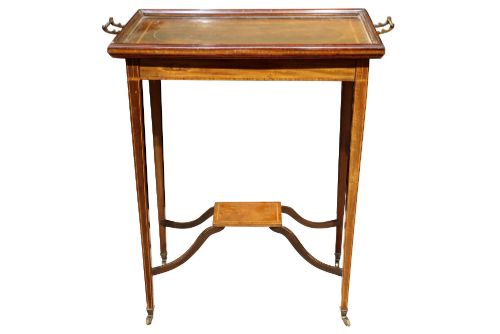
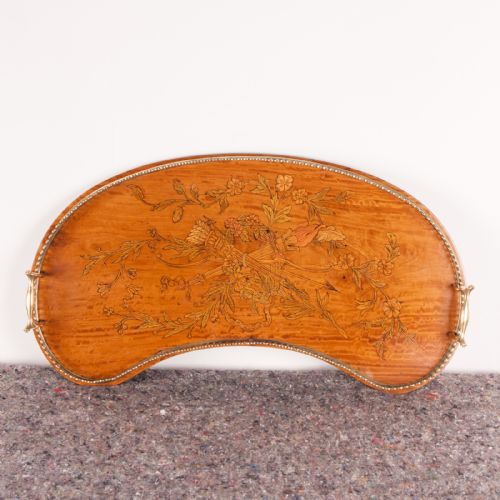
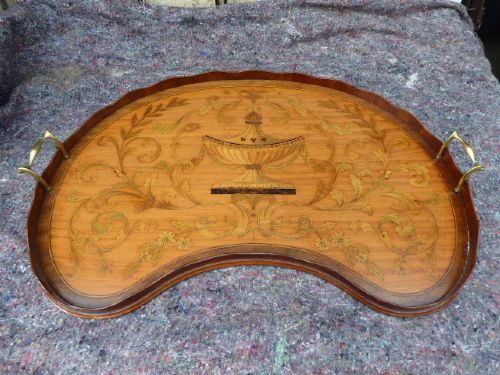
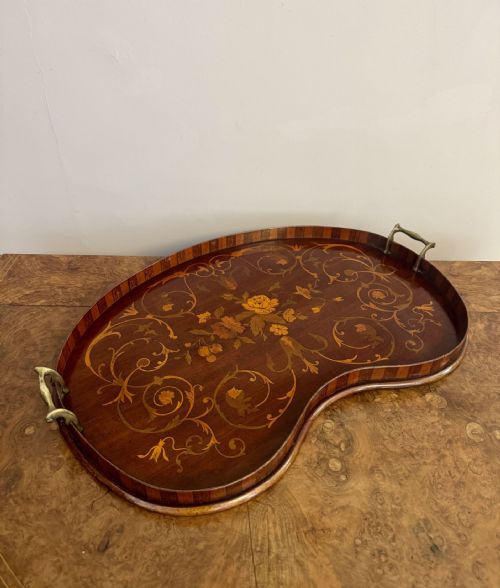
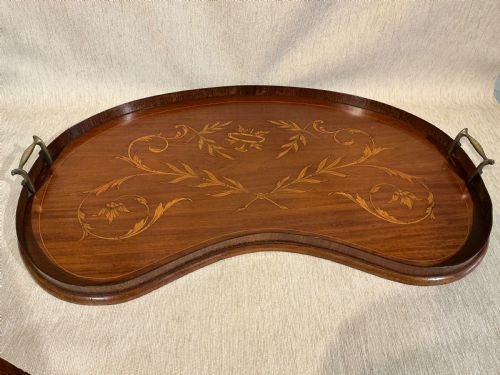
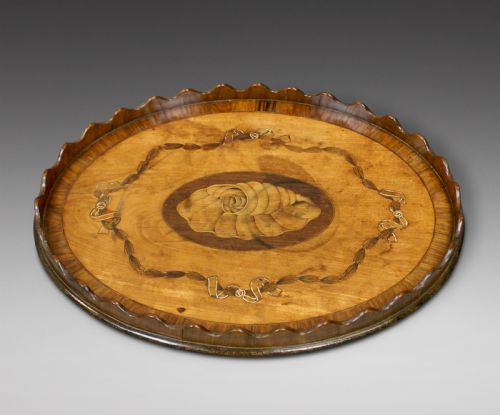
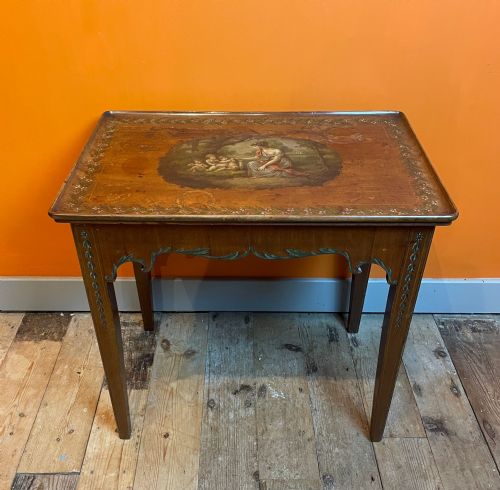
When you search for a satinwood tea tray, you enter a field of serving pieces and occasional tables that span from the eighteenth century through the Edwardian period. The examples on this page predominantly take the form of Edwardian serving trays, kidney shaped trays, and mahogany tables featuring satinwood elements.
Makers and workshops constructed these items in oval, kidney, and rectangular formats, sometimes mounting them onto stands or incorporating them into two tier tables and etageres. The tradition extends from Georgian and George III roots into the heavy revivalism of the Victorian and Edwardian eras, where lighter woods regained favour.
Buyers will encounter items ranging from miniature oval serving trays to large occasional tables with tray tops. The integration of brass galleries and delicate wood veneer highlights the domestic entertaining habits of past centuries.
What varies in quality
The distinction between standard production and superior craftsmanship rests in the depth of the marquetry and the crispness of the inlay work. Finer examples display meticulous hand-cut botanical or classical motifs that integrate seamlessly into the surrounding wood without visible gaps.
Structural integrity also separates the grades, visible in the tightness of the mitred joints, the thickness and stability of the timber base, and the quality of the brass fittings. Superior trays maintain a balanced weight and a clear, hand-polished finish that reveals the underlying figure of the satinwood.
Listings feature Edwardian, Victorian, and 18th Century periods, utilising satinwood, mahogany, brass, and boxwood across serving trays and etageres.
Edwards and Roberts
The Satinwood Tea Tray Glossary
- Satinwood
- A hard, durable timber prized for its golden lustre and reflective, chatoyant grain. It serves as the primary face veneer on high-status tables and serving pieces.
- Marquetry
- The art of forming decorative patterns by fitting together small pieces of coloured wood veneer. This technique creates complex pictorial scenes on the surface of trays and tabletops.
- Gallery
- A raised ornamental border, frequently pierced in brass or carved in wood, surrounding the edge of a tray to prevent items from sliding off.
- Etagere
- A piece of furniture consisting of a set of open shelves for displaying small objects. These often incorporate removable serving trays as their upper tiers.
- Stringing
- A thin, narrow inlay of contrasting wood used to outline the edges of panels and borders. It defines the geometric layout typical of Sheraton revival pieces.
Satinwood Tea Tray: Frequently Asked Questions
How are antique satinwood trays used today?
These pieces function well as display surfaces on coffee tables, sideboards, or ottomans, holding decorative objects or serving drinks during gatherings.
Their decorative wood grain and inlaid patterns also make them suitable for hanging directly on walls as framed pieces of woodwork.
How do I identify an Edwardian satinwood tray?
Edwardian examples often feature light construction, delicate boxwood stringing, and elaborate floral marquetry reflecting a renewed interest in eighteenth-century styles.
They frequently appear in kidney shapes or with integrated brass galleries, matching the lighter domestic interiors of the early twentieth century.
Can these trays hold heavy items?
Most antique serving trays were built for light afternoon tea service and display rather than heavy everyday dining use.
Examining the thickness of the base board and the strength of the side handles or gallery helps determine practical load capacity.