
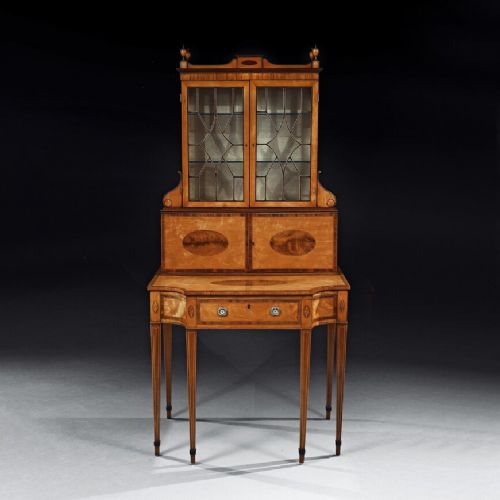
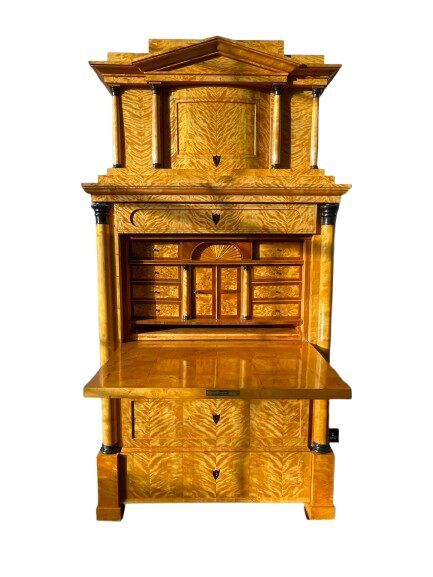


Satinwood Secretaire Cabinet
A satinwood secretaire cabinet combines figured timbers and a fitted writing drawer, offering a refined workspace for the home.
Satinwood Secretaire Cabinet
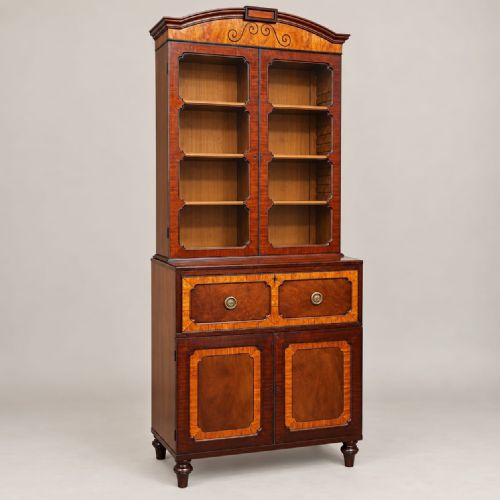
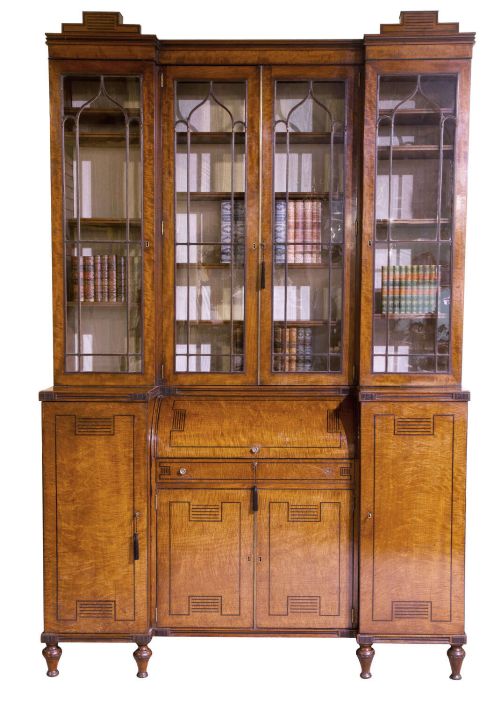
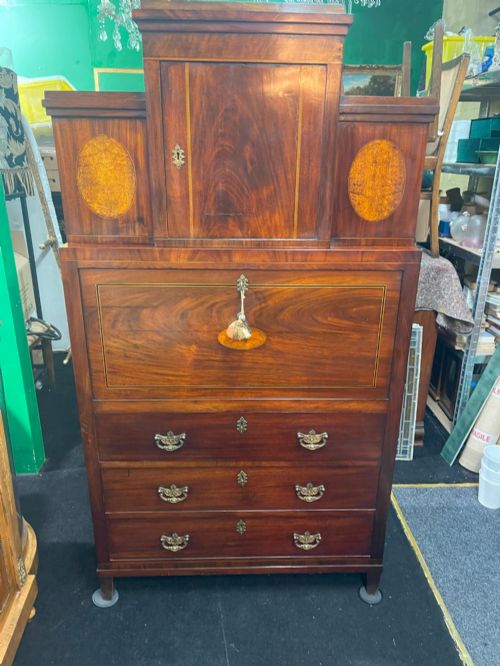
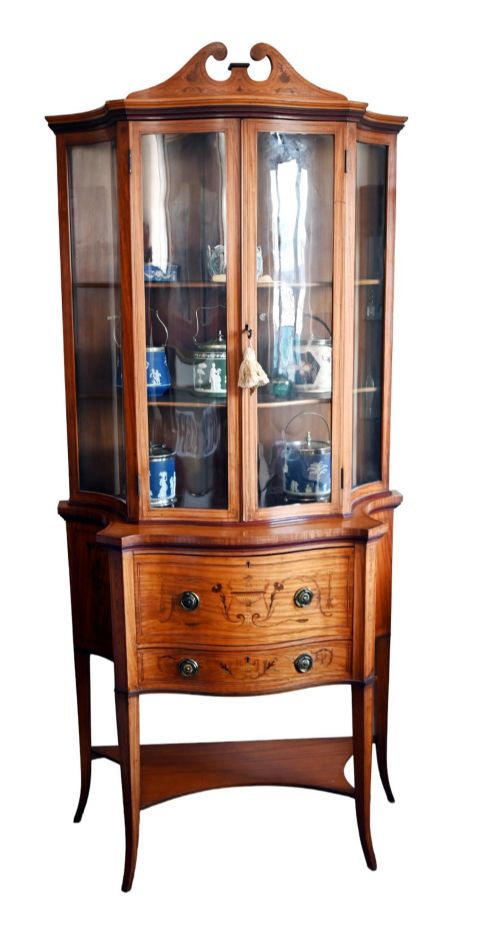
A satinwood secretaire cabinet brings together display and writing functions, often taking the form of a secretaire bookcase, writing cabinet, or secretaire chest. These pieces range from compact writing cupboards to large glazed bookcases designed to house a library while concealing a fitted desk drawer inside.
The pieces on this page span the Georgian period, the 18th century, and the 19th century, including Biedermeier, Regency, and Sheraton Revival styles. George III examples sit alongside later nineteenth-century interpretations, showing how cabinetmakers adapted the form across decades.
Buyers encounter forms that integrate brass hardware, glass doors, and contrasting woods like mahogany and walnut. Whether selecting a tall bookcase or a small writing desk, each piece provides enclosed storage alongside a pull-down writing surface.
How they were made
Cabinetmakers constructed these pieces using dense structural timbers such as mahogany and sabicu, applying figured satinwood veneers and birch veneer to the exterior surfaces. Marquetry inlay, ebonised wood details, and brass fittings completed the decoration of the cabinet facade.
Glazed doors protect the upper sections of the bookcases, while internal compartments utilise small drawers and pigeonholes accessed via the drop-front writing drawer. Some pieces incorporate marble tops and fine crossbanding to frame the grain of the satinwood.
Secret drawers within the fitted writing compartments offered owners a private hiding place for letters and small valuables.
What varies in quality
The quality of a satinwood secretaire cabinet rests in the selection of the timber veneers and the precision of the cabinetwork. Pieces featuring well-matched grain patterns, crisp marquetry inlay, and sophisticated internal desk fittings occupy the upper tier of the range.
Construction details such as solid secondary woods, original brass hardware, and well-executed joinery distinguish finer examples from standard production. The integration of specialised woods like sabicu and balanced proportions across the cabinet facade further define the grade of the piece.
Gillows·Edwards and Roberts
The Satinwood Secretaire Cabinet Glossary
- Satinwood
- A dense, light-coloured tropical timber prized for its lustrous, reflective grain. It was widely utilised by 18th-century and 19th-century cabinetmakers for high-status veneer work.
- Secretaire
- A cabinet or chest incorporating a pull-down drawer that reveals a fitted writing desk with small drawers and pigeonholes. This innovation concealed writing materials within standard furniture forms.
- Marquetry
- The art of forming decorative patterns by fitting together contrasting pieces of wood veneer. It frequently adorned the doors and drawers of polite furniture.
- Crossbanding
- A border technique where strips of veneer are laid so their grain runs perpendicular to the main surface. It frames panels of satinwood on cabinet fronts.
- Sabicu
- A heavy, durable timber often paired with satinwood on 18th-century pieces. Its dark tone provides a strong contrast to lighter woods.
Satinwood Secretaire Cabinet: Frequently Asked Questions
How do I identify a Georgian satinwood piece?
Georgian pieces in satinwood typically display restrained classical proportions, fine crossbanding, and subtle marquetry inlay. Cabinetmakers of this era focused on highlighting the natural figure of the timber rather than applying excessive ornament.
Construction methods such as hand-cut dovetails and native secondary timbers help confirm the period. Examining the internal fittings of the writing drawer also reveals the hand of 18th-century workshops.
Where should I place a secretaire cabinet?
These cabinets suit studies, drawing rooms, or reception rooms where their dual function can be appreciated. Placing them away from direct sunlight protects the sensitive satinwood veneer from fading over time.
Allowance must be made for the drop-front writing drawer when open. Ensuring adequate clearance in front of the cabinet allows comfortable use of the internal desk space.
How do I care for satinwood furniture?
Satinwood furniture requires gentle dusting with a dry, soft cloth and protection from extreme changes in humidity. Avoiding harsh cleaning products preserves the integrity of the polished finish and the underlying veneer.
Maintaining stable room temperatures prevents the wood and veneer from warping or splitting. Professional waxing helps nourish the timber surface without building up excessive residue.