





Satinwood Nightstand Table
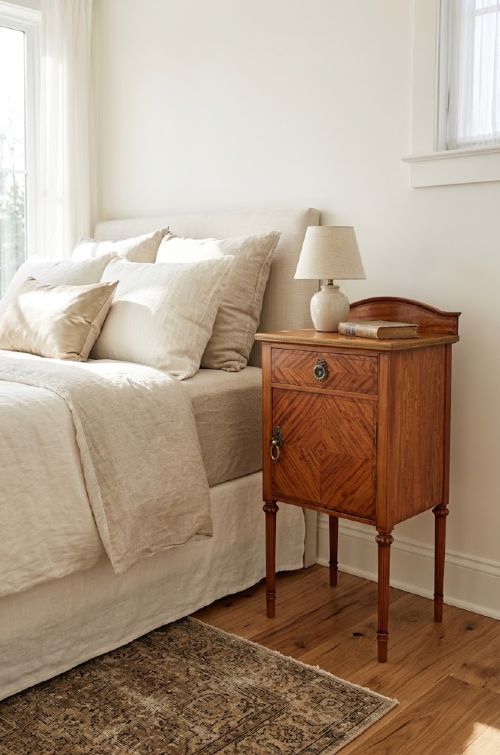
These satinwood nightstand table pieces bring fine timber and compact storage to the bedroom.
Satinwood Nightstand Table
When you search for a satinwood nightstand table, you encounter compact bedside furniture designed for holding lamps and nighttime essentials within reach of the bed. The selection spans several decades, with Edwardian and early twentieth-century examples appearing most frequently alongside Victorian and Art Deco pieces.
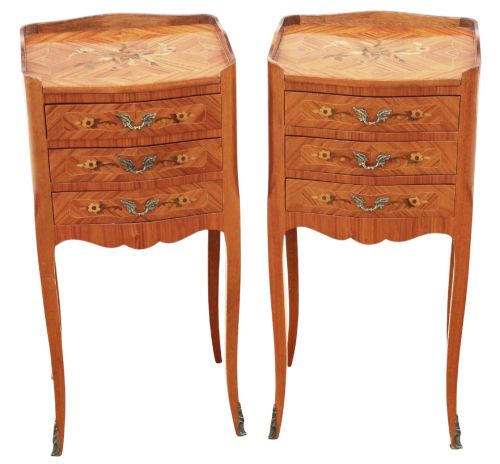
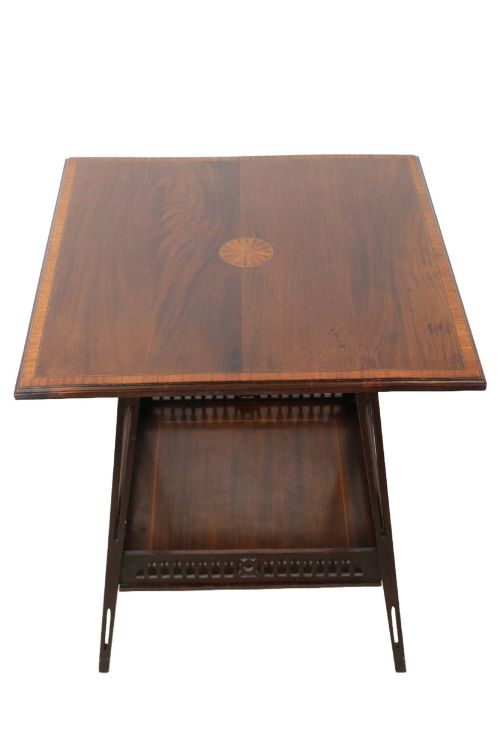
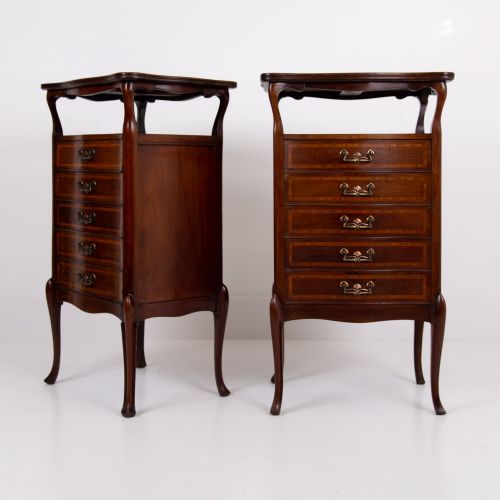
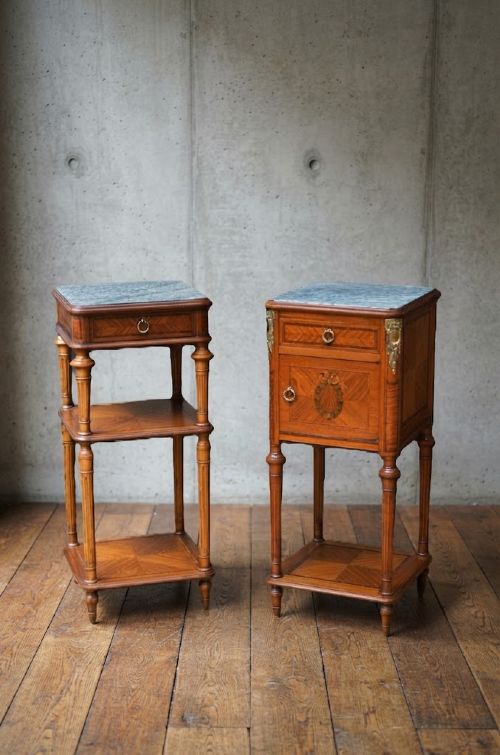
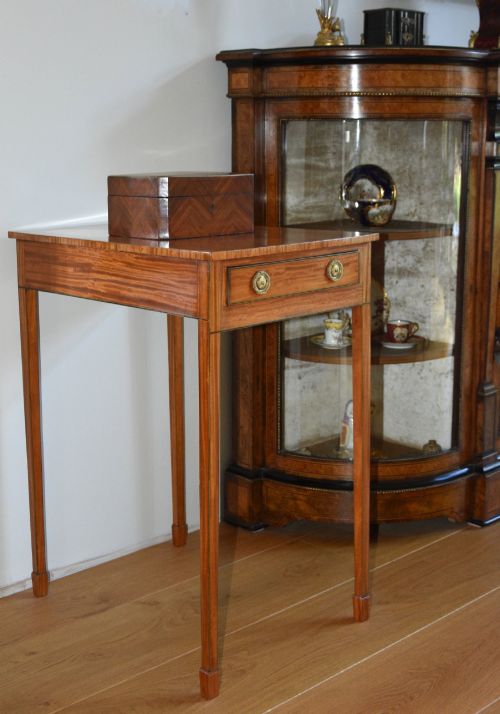
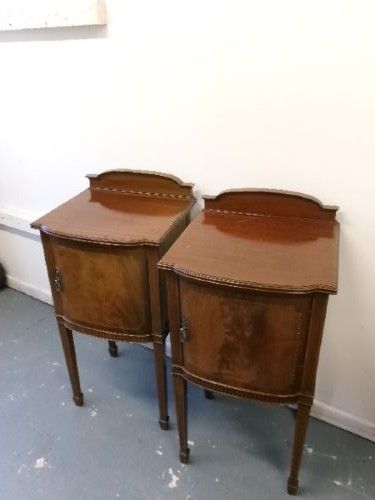
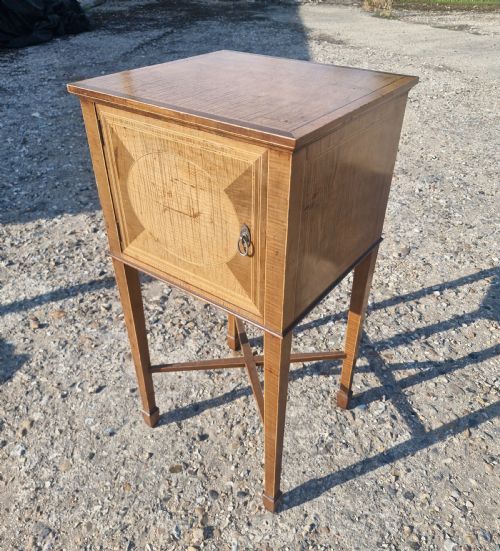
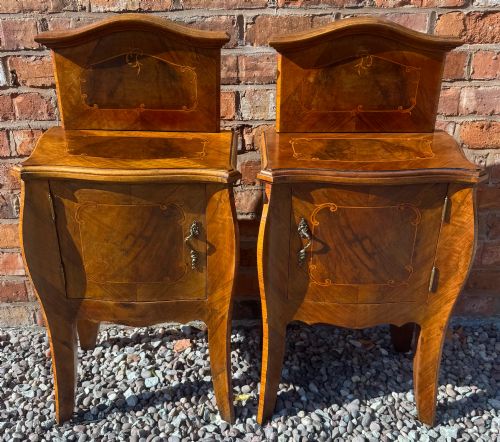
The forms vary from enclosed bedside cupboards with doors and drawers to open lamp tables, occasional tables, and small bedside chests. Many items present themselves as pairs, offering symmetrical proportions for twin beds or larger master suites.
Makers and workshops of the nineteenth and twentieth centuries adapted traditional forms into convenient scales, utilising satinwood alongside mahogany and walnut. These items reflect stylistic revivals ranging from Sheraton and Georgian aesthetics to Louis XVI and French taste.
How they were made
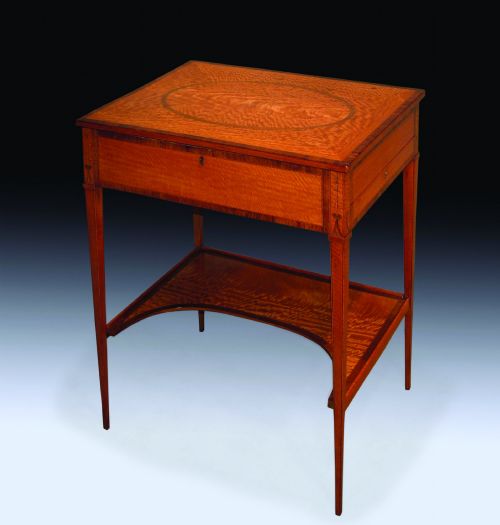
Cabinetmakers constructed these pieces using solid timbers like mahogany and walnut as a carcase, applying figured satinwood veneers to external surfaces for visual depth and grain variation. Workshops incorporated contrasting woods such as boxwood and rosewood for delicate stringing and linear inlay details.
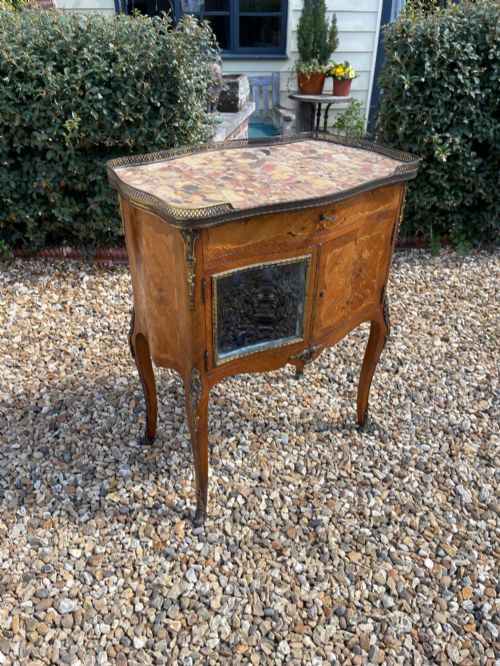
Marquetry and parquetry techniques appear on French and revival models, arranging small wood veneers into geometric patterns or floral motifs. Brass handles, hinges, and occasional marble tops provide functional durability and textural contrast against the timber surfaces.
Listings feature satinwood combined with mahogany, walnut, rosewood, and kingwood across Edwardian, Victorian, and Art Deco periods.
What varies in quality
Quality resides in the selection of the timber veneer and the precision of the cabinetwork. Superior examples display carefully matched grain patterns across drawer fronts and cupboard doors, whereas standard pieces rely on simpler, uniform veneers.
The refinement of the inlay work and the execution of dovetail joints inside drawers signal the hand of a skilled workshop. Pieces bearing maker stamps or attribution to established firms show higher standards of construction and design cohesion.
Trevor Page & Co·Morant & Co·Betty Joel·Maple & Co·Gillows
The Satinwood Nightstand Table Glossary
- Satinwood
- A dense tropical timber prized for its pale, golden colour and natural sheen that catches the light. It frequently appears as a fine veneer on Edwardian and Georgian furniture.
- Marquetry
- The art of forming decorative patterns by fitting together small pieces of wood veneer of different colours and grains. It decorates the surfaces of many French and revival bedside tables.
- Inlay
- A technique where contrasting materials like boxwood or ebony are embedded into recesses cut into the primary wood surface. This creates fine borders and geometric motifs.
- Parquetry
- A geometric mosaic of wood pieces used for surface decoration, often seen in patterned tabletops. It differs from marquetry by relying on angular, repeating shapes rather than pictorial designs.
- Pembroke table
- A small drop-leaf table with hinged flaps on either side supported by folding brackets. They serve versatile functions as occasional tables or small bedside surfaces.
Satinwood Nightstand Table: Frequently Asked Questions
Are these tables sturdy enough for daily use?
These cabinets and tables were built for domestic utility using durable hardwoods and sound joinery methods.
Normal daily placement of lamps and bedside books causes no strain, provided the joints and drawers remain stable.
How do I distinguish Edwardian pieces from Victorian ones?
Edwardian items tend to feature lighter satinwood veneers, delicate inlay, and influences from Sheraton and neo-classical revivals.
Victorian pieces often rely on denser mahogany carcases, bowfront shapes, and darker timber tones with simpler surrounds.
Do matching pairs usually originate together?
Many pairs are constructed as matching sets by the original maker to flank a bed symmetrically.
Some examples represent very close matches assembled later, requiring careful observation of timber grain and dimensions.
How should I care for satinwood surfaces?
Satinwood benefits from dusting with a soft, dry cloth and occasional application of appropriate furniture wax.
Keep these tables away from direct heat sources and strong sunlight to prevent the timber veneer from drying.