



Satinwood Marble Cabinets
Satinwood marble cabinets combine pale figured timbers with cool stone tops, offering refined storage for bedrooms and drawing rooms.

Satinwood Marble Cabinets
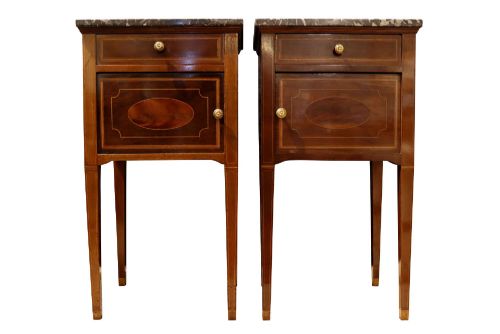
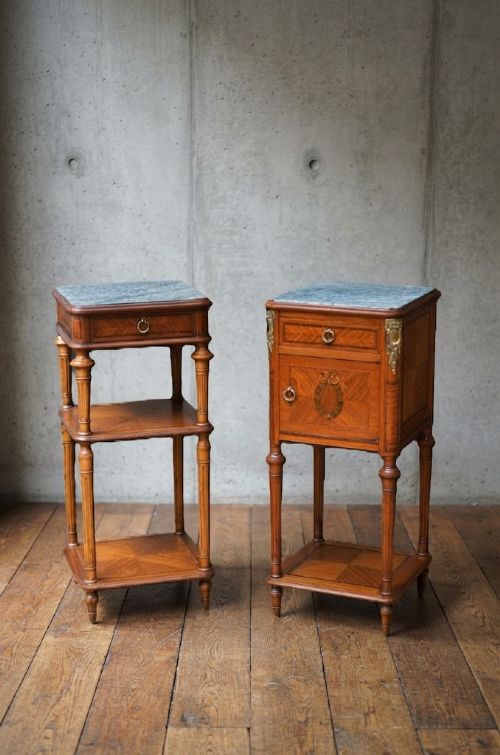
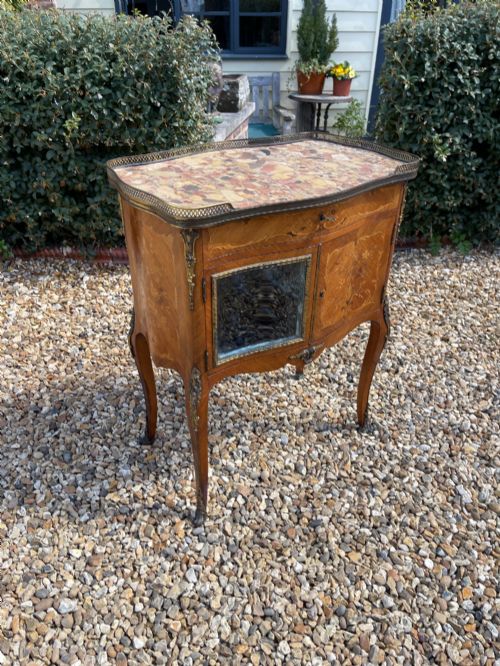
Satinwood marble cabinets are elegant pieces of antique furniture defined by their pale, lustrous timber surfaces and durable stone tops. Buyers searching for satinwood marble cabinets will find these items spanning the nineteenth century and the early twentieth century, with many examples originating from French and English workshops.
The selection ranges widely in form across the periods seen on this page. Bedside cabinets and pairs of bedside cabinets dominate the offerings, alongside side cabinets, washstands, commodes, pedestal cabinets, and secretaire chests.
Makers and designers embraced revival aesthetics, producing pieces in Louis XVI Revival, French Transitional, and Sheraton Revival styles. These furnishings serve both practical storage needs and decorative roles within period interiors.
How they were made
Cabinetmakers constructed these pieces using solid and veneered carcasses of satinwood, often complemented by mahogany, walnut, kingwood, rosewood, and tulipwood. Fine parquetry and intricate inlay work embellished the timber surfaces, showcasing the high skill of period artisans.
Heavy marble slabs were fitted precisely to the tops of these cabinets, providing a smooth and resilient surface suited for daily use. Mounts of brass and ormolu frequently decorated corners, drawer pulls, and legs, adding structural crispness to the designs.
Satinwood Marble Cabinets Retail Price Guide 2026
Typical asking prices for satinwood marble cabinets among the pieces listed under this phrase on Sellingantiques today, from the lower quarter to the upper quarter. They describe what is for sale here now, not the wider market.
Listings feature bedside cabinets, commodes, and washstands primarily from the Victorian and Edwardian periods.
What varies in quality
Quality rests significantly on the selection of timber veneers and the intricacy of the parquetry or inlay. Finer cabinets display carefully matched grain patterns and precise geometric wood arrangements across every surface.
The integration of the marble top and the quality of the cast brass or ormolu mounts distinguish standard production from exceptional pieces. Superior examples exhibit heavy, well-carved or chased metalwork and thick, finely veined marble slabs fitted flush to the timber.
Collinson & Lock London·Gillows·Edmond Poteau
The Satinwood Marble Cabinets Glossary
- Satinwood
- A hard, yellowish timber with a natural sheen that resembles satin. It takes a high polish and formed the primary surface for many fine late-nineteenth-century cabinets.
- Parquetry
- A geometric mosaic of wood pieces used for decorative floors and cabinet surfaces. Makers arranged contrasting timbers like tulipwood and kingwood to create striking visual patterns.
- Ormolu
- Gilded bronze used for decorative mounts and furniture hardware. It provided a bright, metallic contrast against the pale satinwood bodies.
- Commode
- A low chest of drawers or cabinet with doors. French examples from this period often incorporate marble tops and elaborate veneering.
- Washstand
- A functional piece of furniture designed to hold a basin and jug, frequently fitted with a marble top to resist water splashing.
Satinwood Marble Cabinets: Frequently Asked Questions
How are these cabinets cleaned?
Dust timber surfaces regularly with a soft, dry cloth to preserve the polished finish. Avoid silicone-based sprays that can damage antique polishes over time.
Clean the marble top using a damp cloth and mild soap if necessary, ensuring no moisture lingers on the surrounding wood veneers.
Can bedside cabinets serve other rooms?
These compact cabinets function effectively as lamp tables or small side tables in a sitting room or hallway. Their enclosed storage keeps small items out of sight while the stone top holds lighting or decorative objects.
Pairs work well flanking a fireplace or positioned beneath a mirror to anchor a small wall space.
What defines Louis XVI transitional style?
This design period bridges the curvaceous Rococo style and the stricter neoclassical lines of the later eighteenth century. Furniture from this phase employs straight tapered legs alongside softer curves.
Cabinets of this design often feature restrained parquetry and delicate ormolu mounts rather than heavy carving.
Are marble tops original?
Most marble slabs on nineteenth-century cabinets are original to the piece, cut specifically to fit the timber frame. The weight and edge profile usually match the manufacturing standards of the period.
Slight variations in veining simply reflect the natural stone used by the workshop at the time of construction.